

MSB Link DAC III D/A converter
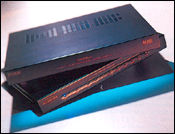
Prelude
I fell in love with the original Link DAC, as was obvious from my">http://www.stereophile.com//digitalsourcereviews/234/">my review in the January 1999 Stereophile. I said that "the Link redefines entry into high-quality digital sound," as it provided excellent sound and 24-bit/96kHz conversion for the remarkably low price of $349. It is as firmly ensconced in Class C of "Recommended Components" as it is in my weekend system, where it tames the digital signals from my DMX receiver and my trusty old Pioneer PD-7100 CD player.
I fell in love with the original Link DAC, as was obvious from my">http://www.stereophile.com//digitalsourcereviews/234/">my review in the January 1999 Stereophile. I said that "the Link redefines entry into high-quality digital sound," as it provided excellent sound and 24-bit/96kHz conversion for the remarkably low price of $349. It is as firmly ensconced in Class C of "Recommended Components" as it is in my weekend system, where it tames the digital signals from my DMX receiver and my trusty old Pioneer PD-7100 CD player.
MSB Platinum Link Plus D/A processor
I have a warm spot in my heart for MSB's approach to product development. They come from a tweaker heritage and still practice the art: MSB will happily install a 24-bit/192kHz upsampler in your CD player, a 5.1-channel input in your DPL amp or receiver, and true 24/96 outputs in your DVD player. Their standalone products, starting with the original Link DAC, are designed from the start to include space for later additions and enhancements.
MSB Technology Analog DAC D/A converter and Analog Power Base power supply
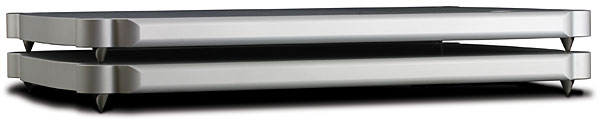
Back in high-end audio's golden daysfor the purposes of this story, the mid- to late 1980smy audio store, Audio Ecstasy, had a service tech named Tom Hewitt. Were he still with us (and I wish he were), Tom would appreciate the radical case design of the MSB Analog DAC. Tom loved not only to fix things, but to see what happened when things were violently stressed. He tested the limits of component construction.
MSB Technology Link D/A converter
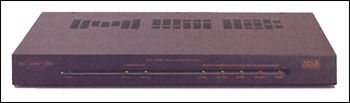
Recently, we've seen the digital "horsepower" race accelerate with the arrival of digital sources and devices with 24-bit and 96kHz sampling capability. Much of this has been spurred by the 24/96 labels emblazoned on the newer DVD players—and, within the purer confines of the audio community, by high-end DACs with this same ability. Indeed, it's possible that the dCS Elgar DAC, near and dear to John Atkinson's heart and a perennial Class A selection in Stereophile's "Recommended Components," performs so well with standard 16-bit/44.1kHz sources because its wider digital bandwidth permits greater linearity within the more restricted range of regular CDs.
MSB Technology Platinum Data CD IV transport & Diamond DAC IV & D/A converter

The audiophile does not pursue music reproduction because it is useful; he pursues it because he delights in it, and he delights in it because it is beautiful. If music were not beautiful it would not be worth knowing, and if music were not worth knowing life would not be worth living.
My apologies for corrupting the well-known statement by French mathematician Jules Henri Poincaré (18541912), in which he described his relationship with science and nature. But substituting audiophile for scientist and music for nature, I feel the sentiment expresses what drives many audiophiles to the extremes for which mere mortals often chide us.
Music Hall dac25.2 D/A processor

Roy Hall has been Creek Audio's US importer for more than 20 years. Did you know that all Creek gear is now made in China? Just like Cambridge Audio, Quad, and many B&W models. Just like some US speaker brands, for which virtually all parts are made in China but are assembled, it's claimed, in the US. Three cheers for brands like LFD, Rega, Sugden, and Harbethall still made in the UK. For French marques made in France. For Italian products produced in Italy. Etc.
Musical Fidelity A324 D/A processor
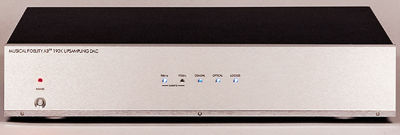
It was 1988. What to do about digital?
Musical Fidelity Digilog D/A processor
 The rapidly evolving world of the late 20th century is the source of much stress. Changes in the status quo, whether wrought by social, political, or technological forces, are often accompanied by anxiety brought on by the struggle to assimilate new patterns of thought. New ideas necessitate abandoning or modifying one's old ideas, thus creating conflict (footnote 1). However, these periods of rapid change can also be exciting, allowing one to chart a course of discovery and growth.
Musical Fidelity M1 CLiC universal music controller
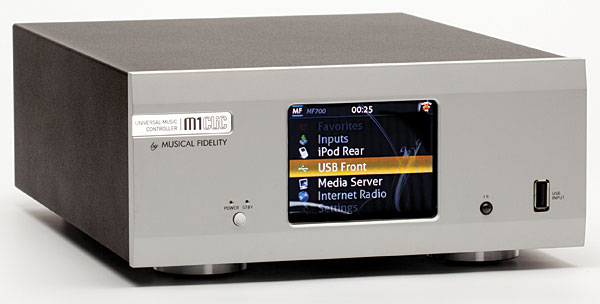
The taxonomy of audio products used to be easy. An amp, a preamp, speakers, a disc player or twodone. Now that hard drives, streaming clouds, and computers have entered the scene, unless your world revolves around only an iPod or a disc player, you have choiceslots of choices.
Musical Fidelity M1 DAC

The M1 DAC is by Musical Fidelity. At $699, it's a stunning bargain. Comparing it to $995 for the Digilog in 1989. Meanwhile, the M1 is far more versatile, way better built, and, if memory serves me right, sounds vastly better.
It appears that the way to sell a DAC in 2011 is to almost give it away, in real-dollar terms. Some people pay far more than this for a set of speaker cables, a pair of interconnects, even a power cord. The M1 DAC is a piece of kit that can transform your system. I kid you not.