

Fidelity Research FR-1 Mk.3F phono cartridge
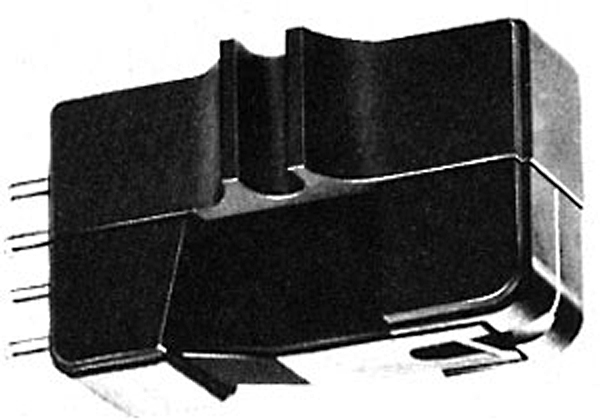
A couple of issues back, we mentioned in passing that the Fidelity Research FR-1 Mk.3F was the only moving-coil cartridge we had heard (as of then) that we would give house room to. (The others had frequency-response problems which so colored the sound that their other strong points were not worth the tradeoff.) That first observation about the FR-1 was based on a couple of hours' listening. Now that we have had an opportunity to live with one of them for a while, we can essentially confirm that first reaction, but with a few added qualifications.
Grado Model A phono cartridge

One of the best pickups we've heard to date, the Grado A was introduced with some fanfare in the fall of 1964 (footnote 1) and then, for no apparent reason, was withdrawn just one year later. It is probably still available, though, either used or, discounted, as new stock at some dealers.
Grado Prestige Gold1 phono cartridge

In the early to mid-1980s, I read every high-end hi-fi magazine I could get my hands on. Among the consequences was my discovery that the Grado Signature Seven phono cartridge—which was better and cheaper than the Signatures One through Six—was the cartridge that God wanted me to have. So I cut back on all manner of luxuries, saved every dollar I could save, and a few months later brought a walletful of cash to Harvey Sound in midtown Manhattan, where an unpleasant man with a bad comb-over handed me a little pill bottle of a plastic tube.
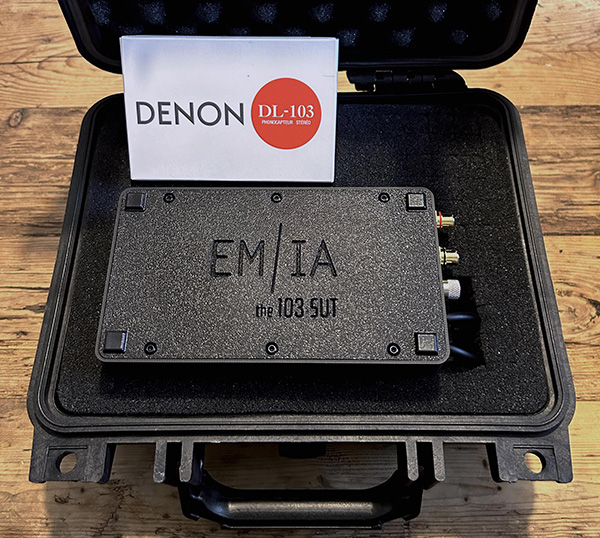
Gramophone Dreams #100: the Schiit Stjarna again, the Denon DL-103, the EM/IA 103 SUT
My Russian neighbor Alex forges ax heads and smokes pig chests 5' from my bedroom window. At 2:00am, shirtless, in February. One especially cold night, I woke up to the sounds of hammering and loud music. When I looked out, Alex was blacksmithing a glowing red meat cleaver blade, with Rachmaninoff plays Rachmaninoff blaring from a cassette in his boom box.
Gramophone Dreams #103: Ortofon MC X40 phono cartridge, Robyatt & Lundahl step-up transformers
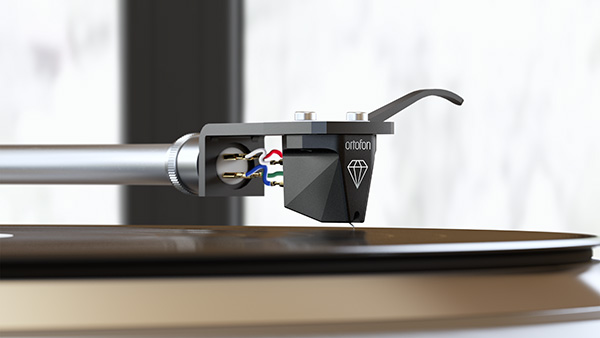
The new MC X-series moving coil cartridges appear to have jumped the fence and broken free of what I long perceived as Ortofon's traditional Scandinavian style. This month, I'm auditioning the top of the X series, the MC X40, which costs $1150 and sounds almost Japanese.
Gramophone Dreams #104: Vintage Systems, Vintage Cartridges Part 1
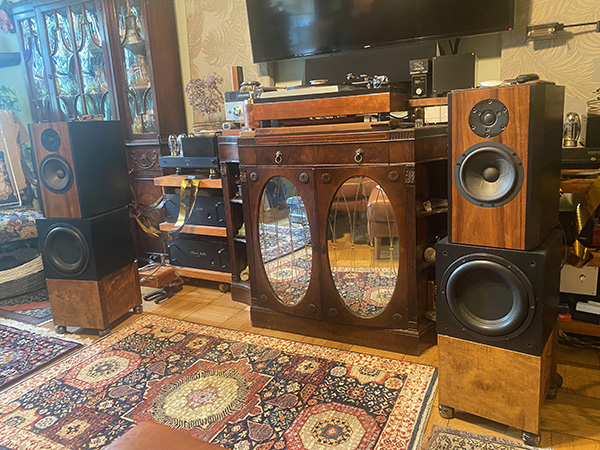
Richard Cirulnick's system.
Last week, a black sedan pulled up by the curb in front of my building. I recognized the driver, Richard Cirulnick, because an old audio-world buddy named Al Rhodes introduced me to him at the New York Audio Show in 2017. Since then, we've hung out a lot, especially at audio shows . . .Gramophone Dreams #106: Lab12 Melto2 Phono, Tzar DST V1 Black Knight Corian, Ortofon 2M Black LVB 250
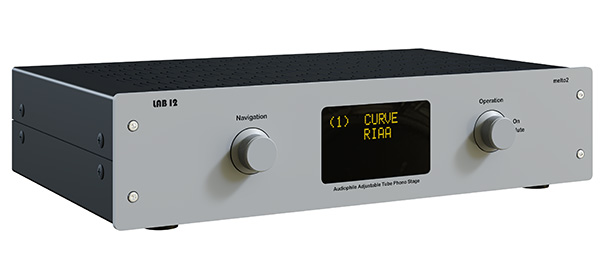
On the front page of its owner's manual, Greek amplifier manufacturer Lab12 describes the Melto2 ($4995) as a "Remote Controlled, Fully Adjustable Phono Preamplifier." I'd describe it as a clear-speaking, fun-to-use, cartridge- and record-collector's dream. Plus: It's got tubes.
Gramophone Dreams #11

Which record player has achieved international acclaim as a musical instrument in its own right?
Which turntable is revered for its near-indestructible build quality?
Which disc spinner has played more recordsand made more people drink, drug, dance, and make outthan any other?
Which turntable has sold over three million units?
Hint: It is not made in the US, the UK, China, or Switzerland.
Gramophone Dreams #24: Hana & Musical Surroundings
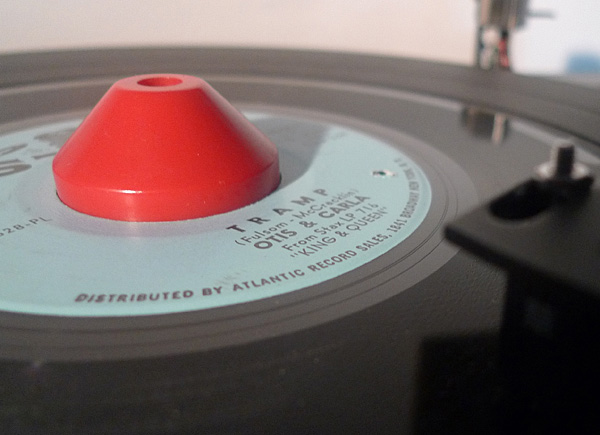
The days were long, the strawberries ripe, but it wasn't quite summer. It was, however, a perfect night for Otis Redding and Carla Thomas singing the Lowell FulsonJimmy McCracklin classic "Tramp," on a 7" 45rpm single (Stax 45-216).
Otis: What you call me?
Carla: Tramp! You don't wear continental clothes, or Stetson hats.
Gramophone Dreams #25: Dr. Feickert, Jelco, Koetsu, My Sonic Lab

I needed one black tiddledywink (not provided) to use Dr. Feickert Analogue's three-speed, two-motor, two-armboard Blackbird turntable. The tiddledywink was for covering the Blackbird's painfully bright power-on LED so that it didn't blind me when I cued up a record. The first night, in my dark listening room, this tiny indicator sprayed the wall behind and the ceiling above with more light than a bright-emitting 845 vacuum tube.