

Affordable Philharmonic Speakers
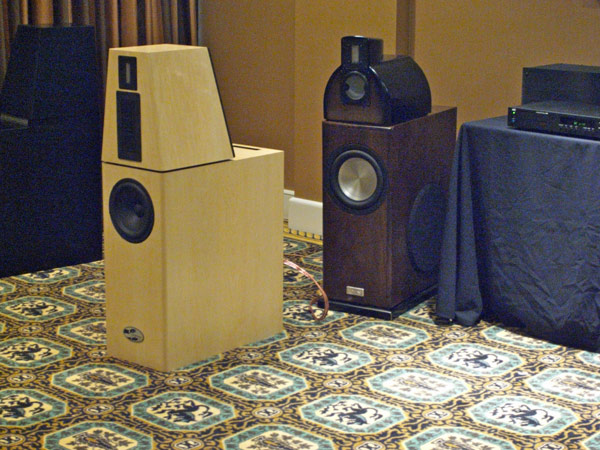
When I asked the price of the floorstanding Philharmonic 3 (front), which I had heard producing a big sound with extended low frequencies on a recording of Copland's Fanfare for the Common Man, driven by an AVA amplifier, I was expecting an answer of the usual "many thousands of dollars." Instead, I was told the speaker costs just $2800/pair!
That is a lot of speaker for the money. The 3 combines a Raal 10D ribbon tweeter crossing over at 2900Hz to a BG Neo 8 planar-magnetic driver in an open-back enclosure. The bottom enclosure, isolated from the upper with a 1/25" vibration-absorbing pad, handles frequencies below 650Hz and loads an 8" Scanspeak Revelator woofer with a transmission line. Less-expensive versions of the speaker, the Philharmonic 1 and 2, differ only in the drive-units used. Check out www.philharmonicaudio.com for the full technical story on these speakers.
Analog Tape Porn
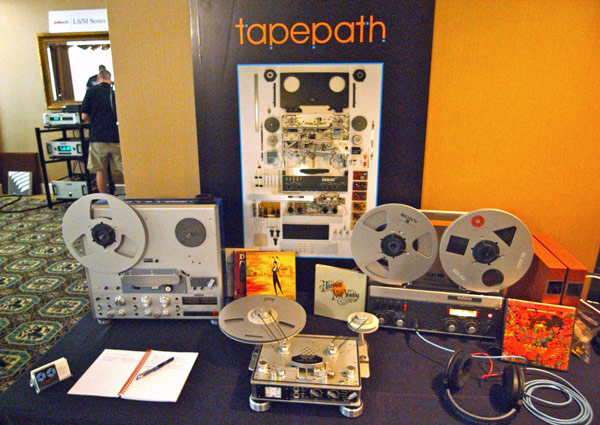
Some of Ken Swauger's open-reel recorder collection on display, from left to right: a ReVox PR99, a Stellavox portable, a ReVox A77, plus some tasty tape releases.
Audience 2+2
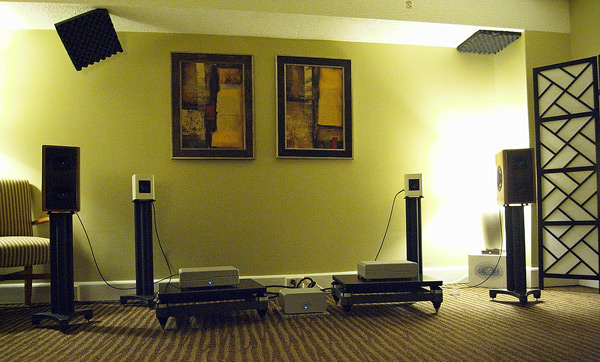
The Audience room was featuring the Clairaudient 2+2s ($5000/pair) when I popped in for a listen. This speaker features four metal-cone units, two on the front two on the back, operated full-range, and reinforced by a passive bass radiator on one of the speaker's sides. Brian Damkroger enthused about the clarity conferred by the absence of a crossover when he reviewed the speaker in the July 2011 issue, but I was less keen on its balance, finding it very forward. Both aspects was readily apparent at Capital AudioFest, though I admit the room's acoustics were problematic. This is definitely a speaker that you must audition for yourself.
Audio Note / Déjà Vu Audio
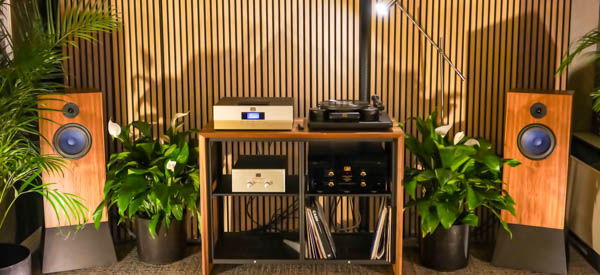
Nothing soothes the frayed nerves of this CAF reporter like an Audio Note UK system, which consistently provide some of the most human, sweet, natural sounding hi-fi equipment at shows year in and year out.
AudioNote
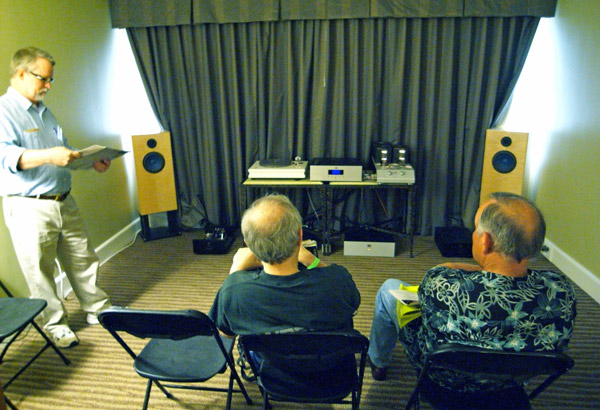
The engineer in me just doesn't get the products from AudioNote UK. Unprepossessing, two-way speakers that cost a lot of money; non-oversampling digital products that cost a lot of money; single-ended triode amplifiers that cost even more. But the musician in me makes sure I always check out the AudioNote room at an audio Showa fine time is guaranteed for all!
Such it was at AudioFest 2011. When I walked in, David Cope (left) was playing a CD of the Rachmaninov cello sonata on the AudioNote CD4.1X player ($10,500). Amplification was being provided by the AudioNote Jinro integrated amplifier that Art Dudley reviewed in April 2011 ($26,500). Speakers were the AudioNote Lexus Signatures, the fourth rung up the ladder on modification of what was once was the original Snell Model E ($16,250/pair; this speaker has external crossovers whereas the three less-expensive models don't). It was with a definite sense of loss that the Rachmaninov movement came to an end. Makes you think. Made me think. Something is going on but you don't know what it is. Do you, Mr. Atkinson?
Border Patrol—Tube Porn #1
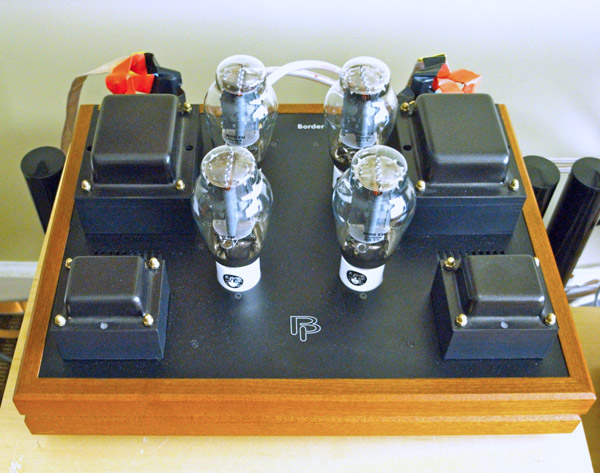
Driving a pair of Living Voice OBXRW speakers (from $11,000/pair depending on finish), this cute 20Wpc tube amp, from an American company run by an English ex-pat, produced a very appealing sound on a classic Louis Armstrong cut.The S20 comes with two mono power supplies, these using tube rectifiers and choke filters, and uses 300B tubes in push-pull. Price is quoted as being "from $12,750."
Capital Audiofest 2011
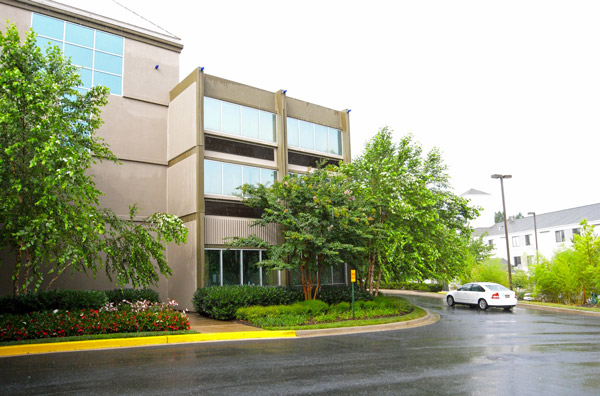
The second Capital AudioFest, sponsored by Carnegie Acoustics, takes place this weekend at the Rockville, Maryland Crowne Plaza, pictured here in Friday evening's rainstorm. On show are 61 brands in 28 rooms and I will be reporting livewell, as live as possible considering that when I am in a room listening to a system, I am not blogging and vice versafrom the show.
Hours are 11am7pm, Saturday July 9, and 11am6pm, Sunday July 10. A raffle is being held at 6pm on both days, and every attendee receives a free sampler CD from MA Recordings. There will also be a swapmeet on Sunday morning starting at 8am. Details can be found at http://www.capitalaudiofest.com/p1.html.
Carnegie—Onkyo
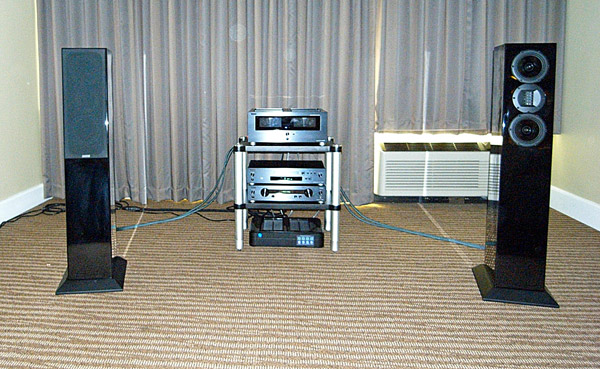
This room was pitch-black when I went in, so, sitting in the listening chair, I held my camera over my head, crossed my fingers and my heart, and pressed the shutter. What the flash revealed was a nicely finished pair of 2-way towers, the Carnegie CST-1s ($1999/pair) driven by an Onkyo Reference M-5000R 150Wpc amplifier. The CST-1 combines a 1"x3" Mylar-film planar tweeter with two 5.25" composite-cone woofers in a transmission-line enclosure. Carnegie's Ron May asked if I would like to hear some Nils Lofgren but to my surprise, he didn't select the track "Keith Don't Go" from the Acoustic Live CD, which has been a fixture at recent audio Shows. Instead he played me "A New Shoulder to Cry On," which sounded excellent. Carnegie is designing its products for the "Affordable Audiophile," an admirable goal.
Cathedral Speakers
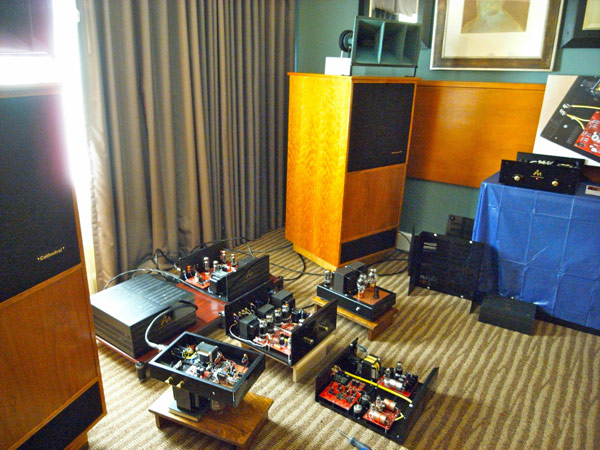
This room was packed each time I poked my nose in, so I didn't get much of a listen. The company's websitewww.cathedralspeakers.com—explains that "Once you hear your favorite music on a pair of Cathedrals, you will never go back to ordinary speakers." Driven by kit versions of AudioNote tube amplifiers, the big, two-way Cathedrals feature Eminence woofers in enclosures fabricated from hardwoods rather than the usual fiberboard, and produced an equally big sound. Price is $6995/pair for the Model 3113 being demmed, which has an Altec 811-B horn, $7995 /pair for the 7117, which has an Altec 511-B horn.
Classic Audio Loudspeakers

Classic Audio Loudspeakers' John Wolff, along with his red shirt, the parrots that perch on his speakers, and the reproductions of Nipper he offers for sale, is a fixture at regional audio shows. When I asked him about this, he responded that he believes regional shows are the future of this industry. John was using Atma-Sphere tube electronics, including M-60 monoblocks, to drive his 4'-tall T-3.4 speaker, which uses a wood radial Tractrix midrange horn fitted with a 4" beryllium-diaphragm compression driver firing into a 2" throat, coupled with twin 15" woofersone firing forward, the other to the floorand a supertweeter. The midrange unit and woofers all use field-coilenergized magnets.