

"Gloomy Sunday": The Most Notorious Song I Know
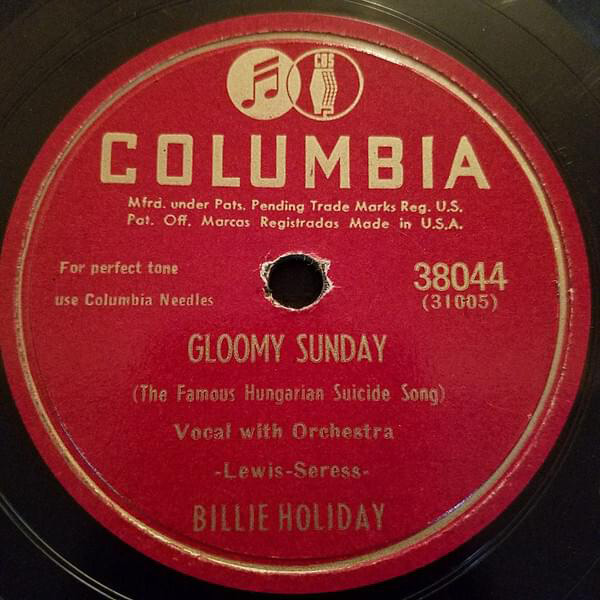
Editor's Note: This article is in part about depression and suicide. If you think of harming yourself, the National Suicide Hotline is there to help: 1-800-273-TALK.
When German writer Johann Wolfgang von Goethe published The Sorrows of Young Werther in 1774, he intended for readers to finish it, but not, you know, to end it. To Goethe's disbelief, his novel sparked a spate of suicides. The title character, whose obsessive love for a married woman was unrequited, ended up shooting himself, and soon the copycatting started. Young men of the era would dress just as the fictional Werther hadyellow trousers, blue jacketand use a similar pistol. Often, a copy of the book was found at the scene. The number of deaths was unsettling enough that Italy and Denmark banned Goethe's novel. The German city of Leipzig even outlawed Werther-style clothes for a while. The phenomenon is now known as the Werther effect.
"Isn't Our Hobby the Greatest?"

As per our ritual, Karim and Dan arrived at my door in late afternoon, bearing our ritual's customary offerings: dark beer, wine, cold pork sandwiches, fruit and chocolate tarts, good music on well-recorded CDs, and audio hardware to try out on the host's hi-fion this particular Friday, my hi-fi. It's what we did: break bread while gabbing like regular folk about regular things, then bolt for the listening room for an evening of hi-fi fun.
"What's Going On"

Mother, mother
There's too many of you crying
Brother, brother, brother
There's far too many of you dying I watched the TV with horror. George Floyd, an African-American man in Minneapolis, Minnesota, was being killed in front of the camera. I retreated to the listening room. In what couldn't have been a coincidence, the Roon app's "Discover" function had recommended I play What's Going On, Marvin Gaye's groundbreaking album, released in 1971 by Motown subsidiary Tamla.
There's too many of you crying
Brother, brother, brother
There's far too many of you dying I watched the TV with horror. George Floyd, an African-American man in Minneapolis, Minnesota, was being killed in front of the camera. I retreated to the listening room. In what couldn't have been a coincidence, the Roon app's "Discover" function had recommended I play What's Going On, Marvin Gaye's groundbreaking album, released in 1971 by Motown subsidiary Tamla.
(Re)imagining a Brahms piano quintet—without piano

Brahms first scored what was to become his Quintet in F minor, Op.34, for piano, two violins, viola, and cello for two violins, one viola, and two cellosno piano. The scoring and perhaps the music was inspired by Schubert's similarly piano-less, two-cello Quintet in C major. The original Brahms score has been lost.
Cellist Terry King, a protégé of the great Gregor Piatigorsky and the first American-born teacher to teach a Tchaikovsky Competition Gold Medal winner, long wondered what the original quintet sounded like. He sent me this quote, from Clara Schumann, from just after she read Brahms's original score, playing all the parts on her piano. "What a world of strength and richness there is in the first movement, how the first theme takes hold of one at once," Schumann wrote. "How beautifully it is scored for the instruments! I can see them bowing. Dreamy at times and then the accelerando and [the] wild, passionate endingit has taken hold of me. And how rapturously the Adagio sings one long melody from start to finish! I play it over and over again and never wish to stop."
King decided that he would recreate the original version of the Brahms quintet.
(Un)healthy Obsessions
During a ferocious storm one recent Saturday, firefighters knocked on my door and urged my family and me to evacuate. The gale had smashed loose a neighbor's large propane tank and plunged it into the choppy waters of the fjord we live on. An explosion was possible, we were told. Five minutes later, our teenage daughters, our dogs, and my wife and I were in the car on our way to safety. (No blast occurred.)
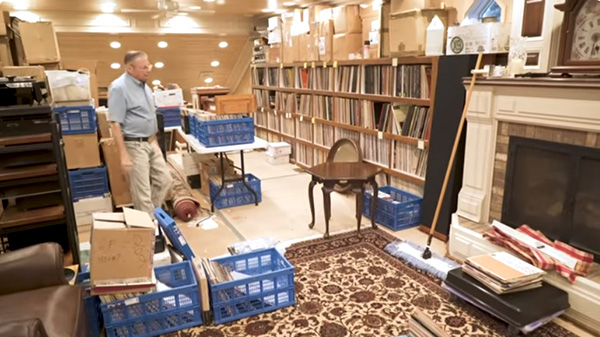
Coincidentally, the last thing I'd read that turbulent morning was the Washington Post's front-page story about the late Ken Fritz (above), a diehard audiophile who'd spent 40 years creating "the best stereo system in the world," and, as I wrote in the April 2024 issue's My Back Pages, alienating members of his family in the process. Both the evacuation and the Fritz tale put me in a pensive mood. If you'll pardon the triteness, each reminded me that life is precious and fragile, as are our relationships with loved ones. We can't afford to take either for granted.
Stereophile's Standards and Principles
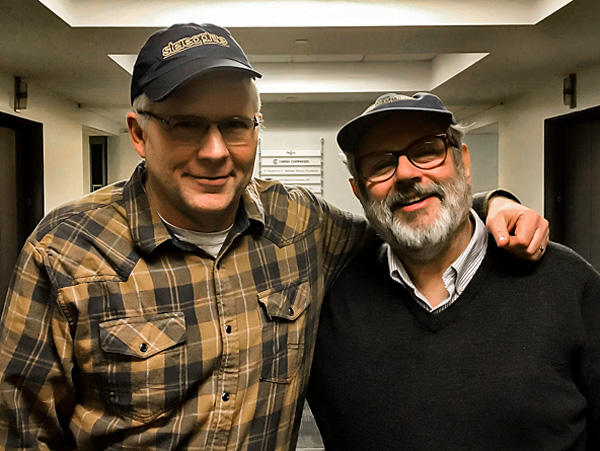
Jim Austin (left) succeeded John Atkinson (right) as Stereophile's editor in April 2019 and has preserved the magazine's Great Wall between editorial and advertising. Here are some of the most important principles that Stereophile religiously follows.
2+2=Quad, Dutton and Rhino Reissue Quadraphonic Albums
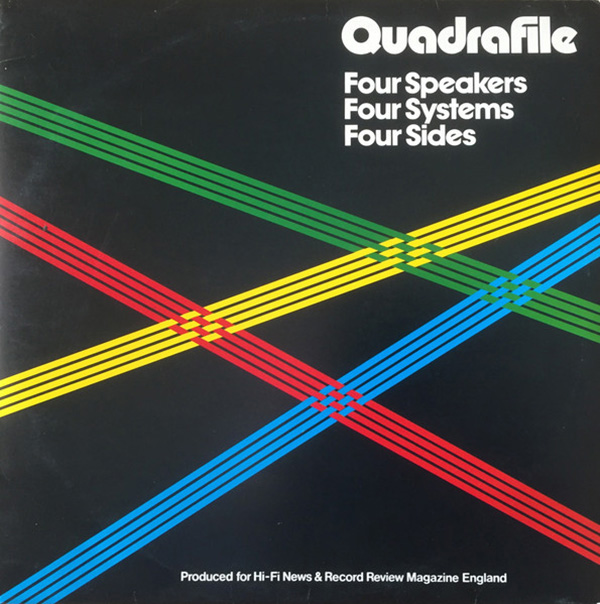
As much as I love my stereo system and listening to music through two speakers, some recordings just can't be bound by the limits of stereophony. For instance, Carl Orff's epic cantata Carmina Burana. Sure, I've heard successful stereo versions, but listen to the four-channel Quadraphonic mix of the classic 1974 recording by the Cleveland Orchestra, Chorus and Boys Choir, conducted by Michael Tilson Thomas, then decide whether stereo still does it for you.
36 Sides of Late David Bowie
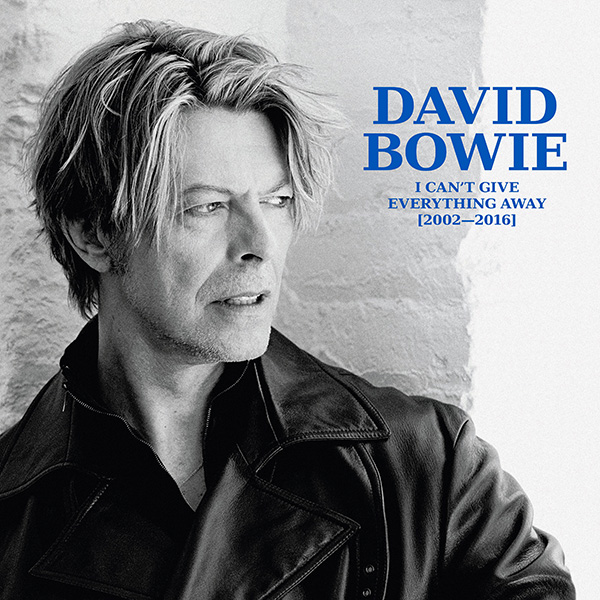
I Can't Give Everything Away is the sixth and last of the Bowie box sets that survey specific periods in the artist's career. The first was Five Years 1969–1973, released in September 2015. That was followed by Who Can I Be Now? (1974–1976), A New Career in a New Town (1977–1982), Loving the Alien (1983–1988), and Brilliant Adventure (1992–2001).
A Chat with Charles Lloyd

Photo: D. Darr
Sasha Matson: Good morning from Cooperstown, home of baseball. Do you follow baseball?
Charles Lloyd: I played first base. I'm left-handed.
Matson: Does this new album, The Sky Will Still Be There Tomorrow, feel special to you?
Lloyd: It does indeed.A Four-Cent Cigar and the Tyranny of Better
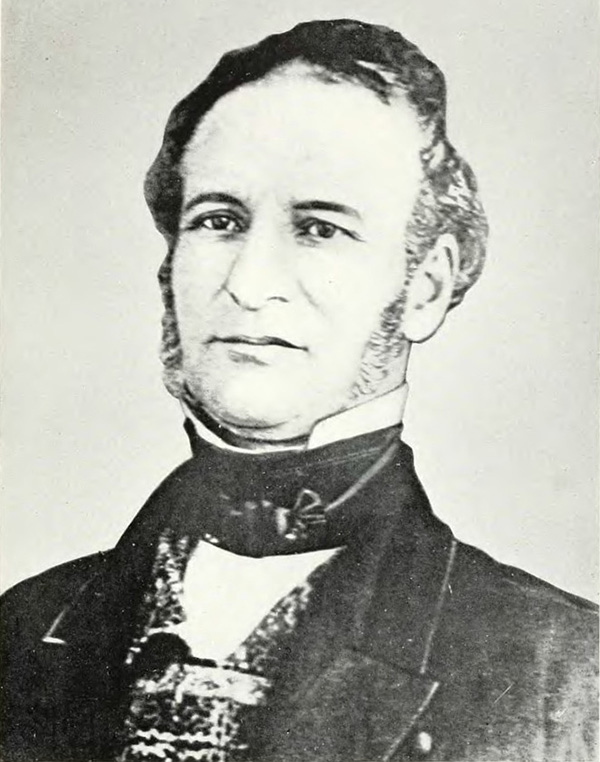
Edward Mott Robinson (above), a Quaker tycoon from whaling-era Massachusetts, would turn down fine cigars. He preferred the cheap kind. "I smoke four-cent cigars, and I like them," he declared (footnote 1). "If I were to smoke better ones, I might lose my taste for the cheap ones that I now find quite satisfactory."
Robinson wasn't so much guarding his palate as preserving his contentment. A simple pleasure had settled into place, untroubled by ambition, and he knew to leave it alone.
I think about Robinson's four-cent stogie sometimes, usually when someone asks whether a $10,000 integrated amplifier really sounds five times better than a $2000 one. (Answer: No, it doesn't.) Or whether hearing a $12,000 DAC will ruin you for the $1000 unit you used to love. (My take: Very possibly.)