

Make America Old Again: Remembering Robbie Robertson and The Band
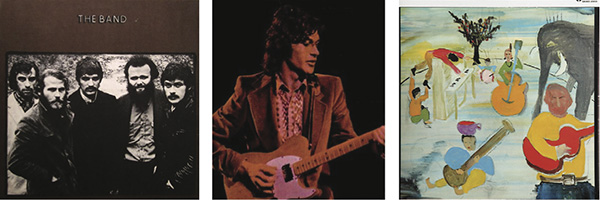
When I read the news that songwriter and guitarist Jaime Royal "Robbie" Robertson had passed, I forwarded a link to the obituary in the New York Times to my friends Doug and Jon. They were with me in the balcony of the Berkeley Community Theater on the evening of January 31, 1970, to hear a performance by The Band. We were juniors at Berkeley High School that year and lived and breathed that music every day. I recall sitting around with them outdoors, singing songs from The Band's first two albums.
Maria, Maria...What's with this gal named Maria?
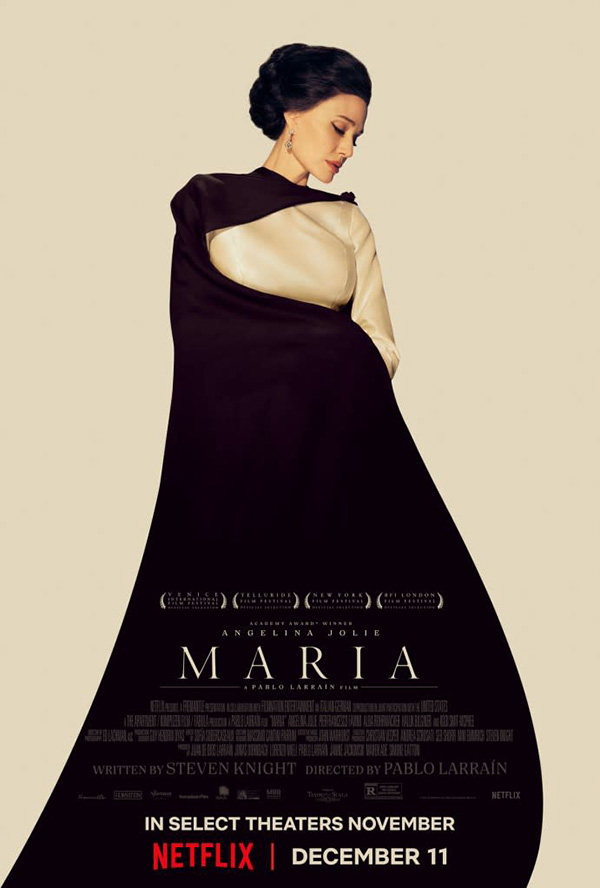
So much critical ink has been spilled on Maria, Pablo Larrain and Steven Knight's biographical fantasy on the last days of operatic soprano Maria Callas, that everyone who hasn't yet seen it "knows" exactly why. Which is a crying shame, given that very few reviews present the musical reasons that make Maria essential viewing, especially for people who care deeply about music.
Mes après-midis chez Don Cherry

In the spring of 1969, as an aspiring jazz drummer of 15 pretentiously and largely uncomprehendingly drawn to the music's difficult avant-garde, I learned that Don Cherry, Ornette Coleman's alter ego during Ornette's starvation years and an icon of free jazz himself, had recently moved to the village of Congers in my native Rockland County, New York, just north of New York City. Ornette was putting together a group drawn mostly from his early cohorts, and the call went out to Stockholm, where Don had settledto the extent that he settled anywherewith his Swedish wife, Moki. Hence his arrival practically on my doorstep.
Michael Des Barres and the Art of Aural Obsession

Photo: Piper Ferguson
Listening to music inspires us to take action. Upon hearing an I.E.Instant Ear-wormwe must then determine the best way we can go about listening to it again (and again) at our convenience. Prior to the free-for-all streaming era, our I.E. follow-through measures typically meant seeking out a specific playback medium for our favorite music, initially based on budgetary constraints. In those formative, pre-employment preteen years, 45sand/or, depending on how far back we're talking here, possibly even 78sfit the literal dollar bill before we could afford to move up the media ladder and begin purchasing LPs en masse. Our then-limited playback options tended to start with those self-contained, close-and-play record players and/or our parents' living-room consoles before we could afford to acquire separate components for more personal, higher-fidelity listening sessions. We were, to be blunt, obsessed.
Across the pond, hungry young listeners were eager to do the exact same thing. Take garage/punk glam-pop vocalist Michael Des Barres (aka MDB), who had duly been shuffled off to Repton School in Derbyshire, England, as a lad in the 1950s and found his initial aural inspiration by listening to his mates' records, since he couldn't yet afford to buy any of his own.Musicology Begins at Home
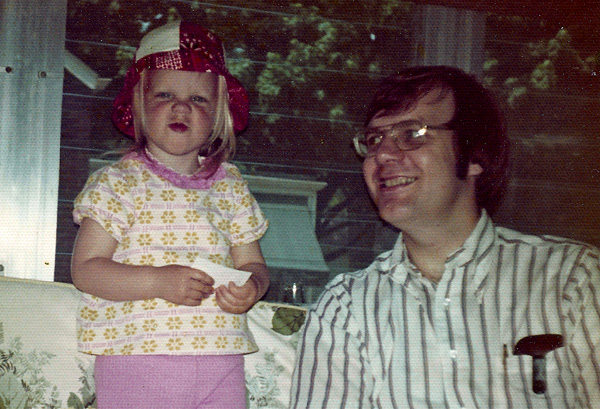
When I was growing up, calling Dad to dinner required a trip down carpeted stairs to the basement, an audiophile man cave in a time before the term had been invented. I'd open the door from the kitchen, and a great wall of sound would emergeand nearly blow me back before I descended the stairs.
My journey to hi-fi
Step 1. When I was in my mid-20s, an older editor at the Dutch current-affairs magazine I worked for told me he wanted to write a piece about audiophiles: He had been bitten by the audio bug himself. Because I often wrote about rock and pop music, he asked if I had a quality hi-fi system, and if so, would I be willing to be interviewed for his article
My Journey to Jazz
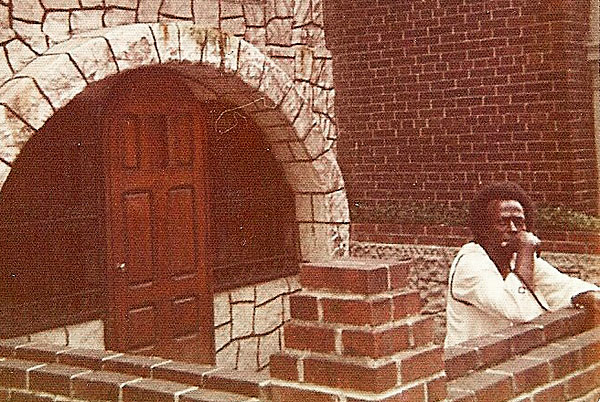
Like most older teens growing up in the South in the late 1970s, I had two poles of rock and roll heroes: The Allman Brothers Band and ZZ Top on one side, Yes and King Crimson on the other.
My Last Far East Trip

Photo: Roy Hall
First comes the anticipation, that initial jet of warm water, that miraculous searching, finding the sweet spot, then heaven on earth as it cleans and caresses. As if by magic, warm, soothing wafts of air gently and sensuously dry my tush. I had forgotten just how wonderful Japanese toilets can be.
It was 5am in Tokyo. I was on my way to Hong Kong, but my ticket demanded a change of planes. Haneda Airport was empty, save for a woman driving a golf cart. She offered me a ride to the other side of the airport where some restaurants were. As we drove off, the cart started playing "Around her neck, she wore a yellow ribbon," filling the cavernous hall with echoes of John Wayne astride his horse, galloping through Monument Valley.My New Album!
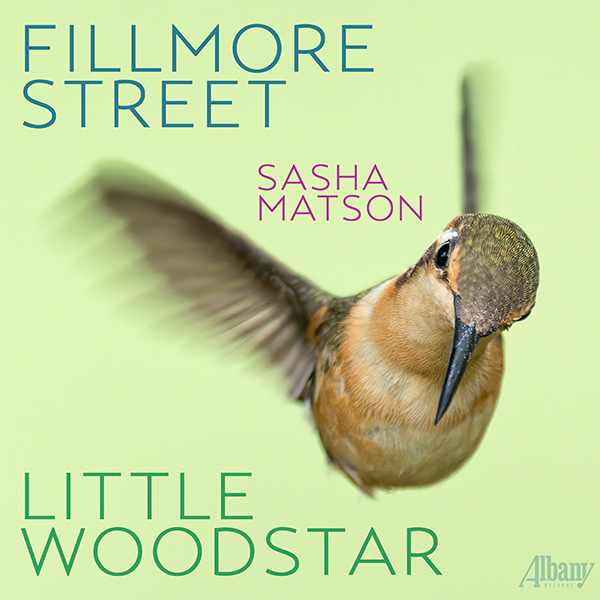
February 2025 marked the release of a new recording of my compositions: Fillmore Street/Little Woodstar. This is the sixth album of my music. My first solo outing as a composerSteel Chords i-5, on AudioQuest Musicwas in 1993.
When I set out to assemble something musical, I don't think in terms of songs, tracks, or playlistsI'm trying to put together an album. Even more old-school: I'm thinking in terms of an album that has two sides, two parts to the program, like an LP. Figuring out what that program should be takes a long time.
In the case of Fillmore Street/Little Woodstar, I decided on a two-piece set consisting of one old composition and one new one. These two works live in two different musical ballparks. Fillmore Street, on side 1 of the LP, is scored for a jazz orchestra. It tells musical stories about three locations in California. The older work on the album, Little Woodstar, which I composed while in grad school, leans classical.
My Triumphant Return to Vinyl
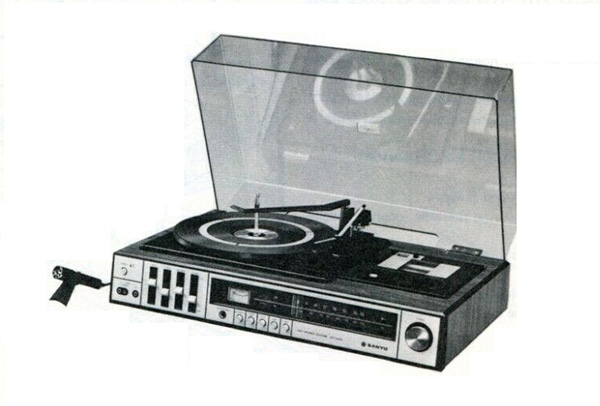
I recently started buying records again after a 30-year hiatus, thanks to my youngest daughter. She was 9, and I was gutting it out through the implosion of my first marriage. I was invigorated by the challenge of outfitting a new apartment on the cheap. I'd walk the aisles of Value Village in search of serviceable kitchen gear, and she loved to come with me, sifting through used books and house dresses while I assessed the quality of a skillet or stovetop percolator. She'd leave wrapped in threadbare pastel, cradling an armful of books by Lemony Snicket and Geronimo Stilton.
One afternoon, as we passed a stack of George Foreman Grills, she saw the record player, a mottled beige-brown box familiar to any Gen-X kid who spent time in their elementary school library. It had the reinforced metal corners and industrial clasps of a steamer trunk and a thick green handle made of indestructible Cold War plastic. Written across the top in black marker: #0027. How this piece of surplus ended up in the wayward-housewares section of a suburban thrift shop was surely an interesting story but not my concern. There it was, shut tight and resolute, perhaps since the 1970s. The price: $8.