

Revinylization #55: An American Beauty Unblemished
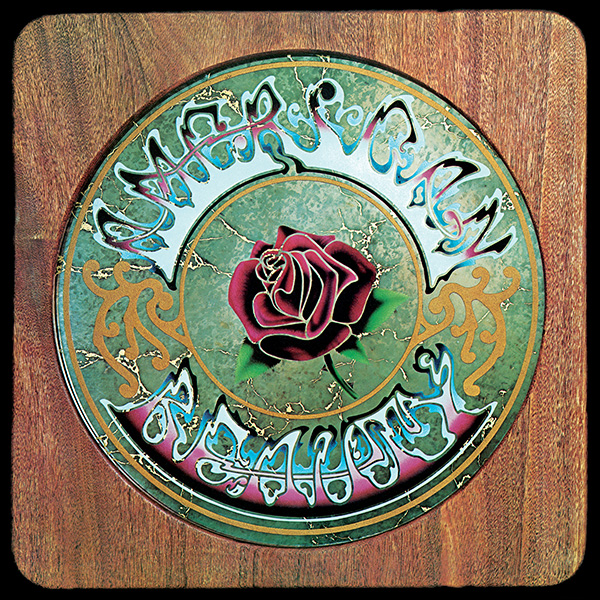
Of all the albums in the Grateful Dead catalog, American Beauty is the one with the widest appeal. Its proto-Americana tunes are neither antique nor modern; instead, they are timeless. The album's sound is clean and lean, up to modern snuff even more than a half-century after its original release in November 1970.
The tunes seem to roll like a Sunday drive on a country road, in and out of dark hollows and up and down hills. Three of its 10 songs have become folk-rock standards: "Friend of the Devil," "Sugar Magnolia," and "Truckin'."
Revinylization #56: Sonny Rollins, A Night at the Village Vanguard, Made New

As one of the first live albums to be recorded in the hallowed space that is New York City's Village Vanguard, Sonny Rollins's A Night at the Village Vanguard (recorded November 3, 1957, released in 1958) set the template, proving that recording in the odd, triangular club could not only work but could also produce distinctive, satisfying sound. Soon after the recording of the Rollins album, Bill Evans and John Coltrane added live Vanguard albums to their recording catalogs.
Now reissued by Blue Note Records as part of its Tone Poet Series, this three-LP edition, which comes from a different source than previous releases, is that rare audiophile reissue where the sonic differences are immediately audible.
Revinylization #57: Trane meets the Motor City, 2 Reissues from OJC and Craft Recordings
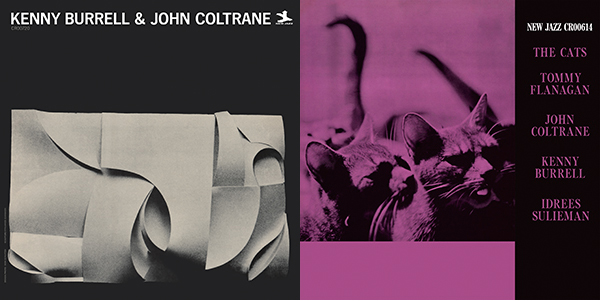
Detroit became a destination for migrating African Americans early, starting with the Underground Railroad; the city's proximity to Canada was convenient for those seeking to escape Southern slavery. The mass human movement accelerated with the Great Migration, which started about 1910, when millions of African Americans left the Jim Crow South for northern cities. The same human movement that brought the blues to Chicago and jazz to New York City took both to Detroit.
In all those cities, the 1920s was a time of ballrooms and big music halls. In Detroit, "society bands" black and white played through-composed, jazz-inflected music, according to a narrative put together by Cliff Coleman and Jim Ruffner for the local jazz museum. The proliferation of orchestra chairs meant that skilled musicians familiar with a range of musical styles could find work, especially if they read music. It also meant that Detroit was ready when, in 1927, Don Redman, who had been the chief arranger for Fletcher Henderson's band, moved to the city to lead William McKinney's Cotton Pickers, the resident Black jazz orchestra at Detroit's Graystone Ballroom. The Pickers soon became an important touring band, with a national reputation. Big-name orchestras like Duke Ellington's and Fletcher Henderson's started to visit the city; on Monday nights, the national bands would "battle" local bands.
Revinylization #58: The Wild, The Innocent, & The E Street Shuffle on MoFi
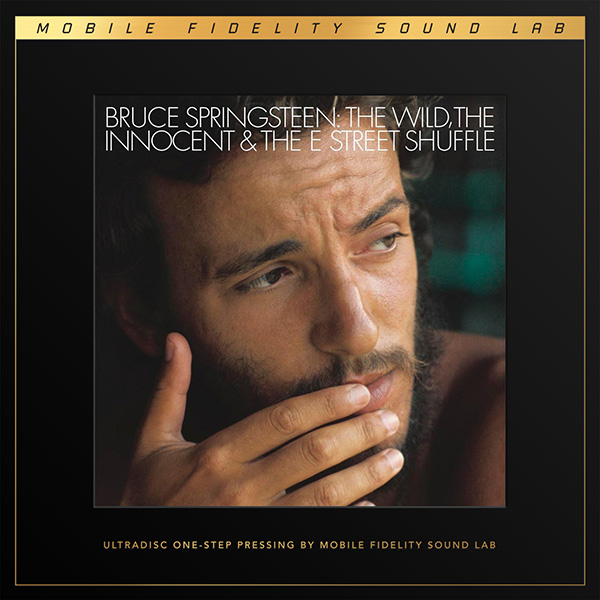
While it's a distant memory now that he's making mediocre albums and using his US website to sell $50 T-shirts for gigs in Helsinki, there was a time when Bruce Springsteen had a hungry heart: Hungry to be perceived as a consequential artist. Focused on telling stories and making vivid albums. Alive with conflict and memorable characters. Back in those days, the early 1970s, he broke any number of rules and barriers. In the case of The Wild, The Innocent & The E Street Shuffle, that meant defeating the dreaded sophomore slump.
Revinylization #59: Takin' it from the (ZZ) Top
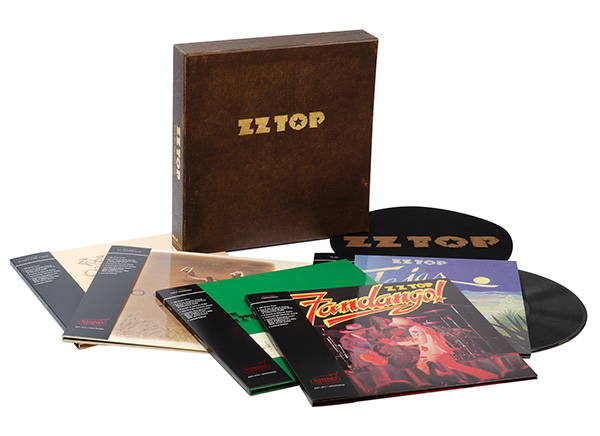
Before the beards, before the fuzzy spinning guitars, before the "Legs" video, there was an electric blues trio, that little ol' band from Texas, ZZ Top. In five years in the 1970s, they made their finest albums and found their first success. They came, they conquered, and gargantuan blues riffsnot to mention the concept of the power triowere never the same.
Anthologized and reissued many times since their releaseTres Hombres alone has been reissued on vinyl three times just since 2006the band's first five albums have been reissued again in an impressive, limited-edition boxed set from Rhino called From the Top: 19711976.
Revinylization #6: Acoustic Sounds Bach & Vivaldi Reissues

I'm not in perfect agreement with my colleagues and friends who believe that RCA's Living Stereo LPs from the late 1950s and '60s are the best-sounding commercial classical recordings ever made. To me, the Decca SXL catalog outshines them sonically, in addition to showcasing the talents of an even greater roster of artists. But that's not to say I'm immune to their charms.
The RCA catalog contains some real gems.
Revinylization #60: The Butthole Surfers Wipe Out
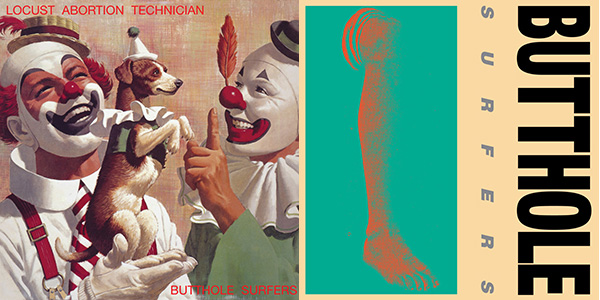
Music's lunatic fringe drifts further out every hour. As it should. In this century, with computers playing an ever-larger role, music continues to fragment and become infinitely more varied. This splintering is either the essence of what keeps it relevant as an art form or something profoundly disturbing, to be hated and feared.
In the mid-1980s, few bands were as loved, despised, and misunderstood as the Butthole Surfers. The impulse to tread in unexplored borderlands of noise, studio blathery, live excess, indulgent nonsensicalness, and the urge to reconnoiter unheard sonics were all taken to heart by a nutty duo of Texans whose dulcet appellation was originally one of their song titles.
Revinylization #61: Lone Justice Rides Again
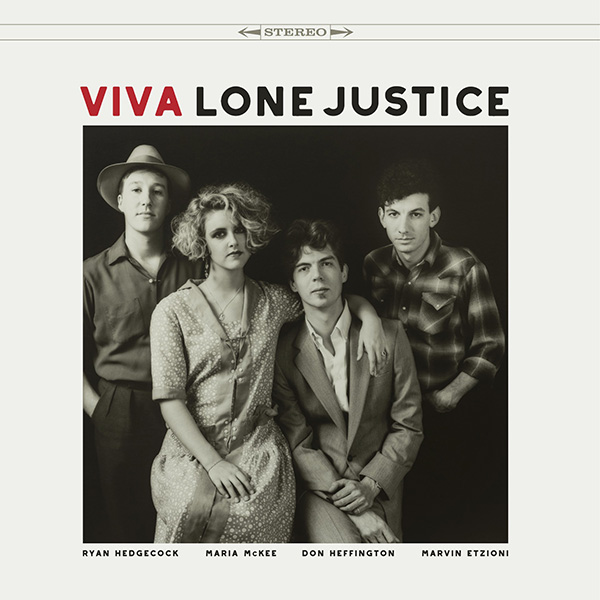
For musicians' sake, the terms "sure thing" or "a hit" should be permanently stricken from the music business lexicon. Like Beetlejuice, if you say it enough, bad things are sure to occur. But in the long annals of the music business crushing the dreams of artists who were a "sure thing" and singles or albums that were guaranteed to be "a hit," few have risen higher and fallen faster than Lone Justice. Rising stars on the Los Angeles music scene in the early 1980s, they melded punk-rock attitude and ethos with a love for classic country music. The New York Times called them "Impressive, ingenious, and forceful." After seeing them, both Linda Ronstadt and Dolly Parton genuinely praised their sassy young singer, Maria McKee.
Revinylization #62: Lou Donaldson
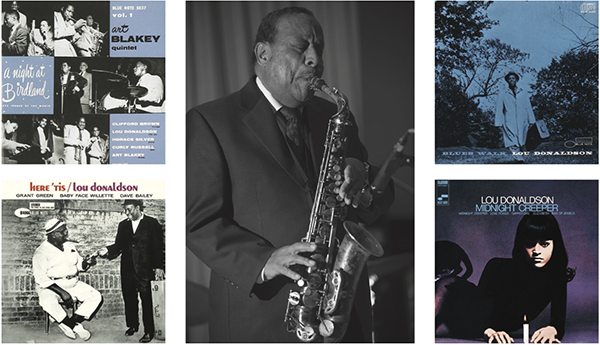
Years ago, at one of the milestone NYC anniversary parties for Blue Note Records, a piercing voice burst out above the clinking glasses and chattering tongues, loudly declaiming (quoted here with several profanities omitted), "Blue Note never gave me a dime!"
A lot of people turned to see who dared profane the label within earshot of beloved Blue Note president Bruce Lundvall and his staff, including the late Tom Evered. A gasp of recognition followed when it was discovered that those words had come from Lou Donaldson, one of the few original Blue Note bebop stars still out partying and playing music in the 21st century.
Revinylization #63: The Three-Horned Vinyl Rhino
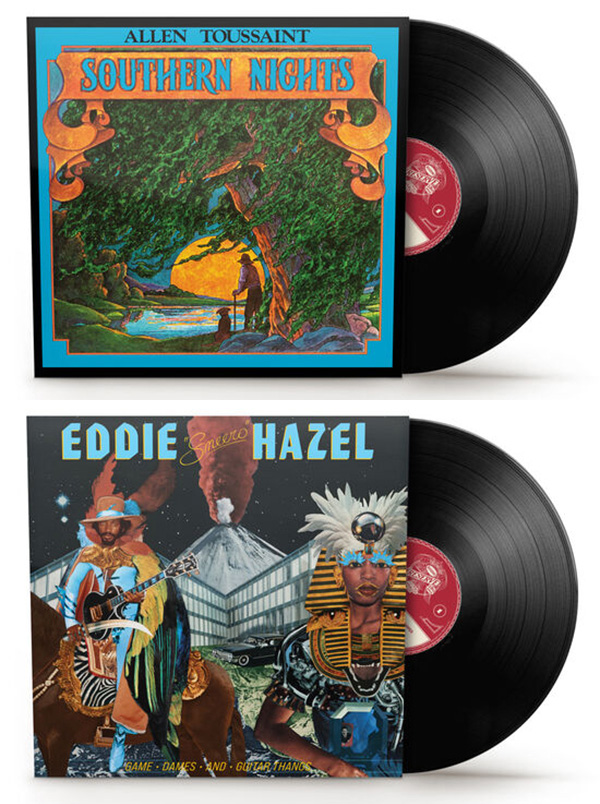
Rhino Records started in 1978 as an eclectic indie label specializing in compilations and offbeat reissues. Its emblem was a scowling rhinoceros-human hybrid with a record spinning on the tip of its horn. Time Warner acquired the label during the 1990s, and today Warner Music uses it as its chief nonclassical reissue vehicle.
As a back-catalog label, Rhino was active early in the vinyl revivaland it continues to be. Rhino quickly learned that a popular older album, when released as a high-quality physical artifactwhether it's an LP, a CD box, a multichannel Blu-ray audio disc, or a combination of formatsengages fans more than merely dropping a new remaster onto streaming. I spoke with Rhino's president, Mark Pinkus, about the company's three-tier vinyl strategy soon after the company announced the third of those tiers, a new, lower-priced all-analog vinyl line called Rhino Reserve.