Recording of the Month

Sort By: Post DateTitle Publish Date

Recording of December 1964: Music at the Court of King Henry VII


Trio Flauto Dolce: Music at the Court of King Henry VII

Jacobean Fantasias; Kleine Geistliche Konzerte (Schutz): Elizabethan Ayres; Sonata in e (Boismortier); Domine, Dominus Noster (Campra).

Martha Bixler (recorders), Eric Leber (recorders, harpsichord), Morris Newman (recorders, bassoon), Robert White (tenor).

Posthorn Recordings (footnote) TFD-1 (LP). Jerry Bruck, eng.


This is another disc that was submitted for review on the basis of our bitter complaints in the August 1964 issue about unmusical gimmickry in commercial recordings. Like the Phoenix disc reviewed elsewhere in this issue, this is a first release. It carries a technical note to the effect that it was made with "a minimum of technical fuss and electronic gadgetry," and like the Phoenix, it sounds that way.
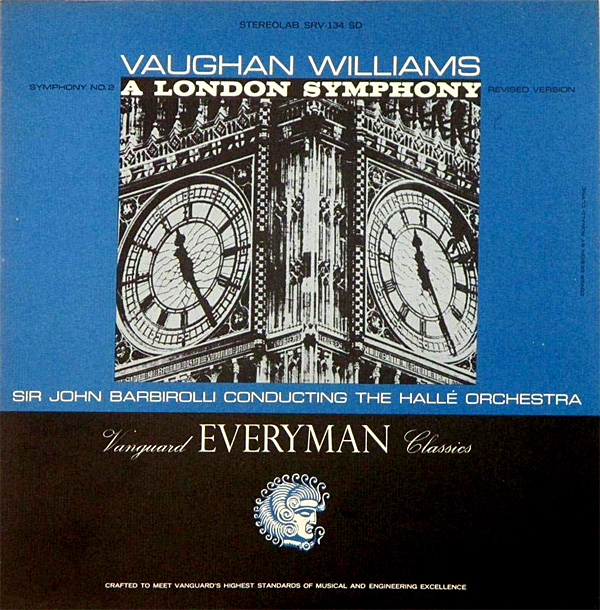

Recording of August 1964: Vaughan Williams: Symphony No.2

Vaughan Williams: Symphony No.2 (A London Symphony)

Hallé Orchestra, Sir John Barbirolli, conductor.

Vanguard Everyman, SRV-134-SD (1963 LP). Reissued in 1982 as PRT Collector GSGC 2035 (LP). Recorded by Pye (UK) in 1957.


This is undoubtedly the best London Symphony that's been committed to stereo to date, and I wouldn't be surprised if it held top place for years to come. I can find nothing to criticize about the performance, and the recording is awe-inspiring—rich, warm and natural, with some phenomenally low bass and very wide dynamic range, yet without the slightest audible trace of breakup during crescendos.

Recording of June 1964: Joan Baez In Concert, Part 2

Joan Baez In Concert, Part 2

Joan Baez, vocals, guitar

Vanguard VTC-1679 (tape), VSD-2123 (LP). Maynard Solomon, prod., Reice Hamel, eng. TT: 48:00.


Well, we finally got ourselves equipped to review 4-track open-reel tapes, via a slightly modified Ampex F-44. All the tapes we have auditioned had noticeably higher hiss than the average stereo disc, but this was not loud enough to be distracting except when the tapes were reproduced at very high levels. Even then, we found the smooth, even hiss to be less objectionable than the ticks and pops from some discs played at the same level.

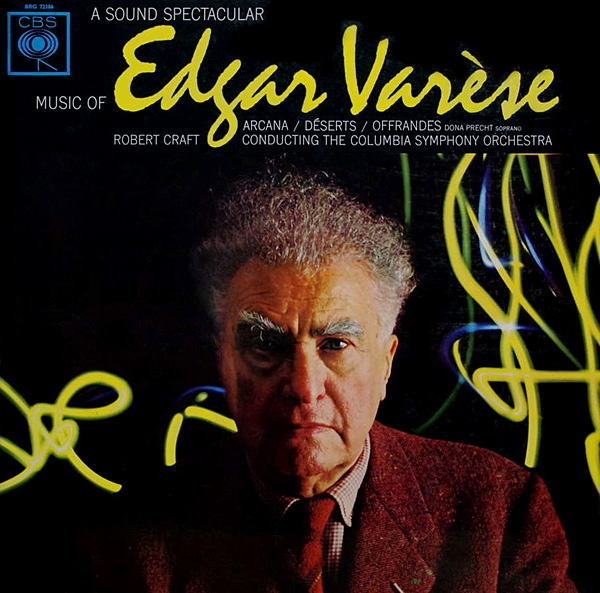
Recording of December 1963: Music of Edgar Varèse, Vol.2

Music of Edgar Varèse, Vol.2

Arcana, Déserts, Offrandes, Chanson De Là-Haut (Song From High)

Dona Precht, soprano, Columbia Symphony Orchestra, Robert Craft, conductor.

Columbia Masterworks MS-6362 (LP). John McClure, Thomas Frost, prods. TT: 24:45.


In electronic music, the sounds of musical instruments, natural noise-makers and electronic signal generators are recorded on tape, modified by running them at higher- or lower-than-normal speeds and manipulating their tonal content, and then combined in rhythmic and tonal patterns to create entirely new forms of music.

Recording of August 1963: Nielsen: Symphony No.5

Nielsen: Symphony No.5, Op.50

New York Philharmonic Orchestra, Leonard Bernstein, conductor

Columbia MS-6414 (LP). John McClure, prod. TT: 33:10


This is surely one of the most exciting works written in the twentieth century. and if there is going to be an upsurge of interest in the works of this great Danish composer as a result of this recording, then Mr. Bernstein and the New York Philharmonic will have rendered music lovers an invaluable service.

Recording of June 1963: Music for Strings

Music for Strings

Couperin: Concert Pieces for Cello and Orchestra; Mozart: Divertimento in D, K.136; Corelli: Concerto Grosso No.4, Op.6; Britten: A Simple Symphony

Solisti de Zagreb, Antonio Janigro, cello and director

RCA Victor LSC 2653 (2 LPs). Richard Mohr, prod., Lewis W. Layton, eng, TT: 47:56


From the standpoint of content and musicianship this is a superb collection of delightful music performed with the consummate authority and artistry for which Mr. Janigro and I Solisti de Zagreb are justly famous. The recording, too, while by no means perfect, is at least pre-Dynagroove, which as far as I'm concerned is now a compliment to any RCA Victor release.

Recording of March 1963: Mahler: Symphony No.1

Mahler: Symphony No.1 in D ("The Titan")

Columbia Symphony Orchestra, Bruno Walter, conductor

Columbia MS-6394 (LP). John McClure, prod. TT: 52:15


This is one of those rare combinations of a superb recording and a stunning performance. As far as I'm concerned, it is the best Mahler First that Bruno Walter committed to discs during his lifetime, including the last one that he made with the New York Philharmonic. And the fact that this recording is far superior to that accorded Walter when he conducted the New York Philharmonic does not detract one bit from my feeling about this new release.

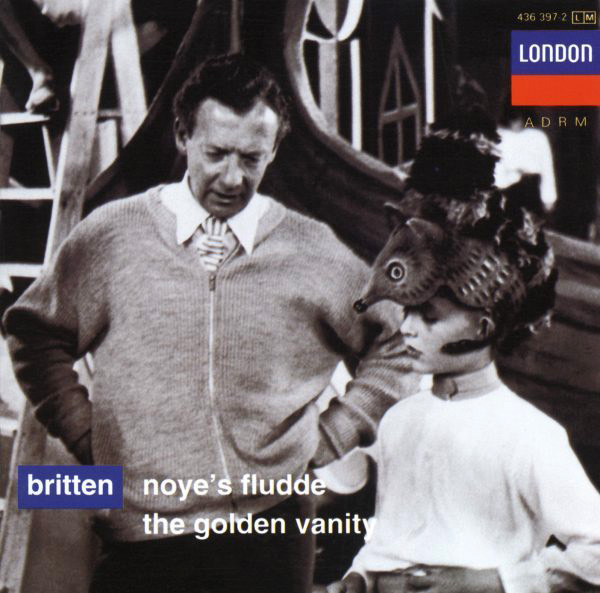
Recording of December 1962: Britten: Noye's Fludde

Britten: Noye's Fludde

Owen Brannigan, Sheila Rex, Trevor Anthony, Children's Chorus, and East Suffolk Children's Orchestra, Members of the English Chamber Orchestra, Norman Del Mar, conductor

London OS-25331 (LP). Colin Graham, prod. Recording date, 1961-07-03. Recording venue, Orford Church, Suffolk. TT: 48:00


This musical setting of the Chester miracle play about Noah, his ark, and the problems attendant thereof, if one of the most movingly beautiful recorded works I have ever heard. Its simplicity and sincerity are a stinging rebuke to those contemporary composers who have forgotten that music is basically an expression of emotion, without which its appeal can be only to the logic-oriented "mind" of a computing machine.

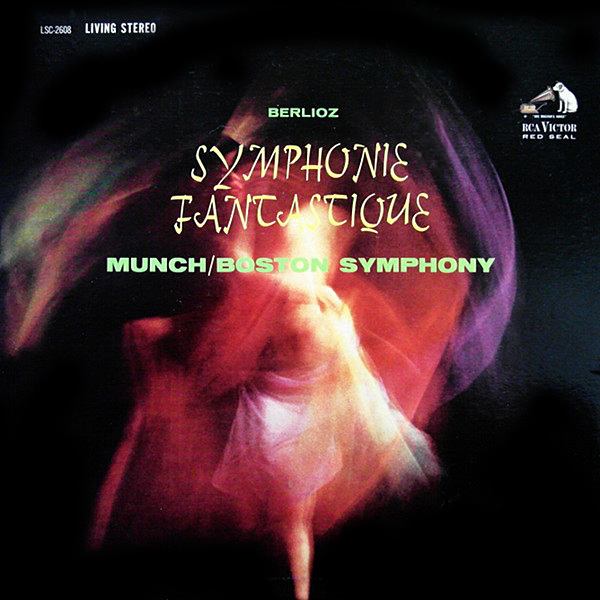
Recording of November 1962: Berlioz: Symphonie fantastique

Berlioz: Symphonie fantastique

Boston Symphony Orchestra, Charles Munch, conductor

RCA Victor LSC-2608 (LP). TT: 48:40


It is easy to forget that the hi-fi movements—the "March to the Scaffold" and the "Dream of a Witches' Sabbath"—comprise barely a third of the music in the Symphonie fantastique, yet when we listen to most of the available versions of this, we can understand why the first three movements are usually passed up by the record listener. Two are slow and brooding, one is a wispy sort of waltz, and all three require a certain combination of flowing gentleness and grotesquerie that few orchestras and fewer conductors can carry off. It is in these first three movements where most readings of Berlioz' best-known work fall flat. Either they are too sweetly pastoral or too episodic and choppy, or they degenerate into unreliered dullness.

Advertisement
Advertisement
Advertisement