Interviews

Sort By: Post DateTitle Publish Date

The Bad Plus—the Magnificent Threesome
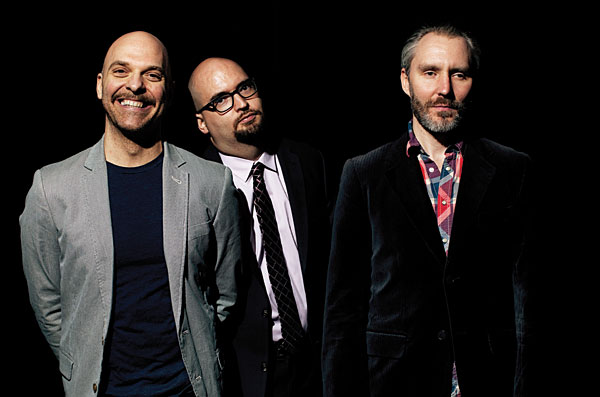
In a discussion about what their music is—and is not—Dave King, drummer for the Bad Plus, remembers opening a show for free-jazz patriarch Ornette Coleman at the New Jersey Performing Arts Center. After their set, the band joined the audience to watch Coleman.


"After the first couple tunes—and this was in a seated theater—I swear, half the audience had left. Fifty years into your career, and he's still making people want to check it out and then decide if they can take it. And that's every night, I bet.
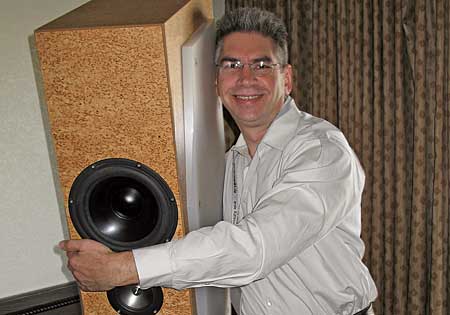
Arnie Nudell: From Here to Infinity


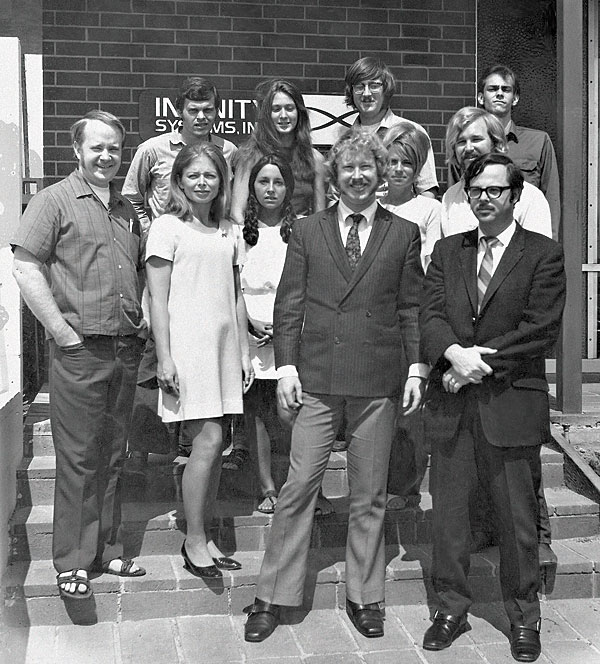
Imagine a speaker firm with an introductory product that pushes the outside of the performance envelope while tearing the pricing envelope to shreds. A reviewer in an audio journal that tilts toward the high end deems this speaker "appallingly expensive," notes he would have bought the test sample if he'd had the money, and confesses that being without it makes him feel "rather as though a member of the family has passed away." Now envision a speaker company at the peak of the industry sales curve, one so successful that a mainstream hi-fi magazine ranks it No.1 in market share for two separate years. Very different companies, right?

Loudon Wainwright III: a Biography in Song

Photo: Aiyana Elliott


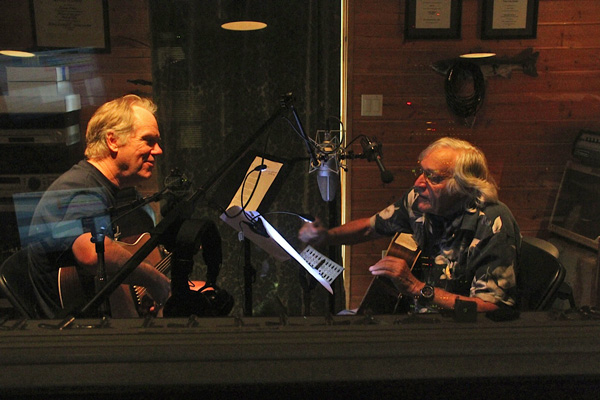
Even when Loudon Wainwright III (left in photo with Ramblin' Jack Elliot) was a young man he was writing autobiographical songs, and his old themes of family, sex, and death resonate more deeply on his new record, Older Than My Old Man Now. He usually performs solo, armed with just an acoustic guitar or a banjo, but most of his recordings present more heavily produced versions of LWIII's music. When I chatted with LWIII in late April I wanted to explore that dichotomy and how those transformations take place.

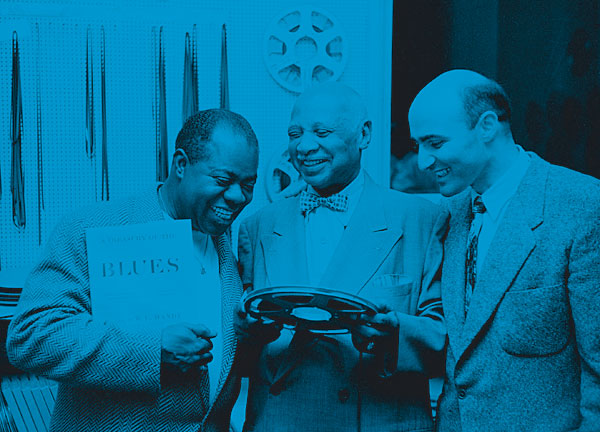
George Avakian: That Rhythm Man!

"So where did it all go wrong, George? When did the major-label record business begin slipping away?"


Before he can answer, I recall something George Avakian once told me over the phone. "Goddard Lieberson [former president of Columbia Records] said, 'I'm tired of sitting in A&R meetings with record guys. Get me some lawyers and accountants who don't want to argue about music.'"


"I don't remember saying that, but that's very interesting," Avakian says with a mischievous smile of recognition.

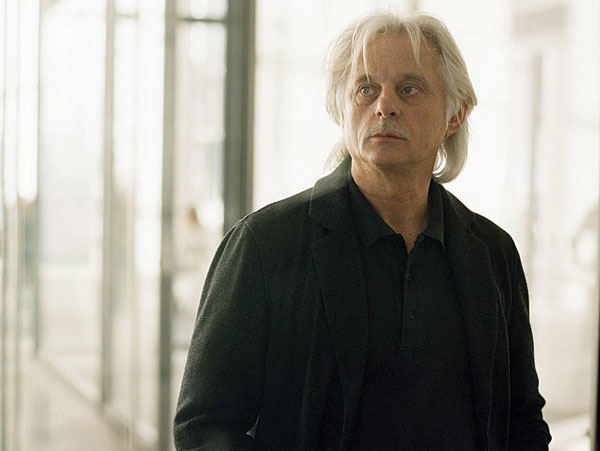
Manfred Eicher: A Magnificent Obsession

At a time when the heads of most record labels barely know how to play a record, let alone make one, Manfred Eicher—owner, founder, and inspiration of ECM Records, which celebrated its 40th anniversary in 2010—has been intimately involved in the making of nearly 1200 of them. How many, though, can he actually remember working on?


"When I listen back to them, I know the story of every record," he says without a smile or a moment's hesitation. "There is never an easy record. Every record needs a lot of input and concentration and dedication and passion to be made, that's clear. Create an atmosphere that is a productive search for music, and when this is the case, you have very memorable records."

John Crabbe: Firebrand

Editor's Note: John Crabbe was Editor of Hi-Fi News & Record Review when I joined that magazine as a lowly editorial assistant in September 1976. At the end of 2007, I had asked Steve Harris to interview John for Stereophile, as part of an ongoing project to create an oral history of high-end audio (footnote 1). Sadly, John passed away in December 2008—see "As We See It" and "Industry Update," in our March issue. We are publishing Steve's interview as a tribute to a man from whom I learned my craft as an audio magazine editor.—John Atkinson

Nelson Pass On The Patents Of Pass

If high-end audio were to carve its own Mt. Rushmore, whose faces would appear there—besides that of Stereophile founder J">http://www.stereophile.com/interviews/66">J. Gordon Holt, of course? It's likely that no two audiophiles would ever come up with identical lists of subjects, but I wouldn't be surprised if they could agree on at least one name: Nelson">http://www.stereophile.com/interviews/1191pass">Nelson Pass.


Richard Sequerra: Tuning In

Richard Sequerra was born in 1929 and raised in various parts of the US by his mother, who worked for the Department of State. By the time he was 20, he had launched a freelance career that has since spanned a wide range of technologies. During a stint at Marantz in the 1960s, he worked with Sidney Smith on that firm's famed Marantz 10B tuner, which was sold from 1964 through 1970. Subsequent products have included the Sequerra 1 tuner and the Metronome 7 loudspeaker, originally produced by Sequerra's firm Pyramid and now hand-assembled by its creator, who offers the most recent version via his websitehttp://www.sequerra.com">website;, for less than half what it cost through retail channels when Sam Tellig praised it in the July 2007 Stereophile. Sequerra's newest transducers—a self-amplified nearfield speaker and matching subwoofer designed for Internet music listening—remain in prototype form; he hopes to sell or license the designs rather than manufacture and market them himself.


Revel's Kevin Voecks

Determined to find out more about Revel's">http://www.stereophile.com/floorloudspeakers/608revel">Revel's Ultima Salon2, I tracked down designer Kevin">http://www.stereophile.com/interviews/390voecks">Kevin Voecks late on the second day of the 2008">http://blog.stereophile.com/ces2008">2008 Consumer Electronic Show. I persuaded him to step outside the demonstration suite of Harman International Industries, Revel's owner, high atop the Las Vegas Hilton. We spent an hour chatting about Voecks's design goals for Revel's new flagship. I asked Kevin what had led his team at Revel to develop a new Ultima Salon loudspeaker after 10 years?


Advertisement
Advertisement
Advertisement