Interviews

Sort By: Post DateTitle Publish Date

Klaus Heymann: A 20th-Anniversary Chat with the Founder of Naxos

When Hong Kong–based music lover and electronics-equipment distributor Klaus Heymann (footnote 1), now 70, first began organizing classical-music concerts as a way to boost sales, he had no idea he would end up founding the world's leading classical-music label. But after starting a record-label import business and meeting his future wife, leading violinist Takako Nishizaki, the German-born entrepreneur sought a way to promote her artistry. First he founded the HK label, which specialized in Chinese symphonic music (including Nishizaki's recording of Butterfly Lovers, the famous violin concerto by Chen Gang). Next he established Marco Polo, a label devoted to symphonic rarities.


Tim de Paravicini: King of Tubes

How many hi-fi professionals can say that they've designed at least one of every part of a complete recording system, from microphones to tape recorders to vinyl-disc-cutting electronics? Probably only Tim de Paravicini (footnote 1). Best known to audiophiles for his extraordinarily durable EAR valve amplifiers, Tim is also an electronics guru to the professional recording world. His global reputation today is based on more than four decades of making things better, building equipment that stands the test of time.


Craig Kallman of Atlantic Records: Listen Closely

Label heads—those at the very highest positions of power at music companies. To anyone who's spent time near the record business, they're a mythical breed. Like gnomes. Or dragons. Often, it's their vision that spells success or failure for the label they run. And what they say goes. Over the years, many a legendary creature has assumed the title: Goddard Lieberson, Clive Davis, Mo Ostin, to name just a few of those who have survived and prospered. The list of those who did not is at least twice as long.


Iván Fischer: The Maestro on Multichannel

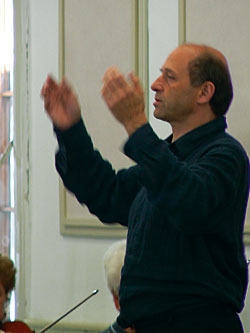
Iván Fischer, founder and conductor of the Budapest Festival Orchestra, has performed with many major orchestras and recorded for a number of major labels, most significantly with Philips, from 1995 to 2004. Fischer/BFO made the first multichannel orchestral recording for SACD, which Philips used as a demonstration disc for their first SACD players. I still treasure that disc—it demonstrates many of the advantages of the medium with a wide and varied program—but it has never been commercially released.


John Dawson: Inventing The Future—Properly

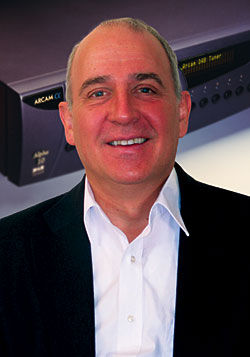
"This won't be a short job," says Arcam's president, John Dawson (footnote 1). He's talking about the challenge of engineering the next generation of Arcam home-theater products to embrace the new high-resolution video formats. It's possibly the biggest technical challenge English company Arcam has faced since, almost exactly 30 years ago, Dawson and his original business partner, Chris Evans, launched their first product—an unpretentious, 35W hi-fi amplifier called the A&R Cambridge A60.


Bob Stuart: The Prime Meridian

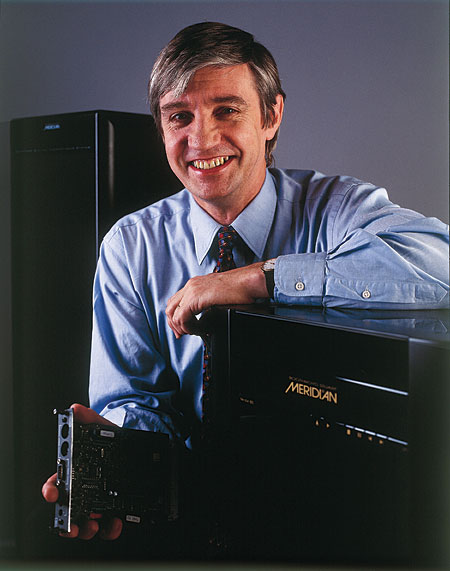
There are many colorful characters, many high-profile movers and shakers, in high-end audio, but there are only a few whose influence extends far beyond the promotion of their own brands. One of this exalted and mighty handful is Robert Stuart, chairman and technical director of the UK's Meridian Audio.


Willie Nile: Places He Has Never Been

Before I even turn on the recorder, Willie Nile is telling me his theory of how the granite under Manhattan Island conducts electricity, which accounts for the perceptible charge that many people feel makes New York City so special. It's also what draws artists like flies, none more passionate than singer-songwriter Nile, who's personally contributed a few volts during his years in NYC.


Audio Beginnings

My e-mailbox fills up with press releases announcing new products and new companies, and that always makes me wonder: Where does all this stuff come from?


I mean, I have lots of ideas—I feel like Butch Cassidy: "I have vision, and the rest of the world wears bifocals." But there's a huge gap between having a good idea and starting a company that successfully gets that idea out in front of the public. And, I suspect, there's an even greater gulf between getting a product out there and actually making a living at it.

Advertisement
Advertisement
Advertisement