As We See It

Sort By: Post DateTitle Publish Date

The Road to Analog-Sounding Digital: Are We There Yet?

To say that a digital source "sounds like analog" has always struck me as coming up short. The notion that one format sounds like another is not really sensible or even ideal. While I love listening to LPs, there are some physical attributes of vinyl that, ideally, you don't want to reproduce. You know what I'm talking about because, every chance they get, LP haters remind us about pops, ticks, skips, surface noise, inner-groove distortion, etc. So when we say that a digital source sounds like analog, what we're really saying is that it doesn't sound like digital.

Voices to Live For

Every music-loving audiophile has a unique story—a story of the first time he or she was grabbed, body and soul, by a first, usually low-budget listen to a 78, LP, CD, open-reel, cassette, or MP3—a story that continues today in that audiophile's quest for high-end bliss. For me, it was my desire to move closer to the voices of the singers I most loved.

50 Years of Stereophile!

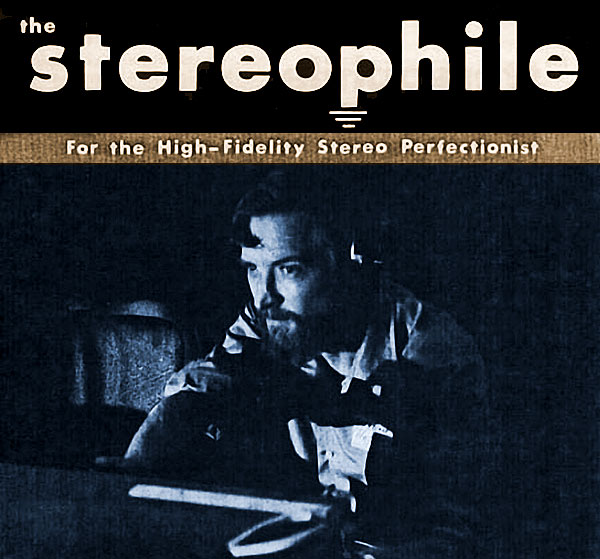
Fifty years ago this month, Vol.1 No.1, Issue No.1 of The Stereophile, published, edited, and mostly written by J. Gordon Holt out of Wallingford, Pennsylvania, hit the newsstands. Gordon had worked for two major audio magazines, High Fidelity and HiFi/Stereo Review (later renamed Stereo Review), and had been disgusted by those magazines' pandering to advertisers. Not only was The Stereophile going to tell it like it was, it was going to judge audio components by listening to them—a heretical idea in those days of meters and measurements. "Dammit," said Gordon, who died in 2009, "if nobody else will report what an audio component sounds like, I'll do it myself!"

Accuracy Is Not the Answer

Before 1982, when the Compact Disc arrived, I didn't love LPs. Analog was already very old tech, and while every trick in the book had been applied to turntables and LPs, they still wowed & fluttered at 33 1/3 revolutions per minute. Vinyl's deficiencies were legion: warped LPs were more common than truly flat ones; surface noise, clicks, and pops sang along with the tune; LPs rarely had perfectly centered spindle holes; inner-groove distortions popped up at inopportune moments; and each time an LP is played, its sound quality degrades, if only ever so slightly. The LP format? Imperfect sound forever.

Skin Deep

In the old days, when audio-show reports routinely appeared in the print edition of Stereophile, life was easier. I spent my show days visiting exhibitors and listening to new gear, but I decorated those days with record shopping, dining out, and staying up late to visit with friends in the industry. And because hard-copy deadlines always seemed to be at least a few days away, I would wait until I'd returned home before doing any actual writing.

Cholera in the time of love

I was recently reunited with an old friend from high school. My best friend from high school, in fact. Our families got together, everyone got along, and as the dust of conversation settled toward the rug of companionable silence, talk turned to work. And when the inevitable happened, and my old friend and his wife—classical-music lovers both—asked how much a person had to spend these days in order to get a good music system, I answered their question with a question—a question that, crazily enough, just popped into my head...

A Pure Vision

A few years ago, while on vacation in Puerto Rico, I found myself sitting at a nearly empty beach bar, discussing music with Cassie Ramone, singer and guitarist for one of my favorite bands, Brooklyn's Vivian Girls. (I was as surprised as anyone by the strangeness of this chance encounter, but that's another story.) When the conversation turned to the topic of so-called "lo-fi" bands, Cassie's tone became critical, almost bitter: "No one wants to make 'lo-fi' records," she said.

Dispatches from the Other Portland

Portland, Maine, my hometown for the better part of two decades, is a pretty hip place. We are not, for the most part, innovators in fashion, but we are early adopters of the more interesting latest styles.


For years now, what I take to be a Brooklyn style has been prevalent among the local twentysomething crowd. The hipper restaurants are full of pretty young women and bearded men in plaid shirts who, on the one hand, seem ready for the woodlot but who, on the other hand, seem too skinny to lift a decent-size chainsaw. Likely as not, they arrived on single-speed racing bikes converted for commuter use. Nifty machines.

Occupy Avery Fisher Hall

Stop me if you've heard this: On January 10, at Avery Fisher Hall in New York's Lincoln Center, a performance of Mahler's Symphony 9, led by conductor Alan Gilbert, was stopped in its tracks by the ringing of an iPhone.


It wasn't just any part of the Mahler Ninth: It happened during the exceedingly quiet closing measures of the final movement.


It wasn't just any symphony orchestra: It was the New York Philharmonic, which Gustav Mahler directed during the last two years of his life.

The 2012 Consumer Electronics Show: A Better Way?

Every time I stepped from the slow elevator onto the casino floor at Harrah's, where Stereophile's editors spent their sleepless nights, my hatred for Las Vegas was revitalized. It felt like some kind of bad joke: Oh god, I'm still here. I would turn right and see the same flashing lights, the same low ceilings, the same people—still sitting, still smoking, still hoping, still staring blank-faced into spinning screens of cherries, spades, and jokers—and I would wonder why.
Advertisement
Advertisement
Advertisement