As We See It

Sort By: Post DateTitle Publish Date

The Deflavorizing Machine
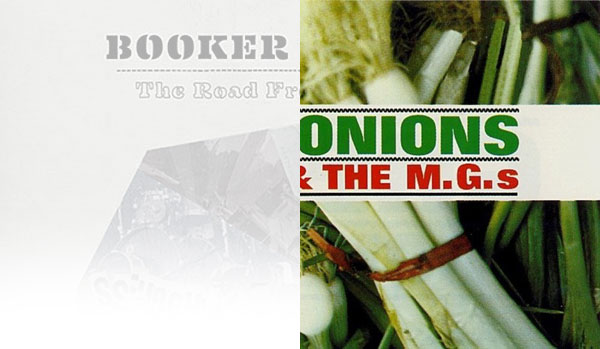
There's an old Woody Allen bit about his mother running the family's food through a "deflavorizing machine" a couple of times, just to make sure dinner was completely tasteless. Well, that's what a lot of contemporary music sounds like to me. Booker T. Jones's recent album The Road from Memphis has some great tunes, but the sound of the album pales in comparison with his seriously funky work with Booker T. & the MG's in the 1960s. It's not just that the new CD is maximally compressed and processed to a fare-thee-well—it's a totally lifeless recording. But this isn't just another analog vs digital diatribe. The problems have little to do with the recording format; it's the way recordings are now made. Too many are assembled out of bits and pieces of sound to create technically perfect, Auto-Tuned, Pro Tooled music. It's not that great music can't be made that way, but it's sure as hell less likely to get my mojo workin'.

Panacea or Snake Oil?

You know about them: audio products or tweaks that fall outside the standard definition of audio component. They're not source components like CD players, not amplifiers or preamplifiers, not loudspeakers, not power-line conditioners or cables—and, if aimed at modifying room acoustics, they're not the standard devices that absorb or disperse sound. Let's call them Unorthodox Audio Products (UAPs). They promise a kind of audio panacea: something that fixes whatever's wrong with the sound of your system.

Despite What You've Heard, Jazz Lives

On this page in the May 2011 issue of Stereophile, Steve Guttenberg became the latest in a long line of prophets of doom who periodically announce that jazz is deceased. Guttenberg argued that "Digital audio mortally wounded recorded music's creative mojo in 1982" and was "stifling creativity in rock and jazz."


I bring glad tidings to Stereophile readers. When it comes to jazz, Guttenberg is dead wrong. The jazz art form today is rich, diverse, deep, and international.

Your Music vs My Music: This Time, It's Personal!

My "As We See It" in the July 2011 issue seems to have touched a nerve. At the AXPONA NYC audio show last June, more than one person stopped me in a corridor to take issue with what they thought I'd written.


That column certainly brought the Beethoven worshippers out of the woodwork. Look, I revere Beethoven, and I stand by what I wrote in the July issue: There can be little doubt, in terms of his impact on the course that Western music would follow, that Beethoven was the most important composer. But "most important" in terms of music history is not the same thing as the composer whose works most deeply touch my heart. For that, Beethoven is just not in my Top Five.

Are You Goin' to (an) Audio Fair?

When I was a young music lover, I'd often listen to Simon and Garfunkel's Parsley, Sage, Rosemary and Thyme LP, specifically the song "Scarborough Fair/Canticle."


Are you goin' to Scarborough Fair?

Parsley, sage, rosemary and thyme.

Remember me to one who lives there,

She once was a true love of mine.


That memory came back during the e-mail exchanges I had with John Atkinson and Stephen Mejias about the positives and negatives of the proliferation of regional audio shows. (JA's reflections on these shows were the subject of last month's "As We See It.")

High-End Audio & the Invisible Hand

A recent e-mail from a reader asked why we list the recordings and systems used by Stereophile writers in their reviews. I responded that we do so in order that readers can place our value judgments in context, and predict how those products might sound with different ancillaries and recordings when they audition the products reviewed at their local high-end audio retailer.

I Am an Audiophile

I was fortunate enough to be raised in an environment where music of many kinds was played often. I lived with my mother in small apartments in Washington, DC, in the 1960s and '70, and most of the time, music was playing. Chopin, Wagner, Beethoven, Coltrane, Miles, Sonny Rollins, Streisand, Baez, Dylan, Miriam Makeba—even the Doors, Hendrix, and Janis Joplin.

"My music is better than your music!"

When people feel passionately about something—whether books, golf, auto racing, dog breeding, or music—there is an understandable impulse to create rankings, hierarchies, and lists. Such lists can be helpful. I am quite likely to read someone's list of The 100 Most Important Jazz Recordings, or of The 100 Greatest Novels in the English Language. Engaging with such rankings and lists has several benefits. First, we all like to see our prejudices validated. When I discover that someone else is also a fan of Ralph Vaughan Williams's An Oxford Elegy, or of Herbert Howells's Master Tallis's Testament, I feel a warm glow of kinship, and feel that my respect for that person reflects well on me. (We are all human, after all.)

Reflections on the Audiophile Image

"Blondy watched this proud, drum-tight personality fidget past him on the street and began projecting; he couldn't help it: an unfinished degree in journalism, concerned married sisters in New Jersey or Connecticut (but probably New Jersey), weights but no cardio, aggrieved blind dates, Cigar Aficionado and Stereophile, takeout menus, acres of porn."
—from "Lucky Alan," by Jonathan Lethem; The New Yorker, March 19, 2007


When did being interested in hi-fi lose its cool? When did it become antisocial? One minute hi-fi was hanging with Hef center-stage in a groovy bachelor pad, and the next thing you know it's a prop used to describe someone who "walked in a fiery aura of loneliness," as Lethem described it. I ask because I'm genuinely concerned. Some of my best friends are audiophiles. But it seems that if you want to be anything related to music, the last thing you want to be is an audiophile.

Advertisement
Advertisement
Advertisement