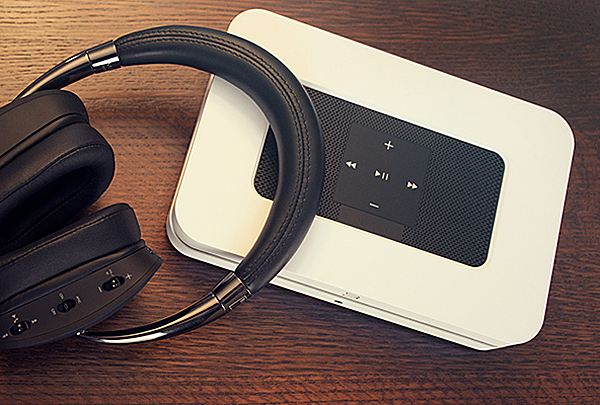
I bought my first streaming DAC in 2016, even though I wasn't yet convinced about streaming. Streaming audio was a great idea, but how would I get the music data from wherever it lives to my DAC's Ethernet port?
This gig has many perksbut the best one without a doubt is the cool, interesting people I get to "meet."
I should explain the quotation marks. Since starting this job, in April 2019, I haven't gotten out much. Even before the pandemic, I was too busy to do much of anything except edit the magazine. So, many of the interesting people I've "met," I've still never seen in person.
I was planning one of my occasional long drives, for music and photography. I had scheduled two nights in Nashville, so I asked around: Where should I go for live music after a dinner of Hattie B's hot chicken? Art Dudley recommended the Station Inn, perhaps the world's best venue for live bluegrass music. You can read about my experience there in the November 2019Stereophile. The Station Inn has now added a streaming service. For $8.99/month or $99/year, you get between 10 and 20 live-streamed performances every month plus access to the archives. If you're a bluegrass fan or merely bluegrass-curious, I encourage you to check it out. It's not as good as being there, but it's still good.
In my As We See It column in the January 2021 Stereophile, I wrote about stories we tell ourselves to make our lives and music betterpersonal stories like the one about my relationship to my Thorens TD-124 turntable, or about hanging out with your dad (or mom) listening to records. Also hi-fi stories like the ones about the types of audio components we preferanalog, digital, tubed, solid stateand how they sound. "Stories deepen our relationships," I wrote, "including our relationships with our audio systems and the music they make."
Stereophile has discussed the pandemic occasionally because of its relevance to our industry and our listening lives. But for the most part, I've steered the magazine away from politics and current events, and I will continue to do so. In this essay, though, I will engage, glancingly, not with politics or current events but with an idea that's drawn from them. I'm doing it to make a point about audio.
In my early years of writing about audio (footnote 1), I was knownto the extent that I was known at allas something of an objectivist. I was, after all, working as an editor at a leading science journal at the time, just a few years out from a brief career as an actual scientist, still in recovery from the physics PhD I'd earned a decade or so before.
I've written before in this space that to me the most wondrous aspect of our avocation (apart from the music) is the way it exists at the intersection of logic and emotion, of science and art. The equipment we use is made by engineers applying scientific principles, yet its goal is to deliver sensual pleasure. Both viewpoints are valid.
Issue 54 of The Absolute Sound, cover-dated July/August 1988, had arrived in my mailbox. I had been warned that this issue contained a report from Stereophile's third hi-fi show, which had been held in Santa Monica the previous April. Although it wasn't listed in the issue's table of contents, I found the show report on page 186, written by Michael Fremer, who was listed on the magazine's masthead as "Senior Editor: Pop Mix."
Listening rooms are real, imperfect places. Their character arises from their defects. I like real, imperfect things (footnote 1).
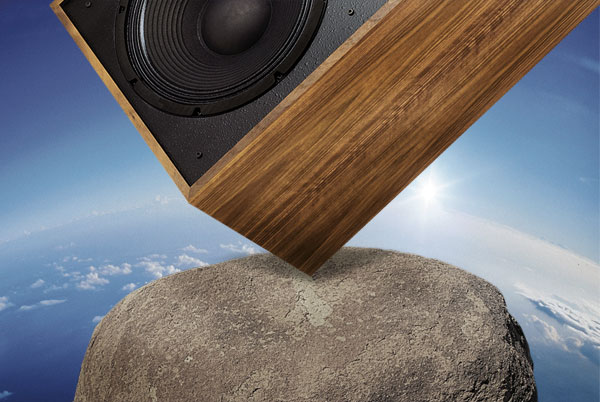
Not that there's such a thing as a perfect listening room. Every domestic listening room shares the same basic problem: Its most fundamental natureits size and shape, the amount of space it carves outresults in resonances that can profoundly alter the sound of reproduced music, especially in the bass.
After completing a PhD in electrical engineering at Imperial College London, Floyd E. Toole joined Canada's National Research Council (NRC), where he would stay for more than 26 years doing audio-related research. He continued his research at Harman International after leaving the NRC in 1991. When Toole left Harman in 2007 (footnote 1), Harman kept the work up under NRC alum Sean Olivewhich fact surely has much to do with the excellence of their current loudspeaker lineup.