Digital Processor Reviews

Sort By: Post DateTitle Publish Date

AudioQuest DragonFly USB D/A converter

"This product is an industry disrupter."


Thus spoke AudioQuest's Steve Silberman, VP of development, of their brand-new USB D/A converter, the DragonFly. "There are a lot of very good DACs out there," he continued. "There are even a lot of very good affordable DACs. But the problem is, people outside of audio don't want them: They don't want old-style components like that.
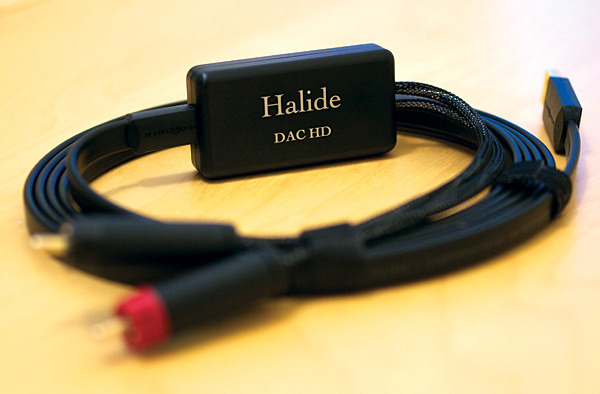
Halide Design DAC HD D/A converter

When it comes to getting audio from a PC via its USB port, the buzzword du jour is asynchronous. This cryptic term refers to which device has control over the timing of the audio data being streamed from the computer: the computer itself, or the device receiving the data. It might seem logical to have the computer control the timing, but this is not so. When digital audio data are converted to analog by a D/A converter, control over exactly when each dataword is converted is critical for the best quality of sound. Any uncertainty in that timing manifests itself as analog distortion, aka jitter.

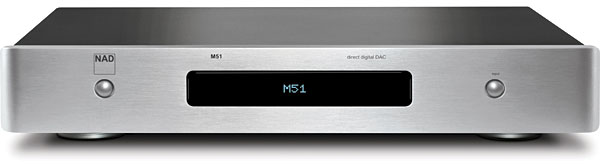
NAD M51 Direct Digital D/A converter

Who wants only a digital-to-analog converter when you can have a DAC with benefits? How about if those benefits also come with some high-resolution attitude?


That's what I pondered while setting up the NAD M51 ($2000). Sure, it's a basic DAC, but it also has extras—like HDMI inputs, remote-controlled volume, a polarity switch, and one of my favorite features on any DAC: a display that tells you which sampling rate the thing is locked to.

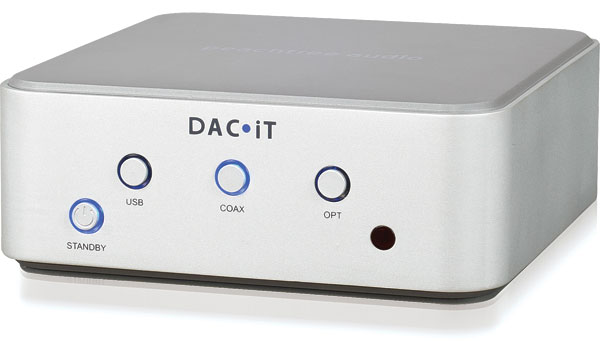
Peachtree DAC•iT D/A converter


It's common knowledge that manufacturers tune the sound of each DAC model. There are the facts of product design and marketing: inputs, outputs, case materials, price points. After that, what's left are the trade-offs of different circuit designs and filter options, which are chosen with care—each has a subtle yet telling effect on a DAC's sound. Most designers try to go from bits to analog with minimal deviation from perfect. But when you look at the measurements and listen closely, you realize that perfect is elusive. One has to make choices.

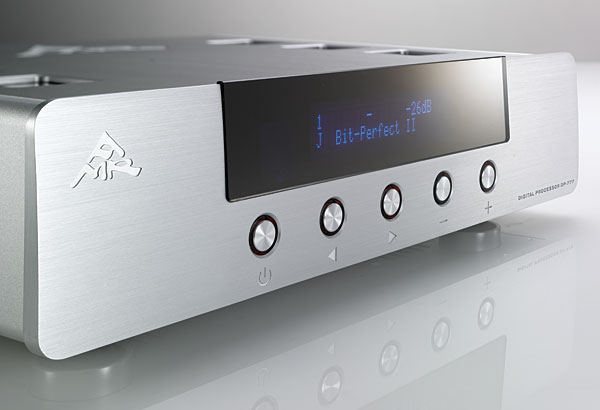
Abbingdon Music Research DP-777 D/A processor

Computer audio is more than just a pleasant distraction. For the jaded reviewer, USB digital converters and the like are an escape from that humdrum, if only because they bring with them so many variables: myriad combinations of different platforms, storage devices, operating systems, device drivers, media players, codecs, word lengths, sampling rates, connection protocols, and more. Challenging though they may be, computer-audio products are a tonic for reviewers inclined toward apathy.

Bricasti Design M1 D/A converter

Back in the late 1980s, it seemed a good idea: Separate a CD player's transport section from its D/A circuitry so that each could be optimally designed, and, as D/A technology improved, the sound of your CD player could be upgraded by replacing the outboard D/A processor. The catch was that the transport and D/A chassis needed to be connected with a serial data link: S/PDIF in optical or electrical flavors, or balanced AES/EBU. To minimize the number of cables required, the format of that link embedded the clock data within the audio data, which rendered the link sensitive to interface timing uncertainty, or jitter. (See "Bits Is Bits?," by Malcolm Hawksford and Chris Dunn.)

Weiss DAC202 FireWire D/A converter

One of the better digital front-ends I've ever heard was demonstrated for me a number of years ago at the house of an audiophile friend: a Weiss Engineering combo of Jason CD transport and Medea digital-to-analog converter. That front-end remains in my mind as one of the only digital systems I've heard that could compete with the very best that vinyl has to offer while still doing what digital does best. In other words, there were warmth and musicality, staggering dynamics, and real silent backgrounds. When, recently, I saw that the Swiss company had come out with a DAC featuring onboard volume control, a headphone amp, and a FireWire input, I knew I had to give it a listen.

Musical Fidelity V-DAC II D/A processor

There's so much uncertainty and confusion surrounding computer audio and high-resolution downloads. Which hi-rez formats will win out? How do you store the downloads you've bought? (Easy. Don't buy them.) How do you access them? Will digital rights management (DRM) cramp your style, or data-storage fees for cloud computing crumple your wallet?

CEntrance DACmini CX D/A converter

Sure, Stereophile gets letters to the editor. We also get some colorful responses for our "Manufacturers' Comments" section. (Vince Bruzzese and Roy Hall are literary standouts among their component-making peers.) And, as one of the magazine's Contributing Editors (Audio), I get lots of personal mail from readers seeking my advice. I thought I might share some of these letters with you, and my responses.
Advertisement
Advertisement
Advertisement