Digital Processor Reviews

Sort By: Post DateTitle Publish Date

Empirical Audio Off-Ramp 4 USB format converter
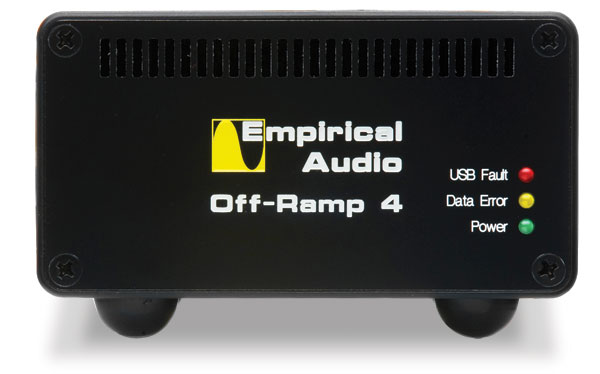
If an audiophile visiting an audio show in 1991 were to have been transported two decades into the future, at first he would not be aware of any difference: A two-channel system would be playing in a hotel room. But on closer inspection, he would notice that the CD player, the ubiquitous source 20 years ago, would be conspicuous by its absence. Yes, there might be a turntable—"Good to see that people are playing LPs in the future," he would think—but why is there a PC in the room?

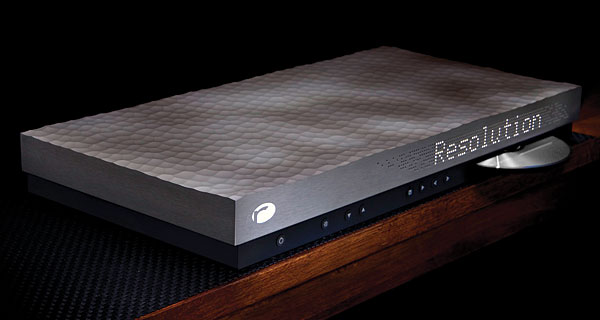
Resolution Audio Cantata Music Center

The dual subwoofers were bumping and our pant legs were flapping. Only moments before, we'd been treated to a polite viola da gamba. Not now. Resolution Audio's designer, Jeff Kalt, had brought only two discs with him to ensure that his company's Cantata Music Center was functioning properly in my system: Jordi Savall and Hespérion XXI's Altre Follie, 1500–1750 (CD, Alia Vox 9844), and Tool's 10,000 Days (CD, Tool Dissectional/Volcano 81991). After changing a few things around with the chamber music, we'd advanced to the hard rock of Tool.

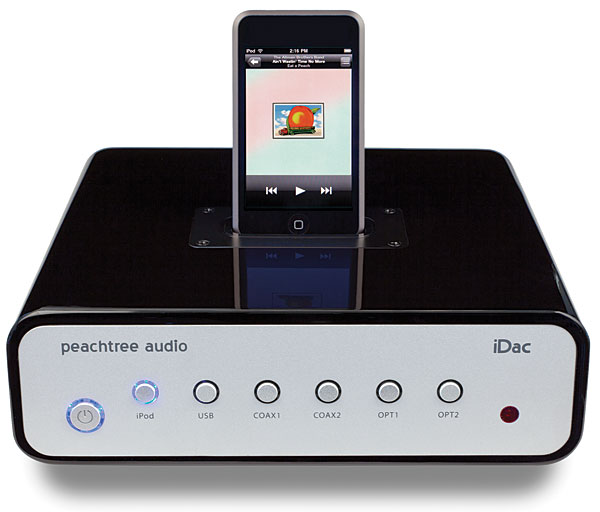
Peachtree iDac D/A converter

Oh boy, another new DAC review. Some folks think DACs, once you get past the features, all sound pretty much the same. I mean, it's just digital. Well, they're right. Pretty much. Just as two new cars of a particular make, model, color, and options package both look the same, sitting there on the lot.


But if you discover a ding in the door of one of them, where most folks still see only a new car, you now see the ding. It might have been there all along, undetected the first few times you walked around the car—maybe your buddy even had to point it out to you. It's insignificant in the scheme of all that a new car is, but once you've seen it, you always see it. Now you can easily tell the two cars apart, and we both know which one you'll drive home.

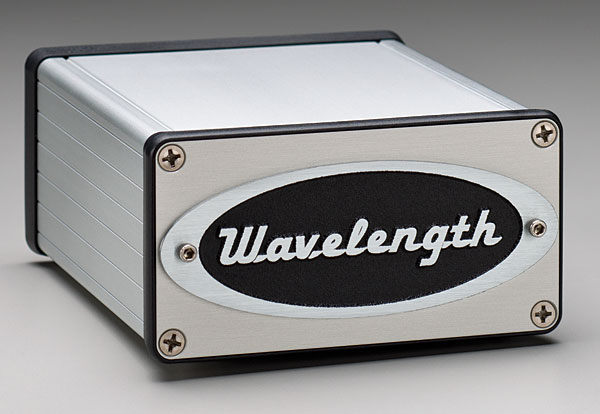
Wavelength Audio Proton USB D/A converter

I don't remember where I was when the Berlin Wall came down, and I already don't remember what I was doing when Liz Taylor died. (I suppose I was busy not thinking about Liz Taylor.) But I do remember when USB-based computer audio became a serious medium: That was when Gordon Rankin, of Wavelength Audio, introduced asynchronous data streaming, with his proprietary Streamlength software. After that, things picked up speed.

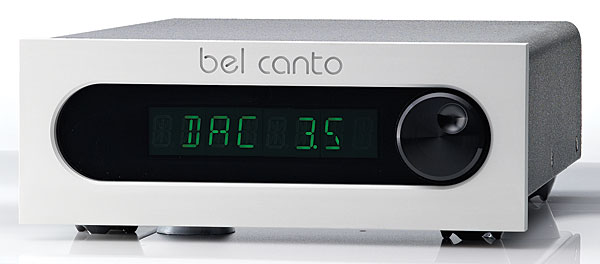
Bel Canto e.One DAC3.5VB D/A converter

Minnesota pride is a funny thing. As Garrison Keillor points out weekly on A Prairie Home Companion, to be a Minnesotan, the first and crucial step to be taken is that of self-effacement. It is unclear to me whether this is the cause or symptom of Minnesotans ability to endure brutal winters, excel at the creation and consumption of hot dish (which the rest of the God-fearing world knows as casseroles), or their miraculous lineage from generations of Norwegian bachelor farmers. Whatever it is, Minnesotans tend to quietly get their jobs done with little more fanfare than a cup of coffee and a slice of rhubarb pie.

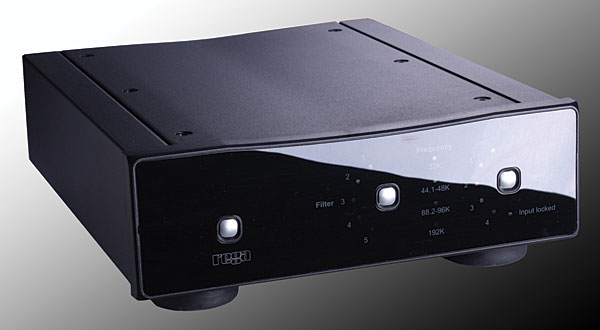
Rega DAC D/A processor

"We like to make things," Roy Gandy, Rega's founder and owner, once told me. "It's what we do." Or maybe it was Rega's chairman and chief engineering honcho, Terry Bateman. Rega products are designed and manufactured in the south of England. So far as I know, no one at the Rega facility, on the Temple Farm Industrial Estate, has committed suicide; the same cannot be said of workers at the factory in China where iPods are made. Al Gore is on the board of Apple. Al, what do you think?

Musical Fidelity M1 DAC

The M1 DAC is by Musical Fidelity. At $699, it's a stunning bargain. Comparing it to $995 for the Digilog in 1989. Meanwhile, the M1 is far more versatile, way better built, and, if memory serves me right, sounds vastly better.


It appears that the way to sell a DAC in 2011 is to almost give it away, in real-dollar terms. Some people pay far more than this for a set of speaker cables, a pair of interconnects, even a power cord. The M1 DAC is a piece of kit that can transform your system. I kid you not.

Esoteric D-07 D/A processor

In November 2009, I took part in an intriguing comparison between live and recorded sound. I first recorded a live piano recital in 24-bit/96kHz digital, then allowed the audience to immediately hear the recording in the same room. (See my February 2010 thoughts on the comparison here.) For playback, I used two of the mono Esoteric D-01VU D/A converters locked to the ultra-high-precision Esoteric G-0Rb "atomic" master clock. I was very impressed by the sound of this cost-no-object digital system, so when I visited the Japanese company's room at the 2010 Consumer Electronics Show and saw their new, relatively affordable D-07 D/A processor ($4800), I asked for a review sample.

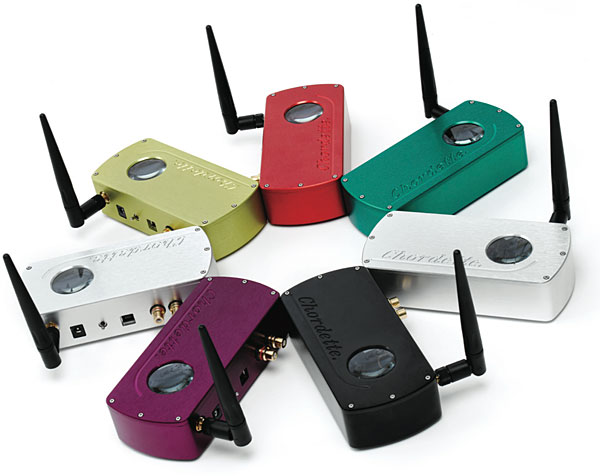
Chord Chordette Gem D/A processor

There's home cooking on one side of the hedge and fast food on the other, and the world moves farther from the former and nearer to the latter with each passing day. So it goes in domestic audio, where virtually every new milestone of the past quarter-century has pointed far more toward convenience than toward quality.


Depressed? Don't be. Those of us in the perfectionist community have a history of dealing with such things, howsoever slowly and inefficiently. (footnote 1). We're getting better at it, too, year by year. An example: Chord Electronics, of sunny southern England, has now brought to market their Chordette Gem D/A converter ($799) which they offer as an affordable means of getting perfectionist-quality sound from computer-music files.

dCS Debussy D/A processor

Don't have $80,000 to drop on dCS's four-component Scarlatti SACD stack that I reviewed in August 2009, or $17,999 for their Puccini SACD/CD player that John Atkinson raved about in December 2009? Even if you do, the new Debussy D/A processor ($10,999) might be a better fit for your 21st-century audio system. Sure, you don't get an SACD transport—or any kind of disc play, for that matter—but the odds today are that you already have a player you like that's got an S/PDIF output that can feed the Debussy.
Advertisement
Advertisement
Advertisement