Digital Processor Reviews

Sort By: Post DateTitle Publish Date

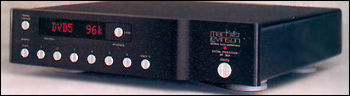
Mark Levinson No.30.6 Reference D/A processor

The Mark Levinson No.30 has enjoyed a continuing residence in Class A of Stereophile's "Recommended Components" listing since it was reviewed in our February 1992 issue (Vol.15 No.2). Madrigal includes the No.30 in its "Reference" series, by which they mean that the unit will not become obsolete. Thus, when new technology became available, the No.30.5 update was introduced, consisting of a single digital-receiver printed circuit board to replace the original's three boards, and a new digital-filtering board. This revision was favorably reviewed by Stereophile in October 1994 (Vol.17 No.10).


Musical Fidelity X-24K D/A processor

The standalone digital/analog converter emerged as a product category in 1987 with the appearance of the Arcam Black Box and the Marantz CDA-94, closely followed by the PS Audio Link. The idea was that putting the sensitive D/A-conversion and analog stages in a separate enclosure with its own power supply would maximize the sound quality when compared with packing these circuits in the same box as the transport. However, it turned out that the routing of the digital data between transport and processor in the form of an S/PDIF- or AES/EBU-encoded bitstream could introduce word-clock jitterwhich undid much of the sonic advantages. (See "Bits is Bits" by Malcolm Hawksford and Chris Dunn, Stereophile, March 1996.)


MSB Technology Link D/A converter

Recently, we've seen the digital "horsepower" race accelerate with the arrival of digital sources and devices with 24-bit and 96kHz sampling capability. Much of this has been spurred by the 24/96 labels emblazoned on the newer DVD players—and, within the purer confines of the audio community, by high-end DACs with this same ability. Indeed, it's possible that the dCS Elgar DAC, near and dear to John Atkinson's heart and a perennial Class A selection in Stereophile's "Recommended Components," performs so well with standard 16-bit/44.1kHz sources because its wider digital bandwidth permits greater linearity within the more restricted range of regular CDs.


Entech Number Cruncher 203.2 & 205.2 D/A converters

"They're cuuuute!" Not a very professional reaction, but what can I say? When the Monster Cable folks pulled out their new Entech Number Crunchers during a recent visit to Santa Fe, I couldn't help myself. I was edging John Atkinson and Wes Phillips out of the way, using my long arms to reach over...gotta get one! There would be time later for the critical evaluation and cool, detached objectivity—first, I had to get one. The Entechs are the Beanie Babies of the audio world


Camelot Technology Dragon Pro Jitter Reducer

666camdragon.jpgThe Dragon Pro is, I believe, the most eagerly awaited of the Camelot products. Since the disappearance of Audio Alchemy's DTI•Pro 32, no comparable anti-jitter and resolution-enhancement product has come along to replace it. (Yes, there are simpler anti-jitter boxes, and there is the Genesis Digital Lens, but these are not truly comparable in approach.) Well, the Dragon is everything that the DTI•Pro 32 was, and more!


The Dragon Pro anti-jitter box offers both jitter reduction and resolution enhancement, along with I2S in/out. Considering the number of Web newsgroup ads from folks wanting to buy AA DTI•Pro 32s, this baby has a waiting market.

Camelot Technology Uther v2.0 D/A processor

666uher2c_2.jpgThe apparent demise of Audio Alchemy left a niche in the marketplace for a supplier of innovative, high-value digital components to provide the less-than-wealthy audiophile with state-of-the-art technology. Although Camelot Technology existed before Audio Alchemy went away, they have quickly taken over this niche with some interesting components. And I understand that some of the former AA technical personnel consulted for Camelot in the development of these products. (A recent press release indicates that Genesis Technology also played a major role in their design.)
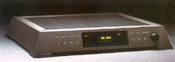
dCS Elgar D/A processor

Things are changing rapidly in the world of professional digital audio. After a decade of stability, with slow but steady improvement in the quality of 16-bit, 44.1kHz audio, the cry among audio engineers is now "24/96!"—meaning 24-bit data sampled at 96kHz. Not coincidentally, DVD offers audiophiles a medium with the potential for playing back music encoded at this new mastering standard.


Advertisement
Advertisement
Advertisement