Kiseki Blue Goldspot Phono Cartridge
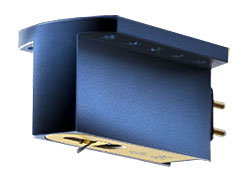 Koetsu. Kiseki. Keebler. Products from all of these firms are shrouded in at least a bit of mystery. Do I believe that Koetsu cartridges are hand-built by an octogenarian samurai swordsmith, or that Kisekis are imported from the planet Vulcan, or that Keebler's cookies are baked by elves? Not really. But it does help to liven up the domestic audio scene.
"Look, sonsee what Scottie just beamed down."
"Gee, Dad, it's big and blue with a gold spot on the front, and it kind of looks like a cartridge."
"Nice guess, son. No ordinary cartridge, this one. Let me tell you about the Vulcan analog freak in Hong Kong..."

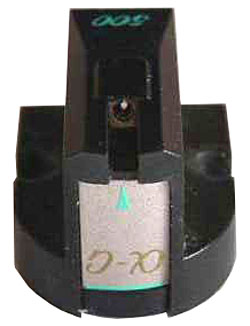
 While the AT-OC9 bears the Audio-Technica logo, you won't find a sample of this moving-coil cartridge at your friendly Audio-Technica dealership. The US distributor of Audio-Technica products has apparently decided that their market does not include high-end cartridges. A quick perusal of the latest Audio directory issue (October 1988) lists the most expensive AT cartridge at $295, with no moving-coils in sight. When I first heard of the AT-OC9, the only reasonably accessible source, short of Japan, was Audio-Technica in the UK. A quick phone call and follow-up letter resulted in a review sample. Since that time, Music Hall in the US importers of the Epos loudspeakers, among other items) has begun importing the AT-OC9 (along with the less-expensive AT-F5). Mail-order company Lyle Cartridges also stock it, I believe.
 The Genesis 500 ($650) is the baby brother of Monster Cable's top-of-the-line Genesis 1000 cartridge. It is almost identical in physical appearance, differing only in its use of green body trim (the 1000 sports red pinstripes). All of the functional differences appear to be in the stylus and cantilever. The cantilever of the 500 is a hollow sapphire rod tightly attached to an inner aluminum tube (the 1000 has a diamond-coated boron tube cantilever). Its stylus is a 6µm x 35µm line-contact (3µm x 60µm for the 1000). Monster claims a stylus life in excess of 600 hours for the Genesis 500, more than 1000 hours for its higher-priced sibling.