Phono Cartridge Reviews

Sort By: Post DateTitle Publish Date

Analog Corner #249: LKV Research Veros One phono preamp, Triangle Art Apollo MC cartridge

Designer Bill Hutchins, of LKV Research, builds the 2-SB moving-magnet/moving-coil phono preamplifier in North Conway, in the White Mountains of New Hampshire; he uses as many US-sourced parts as possible, and sells his products factory direct. I reviewed the 2-SB in March 2014, on AnalogPlanet.com: the 2-SB's sound was exceptionally fine—especially if you like refined, solid-state quiet and detail, and especially considering its then-price of $2500. Since that review's publication, the 2-SB has been upgraded with a version of the third gain stage from LKV's JFET-based Veros One phono preamp ($6500; see below), and its price has risen to a still-reasonable $3000.


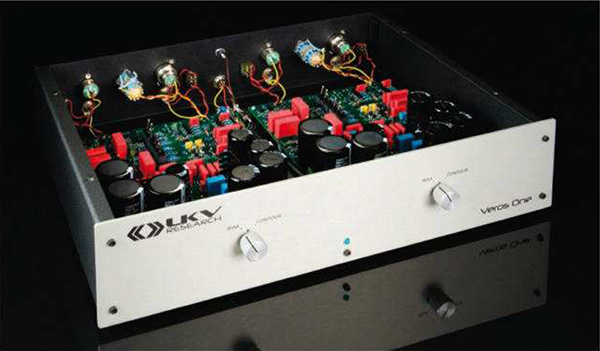
In May 2014, Bill Hutchins introduced the Veros One phono preamplifier ($6500).

Gramophone Dreams #9

"Hail, Neophyte!"


That's what members of the Smoky Basement Secret Audio Society would exclaim in unison at the end of each ceremony admitting a new devotee. It was called the Smoky Basement Society not because everyone smoked (though they did), but because its members believed that whenever an audio designer finally got a design dialed in just right, he or she had metaphorically "let the smoke out." They exclaimed, "Hail, Neophyte!" because they believed that the most important aspect of being an audio engineer was to have a fully open "beginner's mind." In Zen practice, this is called Shoshin, or beginner's heart.

Robert Deutsch Upgrades His Record Player

For some time now, I've been thinking that my record player was due for an upgrade. My Linn LP12 turntable and Ittok LVII tonearm are about 25 years old, and my AudioQuest AQ7000nsx cartridge is going on 15. During that time, my listening has become increasingly dominated by CDs, but I am not yet ready to give up on LPs. Updating my LP12—for which I have Linn's Lingo power supply but no other upgrades—would involve installing the Keel subchassis, for $3250—for which price I could get another maker's new, current-design turntable and still have the LP12 to sell. The Linn Ittok can't be upgraded, and its replacement, the Ekos SE, costs $4950—out of my range. AudioQuest no longer makes cartridges. Examining my AQ7000nsx's stylus under a microscope showed no visible wear, and there was no obvious audible problem that could be traced to the cartridge's suspension, but age must be having some sort of effect. Taking all these factors into account, I decided to replace my entire phono front end.

Listening #157

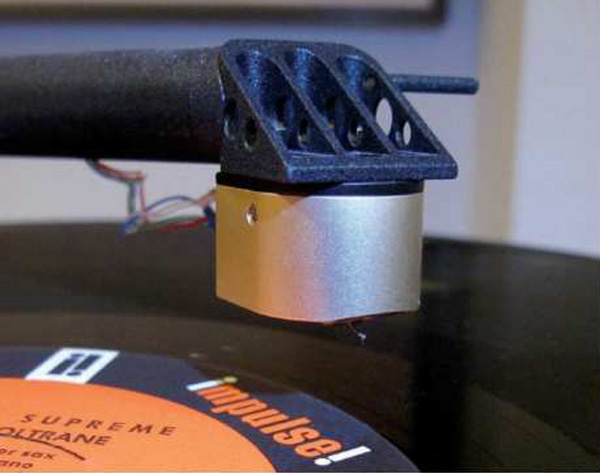
In a typical phono cartridge, the stylus is at one end of an oversize cantilever (oversize in comparison with the cartridge's other moving parts), the fulcrum of which is nearer the cantilever's other end. That design makes possible a certain amount of mechanical compliance that, when the cartridge is lowered to the record surface, helps the stylus seat itself in the groove rather than bounce or skip all over the place. Without at least a modicum of springiness, cueing up a record would be more difficult, and jukeboxes and automatic record changers might never have been possible. Imagine!

Listening #156

Just as John Atkinson has a special telephone on his desk, by means of which the late J. Gordon Holt expresses his displeasure at this magazine's continuing decline into latitudinarianism, my own desk is littered with a dozen or so windup timers, each set to remind me how long it's been since I last wrote about this or that hi-fi eccentricity. Each timer has its own distinctive ring: The one labeled "LOWTHER" is a bit shrill, especially at certain humidity levels, while the one marked "QUAD ESL" can be heard to best advantage only when sitting in a particular spot—and even I have to admit that my "CARTRIDGE ALIGNMENT" timer seems to go off rather too often.

Analog Corner #242: Cornering the Vinyl Scoffers; Fuuga & Air Tight Phono Cartridges

The "Meet the Editors" panel at T.H.E. Show Newport Beach 2015. (L–R): Robert Harley, Chris Connaker, John Darko, Michael Fremer, David W. Robinson.


Add to the deniers of the Holocaust and Climate Change those who say that the vinyl resurgence isn't happening.


Seriously, the pushback was bound to happen, and the bigger this so-called "hipster fad" gets, the more the scoffers sweat. In 2014, according to my sources—representatives of the world's largest pressing plants—more than 73,985,000 LPs were pressed. That's correct: almost 74 million LPs. Taking into consideration such things as multi-LP boxed sets like The Beatles in Mono (which might be counted as a single record in terms of sales), defective discs rejected by consumers or retailers, and unsold records, of which there surely are many in the pipeline, we could cut the number in half—and still have around 35 million. That's more than a 40% increase worldwide over 2013.

Analog Corner #241: DS Audio DS-W1 optical phono cartridge

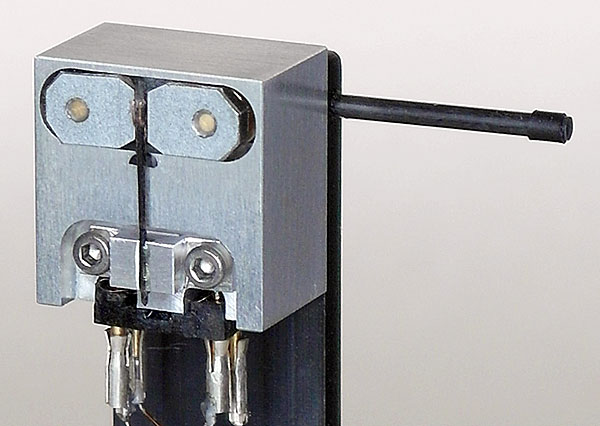
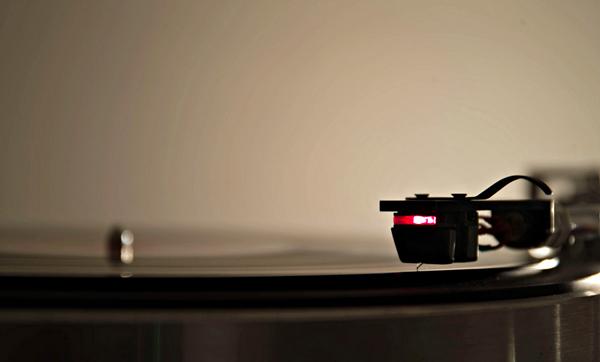
Using light to read data from a disc sounds a lot like the technology behind the Compact Disc—but you may be happy to hear there's nothing digital about DS Audio's optical phono cartridge. The DS-W1 uses the motions of a Shibata stylus and boron cantilever to modulate the output of its externally powered light-emitting diode (LED).


This Analog Corner is reprinted on Stereophile's sister site Analog Planet website.

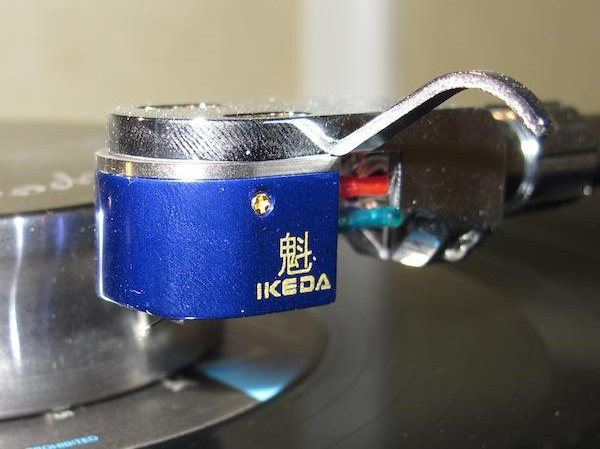
Analog Corner #238: A Tale of Two Cartridges from Ikeda and Ortofon

But first, the blowback I expected following my February 2014 column on Synergistic Research's Uniform Energy Field Technology room treatments never arrived—in fact, quite the opposite. My own positive experience of the UEF devices was confirmed by e-mails from readers who'd already used them, and from those who'd taken up Synergistic's offer of a money-back guarantee. Skeptics will charge that what I and these readers heard is evidence of confirmation bias, but people say this about any positive remarks made about audio components priced above $500.

Gramophone Dreams #4

So, audiophiles, riddle me this: What does a DAC actually look like? I don't mean the box it hides in—I mean the little doodad that does the actual converting from digital to analog. Is it bigger than a phono cartridge? Is it made of rain-forest wood, gemstone, or porcelain? Do people show it to their friends, who gawk in awe and envy? Does it have an exotic, geisha-sounding name like Jasmine Tiger, Koetsu Onyx, or Miyajima Takumi? When it breaks, does a watchmaker type rebuild it for a not-insubstantial fee? Do people hoard them in vaults, like NOS tubes? Can you trade a DAC for a rose-gold Rolex Oyster Bubbleback ca 1945?
Advertisement
Advertisement
Advertisement