Powerline Accessory Reviews

Sort By: Post DateTitle Publish Date

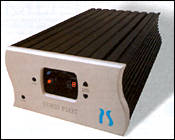
PS Audio Power Plant Premier AC Regenerator

Determining whether an idea is brilliant or off the wall is often a matter of perspective—and of looking at the results that follow from the idea. Take the notion of AC regeneration. AC is what comes from the wall socket, courtesy a network of power-generation plants, and it's specified as having a certain voltage and frequency, with the amount of current limited by fuses or circuit breakers in the electrical panel of the house or apartment. Audio components—other than those powered by batteries—are designed to convert this alternating current (AC) to direct current (DC), then produce variable AC that drives the speakers to produce a facsimile of that signal. In short, AC provides the raw material used by audio components to do their job.

Torus Power RM20 Audio/Video Power-Isolation Transformer

When I arranged to review the Bryston 28B-SST monoblock power amplifier, I wanted to be certain that the 1kW amplifier wouldn't be starved for current. Bryston advised me that Plitron, who manufacture the 28B-SST's toroidal transformer, also make Power Isolation Units (PIUs), under the brand name Torus Power. Torus explained that its PIUs combine surge suppression with massive toroidal transformers to provide AC power conditioning and protection from voltage surges.

HIFI-Tuning Fuses

Tweaks come and go. When a new one creates a buzz in audiophile circles, I generally prefer to wait and see if it's still around after the initial excitement has subsided. I'd heard about "audiophile" fuses some time ago, and although the likelihood of them making a significant difference didn't seem as farfetched as such tweaks as the "intelligent chip" or the "clever little clock," I didn't feel inclined to try them. I was persuaded otherwise by the confluence of two separate influences: a report by Michael Fremer, in the February 2007 Stereophile, that the HiFi-Tuning fuses produced a "subtle but noticeable" improvement in the sound of his Musical Fidelity kWP preamplifier; and an encounter at the 2007 Consumer Electronics Show with Robert Stein of importer Ultra Systems (the HiFi-Tuning fuses are made in Germany), who said that they produced a big improvement and offered to send me some samples.


Audience Adept Response power conditioner

I can't remember a time when I wasn't concerned about power quality. I grew up around finicky, home-brew ham-radio gear and labs full of instruments, and with both, power-conditioning gear was standard fare. When I moved into high-end audio, it seemed obvious that power quality was important. As a result, I've experimented with a wide range of power-conditioning equipment, from simple ferrite loops to huge isolation transformers, and even exotic laboratory power supplies that could vary the voltage, frequency spectrum, and shape of the AC signal.


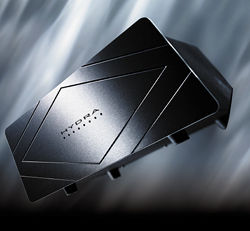
Shunyata Research AC power products

Power-line conditioning and exotic power cords, once considered the lunatic fringe of tweaking, have become normal parts of audiophile life. Over the last several years Shunyata Research, founded by former NSA research scientist Caelin Gabriel, has established itself as a leading innovator in the area. The company's latest efforts include the Hydra Model 8 power-distribution center ($1995), for use with whole systems or front ends; the two-outlet "mini" Hydra Model 2 ($395), intended for use with power amplifiers; and the Anaconda Alpha and Anaconda vX power cords ($1995), the new top models in the PowerSnakes line.


Monster Power AVS 2000 Automatic Voltage Stabilizer & Equi=Tech 2Q & Q650 Balanced Power Systems

It's a simple premise: power corrupts. You can buy the finest audio components in the world, but if the foundation of your aural house is rotten, you won't get anything vaguely resembling the level of performance your gear was designed to provide. Over time, I've come to realize just how fragile the audio signal chain is, dependent as it is on electrical sources fatally compromised by all manner of aural schmutz pouring through the local grid. I've become obsessed with figuring out how to liberate my system from the line noise, reactive loads, and voltage anomalies that veil the presentation, obscure resolution, and limit dynamic range.


PS Audio Ultimate Outlet AC conditioner

PS Audio's Power Plant AC-regeneration devices have taken the audio and home-theater worlds by storm. The P300 was voted 2000 Accessory of the Year in Stereophile (December 2000), and the P600 won the Editors' Choice Platinum Award in Stereophile Guide to Home Theater (January 2001). The Power Plant differs from conventional power-line conditioners (PLCs) in that it doesn't just "clean up" AC but actually synthesizes (or regenerates) it. Each Power Plant is essentially a special-purpose amplifier, producing AC to run the equipment plugged into it, the maximum output wattage indicated by the model number. (The most powerful Power Plant available is the P1200, which produces 1200W.)


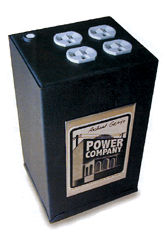
Richard Gray's Power Company 400S AC line conditioner

The Richard Gray's Power Company 400S arrived on the audiophile scene last year with a bang. Weighing in at a hefty 20 lbs and at $700 a pop, this four-outlet power conditioner, according to the paperwork, "effectively 'positions' audio, video, and home theater equipment 'electronically closer' to your utility company transformer, without introducing any type of series electronic 'traps' or capacitors into the circuit, which we feel degrade the performance of certain equipment, and severely limit the amount of current they can handle."


PS Audio P300 Power Plant

Although advertising copywriters would have us believe otherwise, there is not a lot of true innovation in audio. Most audio products are based on well-established principles, perhaps refined in detail and execution. Of course, some products do take novel approaches, but they tend to be too off-the-wall to be taken seriously, or simply don't do the job as well as more conventional products. What's really exciting is to encounter a product that is audaciously original in concept, yet makes so much sense that you wonder why no one even thought of it before (footnote 1).


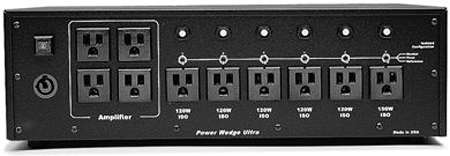
Audio Power Industries Power Wedge Ultra 116 power conditioner

Considering that not that long ago there wasn't even a product category for balanced AC line conditioners, we seem to now enjoy a plethora of the critters. Cinepro offers the PowerPRO 20 (reviewed in Stereophile, November 1998, Vol.21 No.11). And Equi=Tech, which caters more toward the pro end of the field, offers one that I have yet to hear. Now Audio Power Industries weighs in with their own approach to the genre.


Advertisement
Advertisement
Advertisement