SSI 2012

Sort By: Post DateTitle Publish Date

Get 'Em While They're Hot!
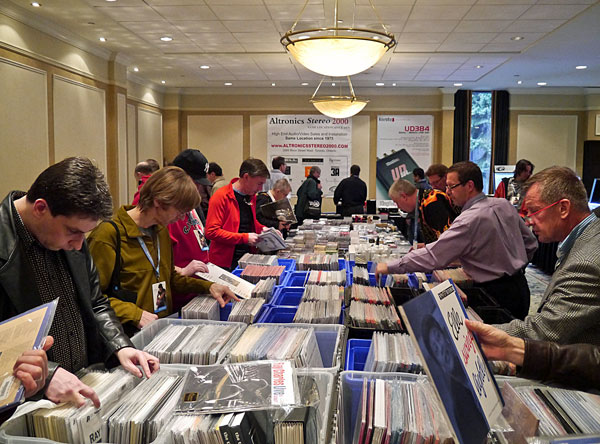
Here's the obligatory "People Buying Records" picture, and even though it was taken on Friday, which is usually the show's least-busy day, I had no trouble finding an opportunity to take a suitable picture. There were also quite a few people at the CD racks, but, overall, I'd say there were more LP buyers than CD buyers in evidence. Make of that what you will. (It may be a reflection of the fact that LPs are not as widely available.)
Tours to Aux 33 Tours

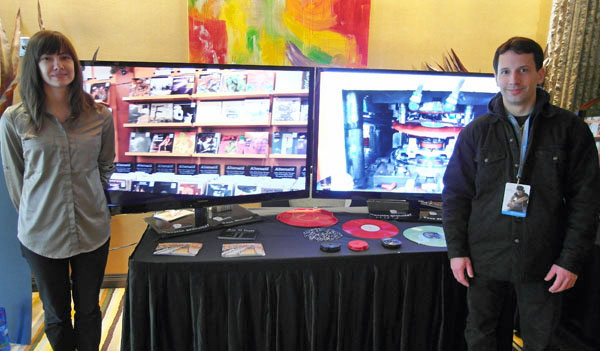
In years past, the Montreal record shop Aux 33 Tours operated a generously sized retail booth at SSI, and I invariably helped them to lighten their vinyl load. I was disappointed that they weren't selling records at this year's show—until I noticed their display in the Hilton's hallway: All day Friday and Saturday, they offered a free shuttle service for people who wished to visit their store. (Sadly, the time was too short for me to take that ride.)

Computer Audio 101

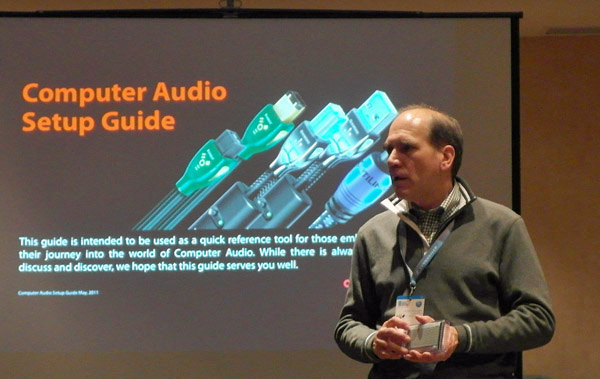
Working alongside Steve Silberman of AudioQuest, Wavelength Audio’s Gordon Rankin offered a series of talks on computer audio for Mac users, while Jim Hillegass, the founder and CEO of JRiver Inc., offered corresponding seminars for users of Windows-based computers. My schedule allowed me to hear only a brief portion of Gordon Rankin’s Saturday seminar—and, regrettably, none of Jim Hillegass’s talks—yet even so, I learned things I’d never come close to knowing before. (An exemplary gem: When it comes to RFI rejection, Apple’s laptop computers are considerably better made than the company’s desktop models.)

Joseph Audio

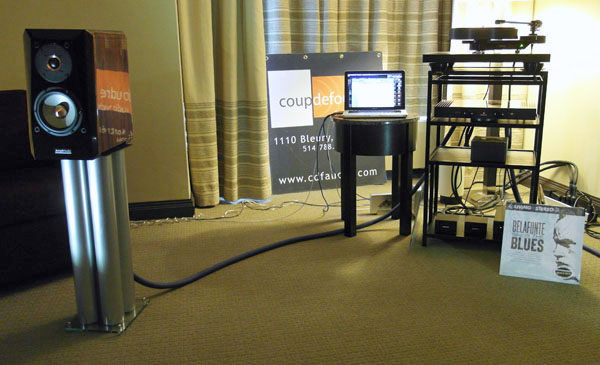
Retailer Coup de Foudre and Canadian distributor Tri-Cell built one of their exhibits around a pair of Joseph Audio Pulsar loudspeakers ($7000/pair, to be reviewed in the June Stereophile by Mikey Fremer), driven by the 70Wpc Brinkmann Audio Vollverstarker integrated amplifier (also $7000), with a MacBook Pro and a Wavelength Audio Brick D/A converter ($2200) as the digital source. As always, Jeff Joseph's room setup was difficult to fault, and the system was smooth, colorful, and dynamic: Listening to the Gypsy swing music of the Howard Fishman quartet, I was happier than I'd been all day.

Rogue's Hydra

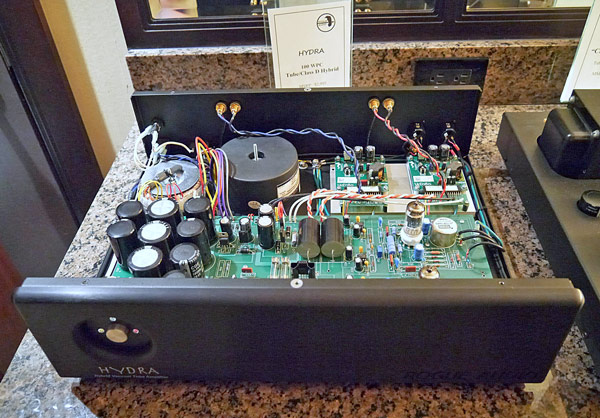
The Rogue Hydra is a 100Wpc amplifier that combines a tube input with a class-D output section (using only the module's MOSFET output, bypassing the rest), with about 2dB of negative feedback. If Rogue is lucky, then this will appeal to both audiophiles that are tube fans and those that are fans of modern digital technology. If they're not lucky, then tube fans will reject it because it includes the evil of digital, and digital fans will reject it because it includes technology that they regard as obsolete. Ultimately, it's the sound that matters—and, according to Rogue's Mark O'Brien, it's an effective combination of the tube sound with the power of solid-state.

All That Needs to be Said!

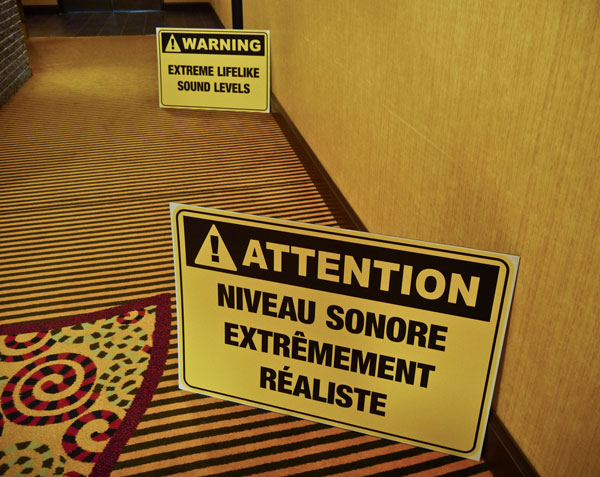
A sign that says "Warning! Extreme Lifelike Sound Levels" is like waving a red cape in front of a bull. Who would be dissuaded from entering a demo room just because you're going to encounter lifelike sound levels? Not me! And are they overstating how loud a sound they're talking about?

Constellation

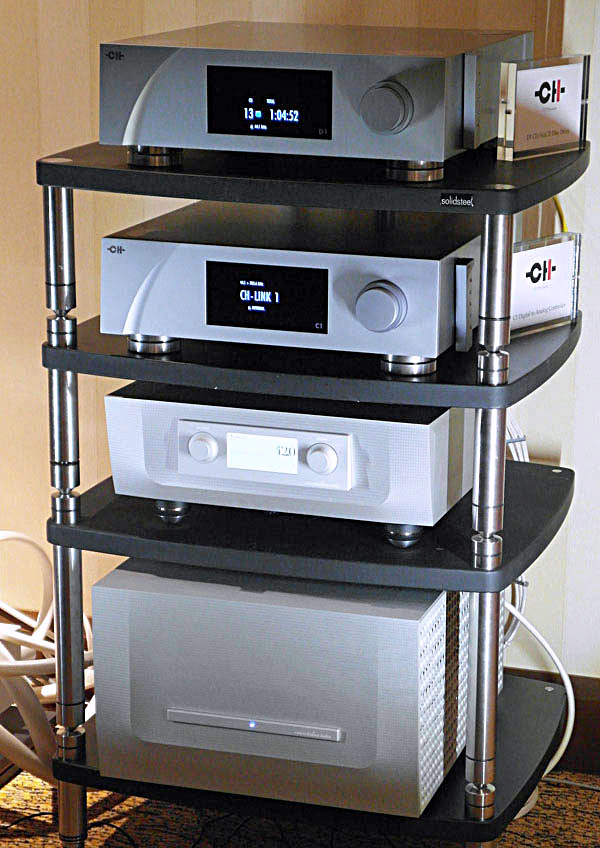
California-based Constellation Audio, represented by the well-known engineer Peter Madnick, supplied the amplification for the Magico Q3 loudspeakers. On audition were their Virgo preamplifier ($19,000) and Centaur amplifier ($24,000), set up with elegant looking (and apparently effective) loudspeaker cables and interconnects from Argento Audio of Denmark. Source components were the C1 D/A converter and D1 disc transport from CH Precision of Switzerland.

Something Magico

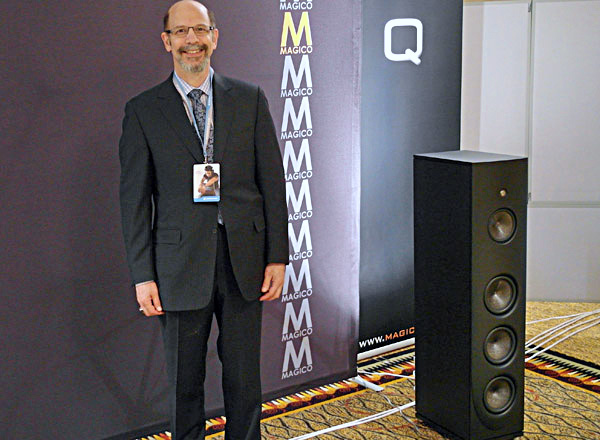
Loudspeaker specialists Magico were on hand with their recent Q3 ($38,950/pair), which boasts a 90dB sensitivity rating and 5 ohm nominal impedance: not quite SET territory, but easily the California firm's most sensitive speaker yet. Magico rep and fellow bluegrass fan Irv Gross put the Q3 through its paces for me; I was impressed with its speed, scale, drama, and sheer grip—not only in the lowest frequencies but all the way up through its well fleshed-out treble range.

Splendid Spendors

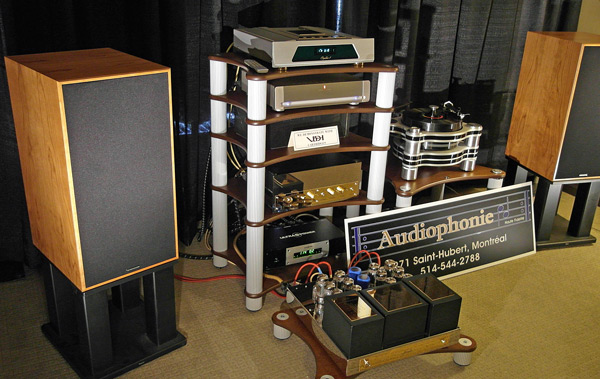
I was delighted by the sound being made by Montreal dealer Audiophonie—partly, I admit, because they were demonstrating an all-new version of the venerable Spendor SP100, now in R2 form ($11,900/pair), an earlier version of which I owned and loved for years. Its tone, touch, spatial presentation, and vibe were all just about perfect. I will beg—yes, beg—for the opportunity to write about the Spendor in the months to come.

"Axial Triphonic Speakers" from Lys Audio

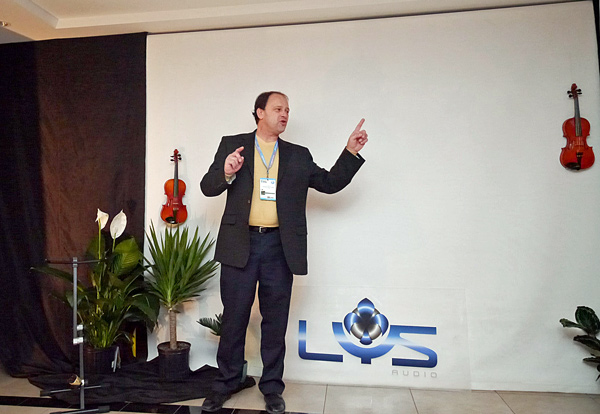
One of the more controversial products at this year's SSI was the demo of "Axial Triphonic Speakers" by Lys Audio. According to company president Jacques Gérin-Lajois (given a running translation from French by one of his associates), this is based on a patent that was obtained 65 years ago, but has not been put into practice until now. As I understand it, it involves starting with a monophonic source, obtained by summing the stereo channels (or multiple channels), and then splitting the mono signal into bass, midrange, and treble, sending these to the appropriate speakers. Depending on the impedances, you can use just one amp to drive all three speakers, or (as was the case with the SSI demo), one amp for the midrange and treble, and another for the bass.
Advertisement
Advertisement
Advertisement