SSI 2012

Sort By: Post DateTitle Publish Date

James Tanner's Speakers

Long-time audiophile and Bryston's VP of Sales, James Tanner, has turned his hand to speaker design, and the result, now in advanced prototype form, was introduced at SSI 2012. Dubbed the Model T (the initial of his last name, and because it will come in any color as long as it's black), this is a tall floorstander, with custom drivers made by Canadian speaker manufacturer, Axiom, and features Bryston's BDX-1 digital crossover. The DSP controls of the BDX-1 allow correction of both phase and frequency response; the latter is said to be 17Hz–25kHz, ±¼dB. Tanner told me that he's not entirely happy with the performance of one of the drivers, which is being revised to have a "quicker" response. The Model T is a sealed-box system, with a sensitivity of 93dB. The projected price, including the BDX-1 digital crossover, is $10k/pair.

Line Magnetic Amplifiers

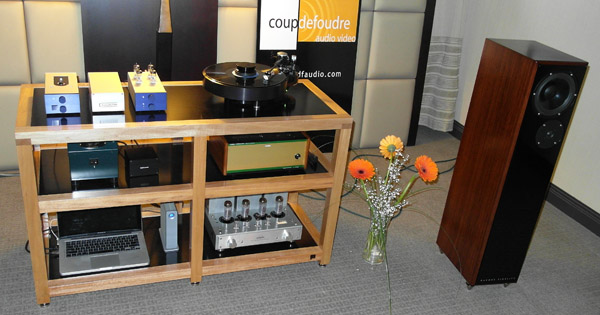
The curiously named Line Magnetic company of China has begun making a series of relatively affordable tube electronics, all hand-wired, and all with styling details that recall classic products from the first half of the 20th Century. LM's model 211IA integrated amplifier ($1650) was used to drive the new Gibbon 88s from DeVore Fidelity. Each channel of the amp produces 32Wpc from a pair of EL34s running in Ultralinear mode—the 211IA can also be switched to triode operation—with all-tube preamp and driver stages and a silicon-rectified power supply.

DeVore Fidelity

One of the many rooms sponsored by Montreal retailer Coup de Foudre was dedicated to the new DeVore Fidelity Gibbon 88 loudspeaker ($5000/pair), which replaces the Super 8 in DeVore's line. The 88 uses an entirely new woofer, which designer John DeVore says was influenced by the recent work he did on the DeVore Orangutan model; technical distinctions include a paper (instead of plastic) cone and a larger motor overall than its predecessor, with double the voice-coil travel. Consequently, sensitivity is up in the Gibbon 88, to approximately 91dB.

Hegel and Amphion

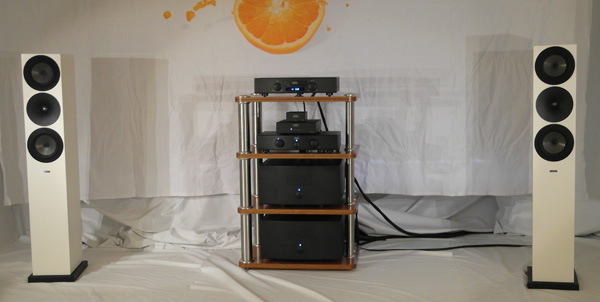
Every hi-fi show seems to harbor a few restful rooms where the music is well selected and the playback quality is serenely good; at SSI, the exhibit space shared by Scandinavian manufacturers Hegel and Amphion served that purpose for me. (The white fabric walls probably added to the sense of calm.) The Amphion Argon7 L loudspeakers ($6k–$7k/pair, depending on finish) sounded clear, smooth, and altogether lovely with Hegel amplification and digital source components.

Tannoy and Linn

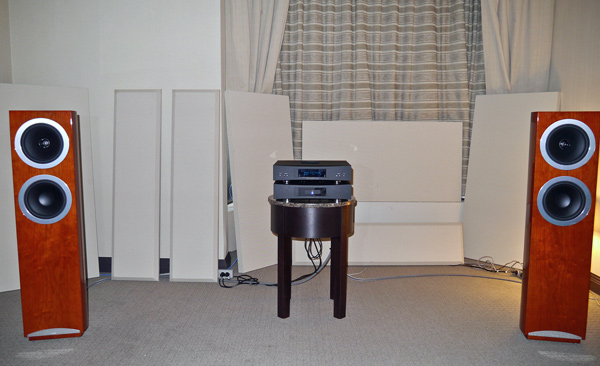
Two venerable British makes—who share a North American distributor and neither one content to rest on their laurels—teamed up at SSI 2012, the Tannoy Definition DC8T ($6200/pair) being combined with the Linn Akurate DSM digital streamer ($9200) and Linn Akurate 2200 integrated amp ($6000) to produce a very clean, dynamic sound.

The MBL 126

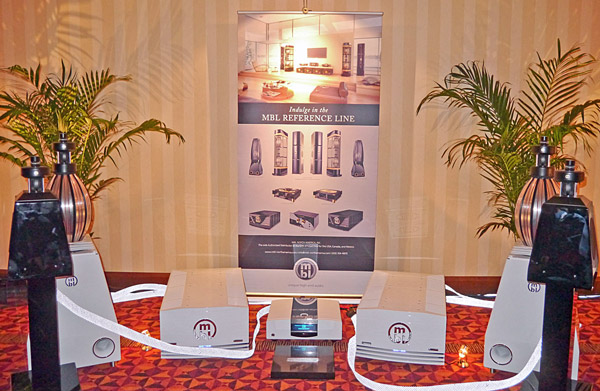
I've been an admirer of MBL's omnidirectional speakers, the latest 101E Mk.II reviewed by Michael Fremer in the April 2012, issue. These were demoed at SSI 2012, and sounded great, as always. While certainly an impressive illustration of the art and science of speaker design, for me, the 101E Mk.II, being priced at about $70k/pair, is a speaker that I just can't relate to—the audio equivalent of a Lamborghini.


What I found exciting at SSI was MBL's new entry-level "baby" speaker, the MBL126. With a new radial midrange driver and tweeter, and two 5" "push-push" drivers, with MBL's less-expensive electronics, the pair of MBL126s at the show had much the same sort of open, non-listener-position-dependent sound that characterizes it senior siblings—and the price is a relatively-affordable $11,800/pair.

Coup de Foudre: VTL

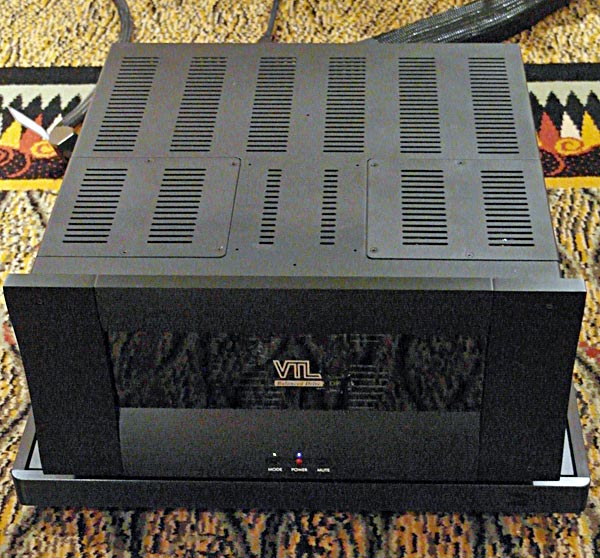
The VTL MB185 Series IIIs, which sounded great driving the Wilson Sophia Series 3 loudspeakers, offer a choice between XLR and RCA inputs—and, according to designer Luke Manley, they can develop fully balanced performance with single-ended inputs. Their EL34-based output sections can also be switched between triode and tetrode operation.

Theory + Application

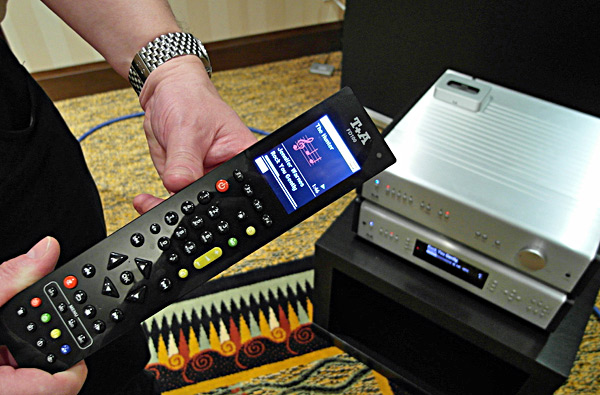
Munich-based T+A, which is distributed in North America by Dynaudio, displayed a prototype of their forthcoming DAC 8 D/A converter, which is projected to sell for under $3000. Built around dual 32-bit Burr-Brown DAC chips, the DAC 8 offers a choice of true balanced or single-ended operation, with all proprietary digital filter designs and sampling rates up to 192kHz.

First Dragonfly of Spring

What's 2" long, comes out in May, and responds to external stimulus by changing color? The AudioQuest Dragonfly ($250), a USB D/A converter designed for the company by Wavelength Audio's Gordon Rankin (and whose proprietary software allows it to function as a true asynchronous DAC). The Dragonfly, which is powered by the USB bus, performs at 44.1, 48, 88.2, and 96kHz; the dragonfly icon on its plastic case (not shown here) indicates the sampling rate in use by glowing green, blue, amber, or white, respectively. Features include separate clock oscillators for 44.1/88.2 and 48/96; a 64-position analog volume control that overrides the digital volume control in iTunes/etc.; and proprietary USB input and 3.5mm output connectors.
Advertisement
Advertisement
Advertisement