Revinylization

Sort By: Post DateTitle Publish Date

Revinylization #57: Trane meets the Motor City, 2 Reissues from OJC and Craft Recordings
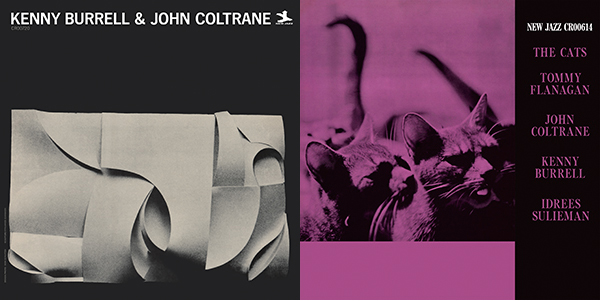
Detroit became a destination for migrating African Americans early, starting with the Underground Railroad; the city's proximity to Canada was convenient for those seeking to escape Southern slavery. The mass human movement accelerated with the Great Migration, which started about 1910, when millions of African Americans left the Jim Crow South for northern cities. The same human movement that brought the blues to Chicago and jazz to New York City took both to Detroit.


In all those cities, the 1920s was a time of ballrooms and big music halls. In Detroit, "society bands" black and white played through-composed, jazz-inflected music, according to a narrative put together by Cliff Coleman and Jim Ruffner for the local jazz museum. The proliferation of orchestra chairs meant that skilled musicians familiar with a range of musical styles could find work, especially if they read music. It also meant that Detroit was ready when, in 1927, Don Redman, who had been the chief arranger for Fletcher Henderson's band, moved to the city to lead William McKinney's Cotton Pickers, the resident Black jazz orchestra at Detroit's Graystone Ballroom. The Pickers soon became an important touring band, with a national reputation. Big-name orchestras like Duke Ellington's and Fletcher Henderson's started to visit the city; on Monday nights, the national bands would "battle" local bands.
Revinylization #56: Sonny Rollins, A Night at the Village Vanguard, Made New

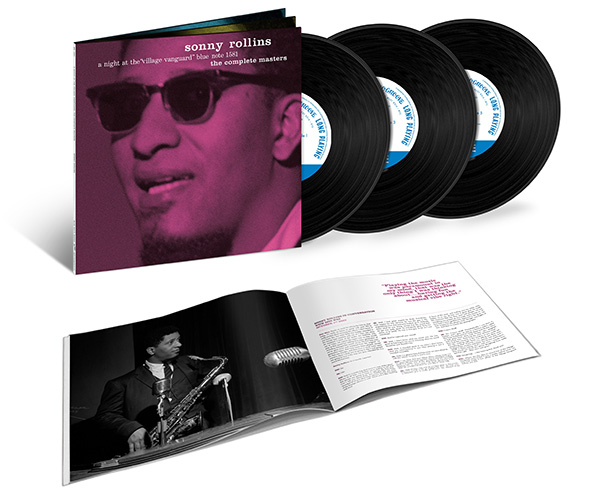
As one of the first live albums to be recorded in the hallowed space that is New York City's Village Vanguard, Sonny Rollins's A Night at the Village Vanguard (recorded November 3, 1957, released in 1958) set the template, proving that recording in the odd, triangular club could not only work but could also produce distinctive, satisfying sound. Soon after the recording of the Rollins album, Bill Evans and John Coltrane added live Vanguard albums to their recording catalogs.


Now reissued by Blue Note Records as part of its Tone Poet Series, this three-LP edition, which comes from a different source than previous releases, is that rare audiophile reissue where the sonic differences are immediately audible.

Revinylization #55: An American Beauty Unblemished

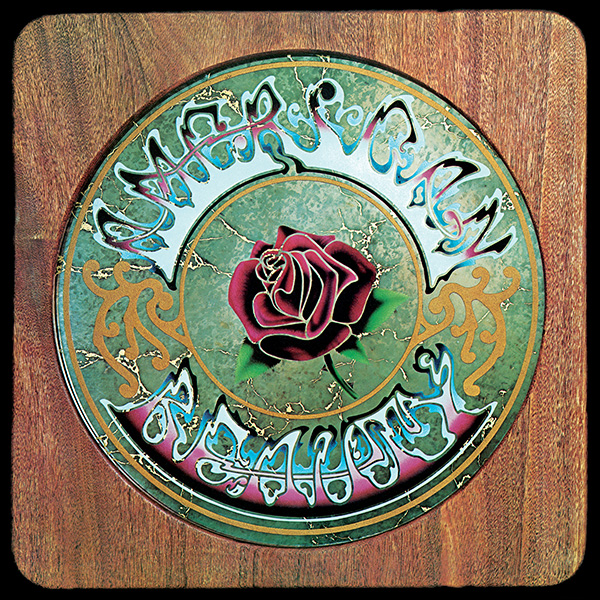
Of all the albums in the Grateful Dead catalog, American Beauty is the one with the widest appeal. Its proto-Americana tunes are neither antique nor modern; instead, they are timeless. The album's sound is clean and lean, up to modern snuff even more than a half-century after its original release in November 1970.


The tunes seem to roll like a Sunday drive on a country road, in and out of dark hollows and up and down hills. Three of its 10 songs have become folk-rock standards: "Friend of the Devil," "Sugar Magnolia," and "Truckin'."

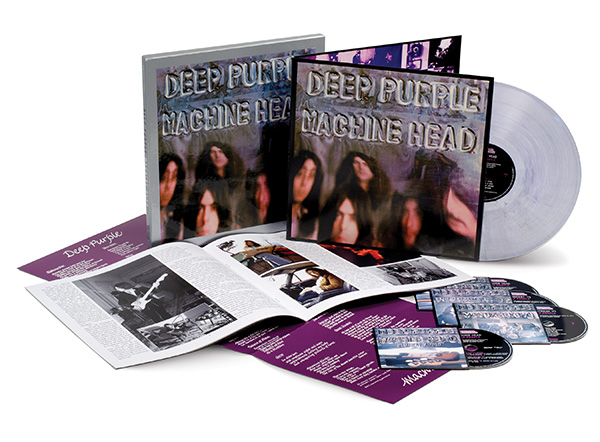
Revinylization #54: Deep Purple's Machine Head

Ow Ow Ow, Ow Ow Whaow, Ow Ow Ow...Wha-aa-ow. That simple G-minor melody, supposedly inspired by Beethoven's Fifth Symphony (or perhaps Brazilian composer Carlos Lyra) and played with the tone of a Fender Stratocaster doubled by a Hammond B3 organ, is unquestionably the most famous rock-guitar riff. The apotheosis of 1970s hard-rock, the ubiquitous "Smoke on the Water" is also the unlikely story of the song's creation and the high-water mark of long-running UK rock band Deep Purple.

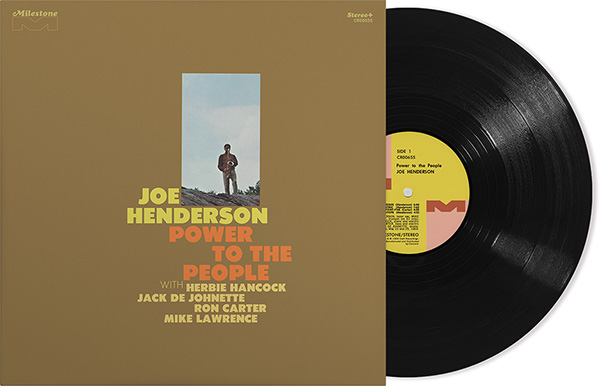
Revinylization #53: Craft Records releases Joe Henderson's Power to the People

In the late 1960s and the early years of the next decade, tenor saxophonist Joe Henderson, like many of his contemporaries, was listening to such albums as Miles Davis's Filles de Kilimanjaro and Miles in the Sky and pondering what it meant for his music. During this period, for better or worse, the rhythms and aggressive approach of rock music, including the use of electric rather than acoustic instruments, were mixing with jazz and giving birth to fusion. In hindsight, it seems inevitable that these two vital genres, both of which prize improvisation—be it on electric guitar or tenor saxophone—should become each other's major influence. Jazz fusion based in jazz (Mahavishnu Orchestra, Tony Williams Lifetime, Return to Forever), and jazz rock based in rock (Chicago, Blood Sweat & Tears, Soft Machine), evolved into major genres in the 1970s. From these tendrils, jazz pop, jazz funk, M-Base, and even smooth jazz have continued to spread.

Revinylization #52: Nina Simone's Seminal Wild is the Wind

By all accounts, Eunice Kathleen Waymon, aka Nina Simone, who passed in 2003, was a troubled person and a brilliant artist. Why she was not more acclaimed during her lifetime is a question several recent film projects have tried to answer. Did her fierce stand on civil rights lose her fans? Or was it, as the films have implied, a case of self-sabotage driven by mental illness? Whatever the answer, her inimitable work continues to resonate with ever more force and depth.


A mix of tracks left over from sessions Philips recorded in 1964 and 1965, Wild Is the Wind has been reissued on 180gm vinyl by Universal Music and Acoustic Sounds. Remastered by Ryan Smith at Sterling Sound and plated and pressed at QRP in Salina, Kansas, the record sounds warm and evocative, capturing the nuances of Simone's complex vocal powers.

Revinylization #51: ECM is Back in the Vinyl Game

Given his seemingly endless stream of ideas, virtuoso instrumentalism, and considerable wealth of recordings, Keith Jarrett is a creative universe unto himself. He began his recording career on Atlantic Records and recorded for several labels, including Impulse!, along the way, but it was on Manfred Eicher's label ECM that he first broke through to worldwide fame in 1973, with the 3-LP set Keith Jarrett, Solo Concerts: Bremen/Lausanne. Considering its landmark status, it's fitting that the album is among the first releases in ECM's new Luminessence vinyl series, reissued in its original triple-vinyl form.

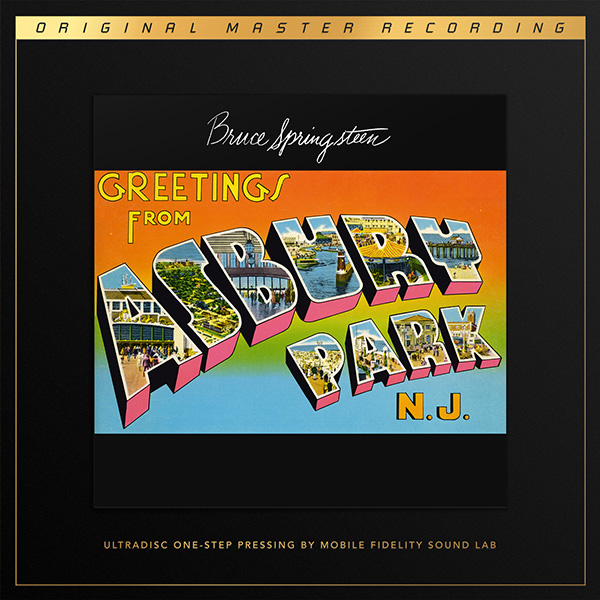
Revinylization #50: Bruce Springsteen's Greetings from Asbury Park, N.J. at 50

In Jan Swafford's excellent 2020 Mozart biography The Reign of Love, he intimately weaves the composer's life story with the music he created. Along the way, he confirms a legendary scene. Played to the hilt in Amadeus, Milos Forman's 1984 film adaptation of Peter Shaffer's play, the then-reigning Hapsburg monarch, Joseph II, rushes backstage after the premiere of Mozart's first operatic blockbuster, The Abduction from the Seraglio, and opines, "Too beautiful for our [Viennese] ears, my dear Mozart, and monstrous many notes." Sassy by nature or perhaps just stung by the implied criticism, Mozart supposedly replied, "Exactly as many as necessary, Your Majesty."


That quote rings in my head each time I listen to Bruce Springsteen's still-astonishing 1973 debut album, Greetings from Asbury Park, N.J., which has just turned 50 and been reissued in Mobile Fidelity's Ultradisc One-Step series.

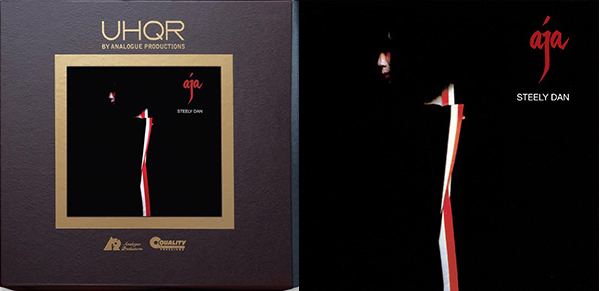
Revinylization #49: Steely Dan's Aja

In the 1970s, Steely Dan produced hit records for a listening public that could care less about the band's cryptic lyrics. Those early Dan fans responded to their songs' epic choruses and glistening hooks, awarding chart-topping success and a global audience.


From 1972's Can't Buy a Thrill to 1980's closing act Gaucho, Bard sages Walter Becker (1950–2017) and Donald Fagen occupied a place in pop music as unique as their songs' references to "wild gamblers," "midnight cruisers," "bodacious cowboys," and a female protagonist who "prays like a Roman with her eyes on fire." Much later, Becker and Fagen returned to the studio, issuing Two Against Nature to an audience still hungry for their singular R&B-and jazz-based music.

Revinylization #48: When Duke met the Bean

Saturday, August 18, 1962, was quite a day in music. In England, Ringo Starr made his first appearance as a full member of the Beatles, at a Horticultural Society dance at Port Sunlight, Merseyside. In Englewood Cliffs, New Jersey, two jazz giants met in a recording studio for the first time. Duke Ellington showed up with a streamlined, potent ensemble: Johnny Hodges, Harry Carney, Ray Nance, Lawrence Brown, Aaron Bell, and Sam Woodyard. Then tenor sax legend Coleman Hawkins arrived.


Ellington and Hawkins had never recorded together, so there was an atmosphere of energy and something grand and long overdue. Producer Bob Thiele and engineer Rudy Van Gelder stayed out of the way and let the music unfold while making sure not to miss anything. The result was a spectacular, loose, joyous, perfectly played album: Duke Ellington Meets Coleman Hawkins (Impulse! Records, AS-26, A-26 in mono).

Advertisement
Advertisement
Advertisement