Keith Howard

Contingent Dither

If there is one thing I've learned in almost 28 years (ouch) of audio writing, it's that audience reaction is fickle. Sometimes readers will swallow the most contentious pronouncements without indigestion, only to choke on throwaway lines you've invested with little importance. It just goes to confirm that human communication involves senders and receivers, and they aren't always in synchrony.

Continue Reading »

Time Dilation, Part 2

If you missed <A HREF="http://www.stereophile.com/features/105kh">Part 1 of this article</A> (<I>Stereophile</I>, January 2005), or it has faded in your memory, here's a r&#233;sum&#233;. (Readers who recall Part 1 with crystalline clarity, please skip to paragraph four.) The accurate measuring of loudspeakers requires that the measurements be taken in a reflection-free environment. Traditionally, this has meant that the speaker be placed atop a tall pole outdoors or in an anechoic chamber. Both of these options are hedged around with unwelcome implications of cost and practicality. To overcome these and allow <I>quasi-anechoic</I> measurements to be performed in normal, reverberant rooms, <I>time-windowed measurement</I> methods were developed that allow the user to analyze only that portion of the speaker's impulse response that arrives at the microphone ahead of the first room reflection. MLSSA from <A HREF="http://www.mlssa.com">DRA Labs</A> is the best-known measurement system to work on this principle, and both John Atkinson and I use it in the course of preparing our loudspeaker reviews.

Continue Reading »

Red Shift: Doppler distortion in loudspeakers

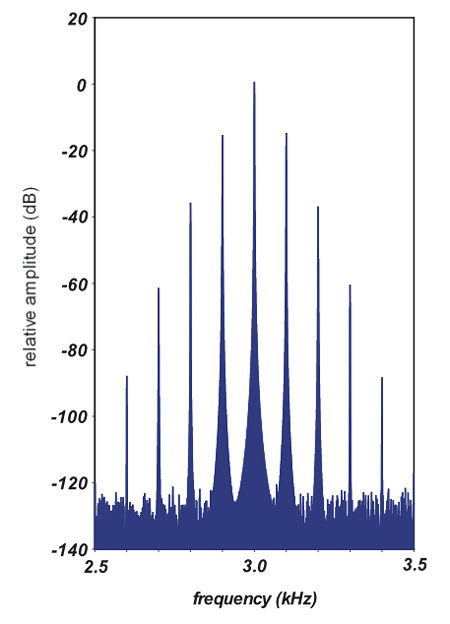
In the world of digital audio, jitter has been a focus of audiophile attention for well over a decade. It is blamed for many of the sonic ills of which CD and other digital media have been accused. But here's a puzzle: The major source of frequency intermodulation distortion in audio systems&mdash;the loudspeaker&mdash;has largely escaped such withering inquiry. Why?

Continue Reading »

Cutting Corners

If anyone ever thinks to compile a list of the 100 seminal audio papers that should be found in every tech-aware audiophile's filing cabinet, Harry Olson's "Direct Radiator Loudspeaker Enclosures" deserves to feature in it. Originally presented at the second Audio Engineering Society Convention, in October 1950, it was published in <I>Audio Engineering</I> in 1951. In 1969&mdash;in a rare and certain acknowledgement of its classic status&mdash;the AES republished it in its <I>Journal</I> (footnote 1).

Continue Reading »

New Media Metrics

Looked at from one viewpoint, DVD-Audio and SACD appear to be exercises in sheer profligacy. In the case of DVD-A, why provide a <A HREF="http://www.stereophile.com/features/282">maximum bandwidth</A> almost five times what is conventionally taken to be the audible frequency range, and couple it to a dynamic-range capability far in excess of that achievable by the microphones used to record the sound? In the case of SACD, why provide a potential bandwidth in excess of 1.4MHz, only to fill more than 95% of it with <A HREF="http://www.stereophile.com/features/374">quantization noise</A>?

Continue Reading »

The Law of Averages

The Compact Disc clearly hasn't read the script. At a time when, in the autumn of its commercial life, the format is supposed to be stepping aside to allow younger blood to succeed it, CD has instead in recent years enjoyed something of a revival in audiophile opinion. While SACD and DVD-Audio, rather strutting and fretting their hour upon the stage, are doing more plain fretting than anything, the best in CD sound quality has improved sufficiently for some to question whether we need the new media at all.

Continue Reading »
Advertisement
Advertisement
Advertisement