Audacious Audio

Sort By:  Post Date TitlePublish Date

Listening #129

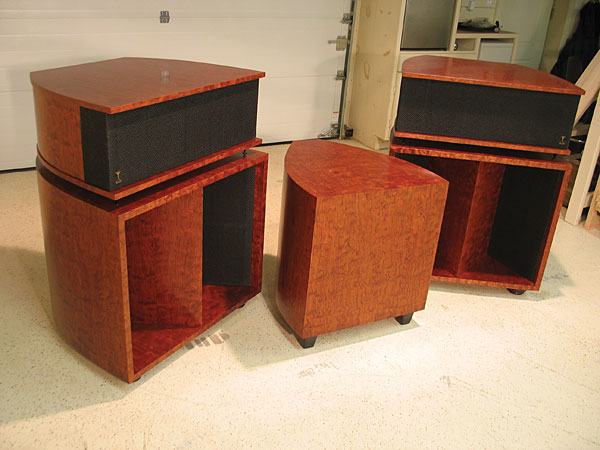
Volti Audio's Vittora, a borrowed pair of which now sit at the far end of my listening room, is a great loudspeaker and, at $17,500/pair, a seriously great value. After a few weeks with the Vittora, I find myself convinced by the naturalness, momentum, and force that it found in every record I played: This is surely one of the finest horn-loaded speakers made in the US.

Lamm Industries ML3 Signature monoblock power amplifier

Even as the gulf narrows between the sounds of the best solid-state and the best tubed amplifiers, most listeners remain staunch members of one or the other camp. Similarly, when it comes to video displays, the plasma and liquid-crystal technologies each has its partisans, though that conflict's intensity is relatively mild, perhaps because video performance, unlike audio, is based on a mastering standard that establishes color temperature, gray-scale tracking, color points, and the like (I'm deeply in the plasma camp). But in audio, the "standard" is whatever monitoring loudspeaker and sonic balance the mastering engineer prefers, which makes somewhat questionable the pursuit of "sonic accuracy." Still, in a power amplifier, a relative lack of coloration is preferable to amps that Stereophile editor John Atkinson has characterized as "tone controls"—usually, if not exclusively, of the tubed variety.

Symphonic Line Kraft 400 monoblock power amplifier

Things didn't start off auspiciously. I'd been after Symphonic Line's Klaus Bunge for more than a year to send me the Kraft 400 Reference monoblocks. Finally he called. He said he was going to be in town for a few days, and he had with him a pair of what he described as his "traveling" Kraft 400s, which he proposed to leave with me.

Sound-Lab A-1 electrostatic loudspeaker

Designer Dr. Roger West got his first taste of electrostatic transducers many years ago during a stint with Janszen (remember the Janszen tweeter?). To realize the potential of the full-range electrostatic loudspeaker (ESL), he and Dr. Dale Ream formed a new company dedicated to ESL research and development. West describes this company, Sound-Lab Corp., as "the electrostatic speaker specialists."

TAD Evolution One loudspeaker

I had been anticipating getting to audition a pair of TAD loudspeakers in my system since the introduction of the original TAD Model-1, in 2003. It was designed by Andrew Jones, who had recently assumed the mantle of chief designer at Technical Audio Devices Laboratories (TAD), at that time a subsidiary of Pioneer. Although TAD dates back to the mid-1970s, its research and development efforts had been focused on the professional sound market, something that continues. Jones came from a long line of speaker innovators at KEF and was assigned the goal of developing state-of-the-art speakers for the domestic market.

YG Acoustics Sonja 1.3 loudspeaker

The advertisements run by Colorado manufacturer YG Acoustics in 2008, when it launched its flagship loudspeaker model, the Anat Reference II Professional, unequivocally claimed it to be "The best loudspeaker on Earth. Period." They caused a stir. The YGA speaker cost $107,000/pair at the time of Wes Phillips's review in the March 2009 issue. Wes didn't disagree with the claim, concluding that, "Like my pappy used to say, it ain't braggin' if you can actually do it."

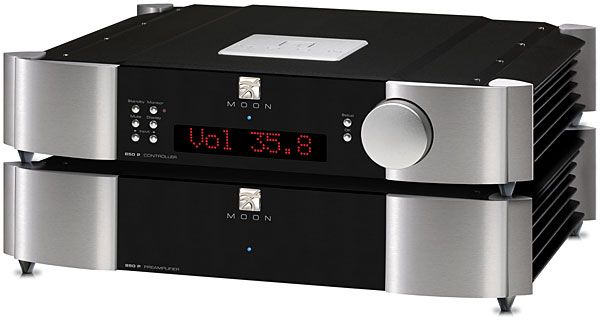
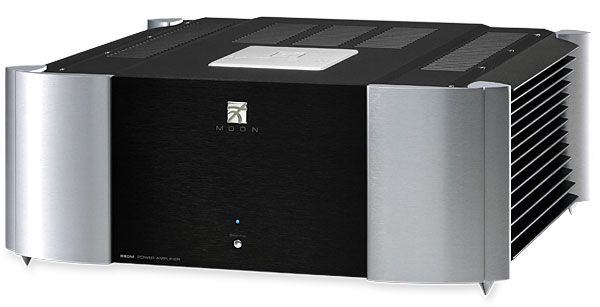
Simaudio Moon Evolution 880M monoblock power amplifier

In the September 2005 issue (Vol.28 No.9), I reviewed Simaudio's first reference-quality power amplifier: the 1000W, 220-lb Moon Rock monoblock ($37,000/pair). At the time, the Rock was a dramatic departure for Simaudio, then primarily known as a maker of midpriced gear that was good for the money. I found a lot to like about the Rock, concluding that while it wasn't quite up to the standard of the best superamps of the time, it was very good—and, for Simaudio, an admirable first shot at the state of the art.

TAD C600 line preamplifier

In the early 1970s, Stereophile's founder, J. Gordon Holt—a man I used to describe, with all due respect, as having been clothed by the haberdasher to the homeless—said that Audio Research's SP-3 tubed preamplifier was "the closest thing available, in fact, to the ideal straight wire with gain" ie, it would amplify the signal without editorializng in any way. Back then, the SP-3 cost $595. Today it would cost around $3500. But TAD's C600 dual-mono, solid-state, balanced preamplifier costs more than 10 times that: $42,000.

Music First Audio Baby Reference passive preamplifier

In April 1987, Anthony H. Cordesman had mixed feelings about the Mod Squad Passive Line Drive System Control Center. (Read his review here.) Introduced in 1984, the Line Drive offered volume and balance controls, five line-level inputs, and switching and monitoring for two tape decks. You didn't plug it into the wall; it provided no gain. Was it even a proper preamp? (footnote 1)

AHC demurred. "I'm not sure that I'm ready to advise anyone to take the risk of not buying a unit with a top-quality phono stage, no matter how well CD or DAT perform," he concluded, between commenting on Middle East wars.

Advertisement
Advertisement
Advertisement