Features

Sort By:  Post Date TitlePublish Date

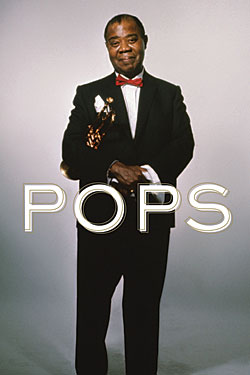
Book Review: Pops: A Life of Louis Armstrong

Pops: A Life of Louis Armstrong, by Terry Teachout (Houghton Mifflin Harcourt, 2009): 475pp. Hardcover, $30; paperback, $16.95.

If you plan to read just one book about Louis Armstrong, whose virtuosic cornet solos pushed jazz past rudimentary ensemble playing and launched his phenomenal career as an instrumentalist and singer, make it Pops. Teachout built it on brickwork laid by authors who preceded him, so you'll benefit from their research, as well as from narrative on 650 previously private reels of tape that Armstrong recorded and archived. Moreover, Teachout is a musician and music critic who offers opinions on his subject's discography.

Few people seem to realize that Armstrong (1901–1971) called himself LOU-iss. "All White Folks call me Louie," he once noted, and in some instances that may have been patronizing. In others, it was surely an instinctive response to the man's infectious warmth and informality.

Road Trip!

Illustration: Jeff Wong

John Atkinson and I were On the Road, whistling down I-95 in a big, Kona Blue Metallic 2011 Ford Edge Ltd with voice-command everything. To paraphrase Raoul Duke at the very beginning of Hunter S. Thompson's Fear and Loathing in Las Vegas, we were somewhere around Princeton, New Jersey—not quite the edge of the desert—when the drugs began to take hold. Just as in the original text, "there was a terrible roar all around us, and the sky was full of what looked like huge bats, all swooping and screeching and diving around the car . . ." I decided that there was no point in mentioning the bats to JA. He'd bought the Criterion Collection DVD of Terry Gilliam's film version of Fear and Loathing at Princeton Record Exchange. He knew about the bats.

Looking Back at the 1980s

A freelance reviewer's workload is erratic. On the odd occasion one might have a few moments' respite, while at other times the coincidence of multiple deadlines for copy results in several weeks of panic. As I write this missive I have just completed one such overload period covering so much equipment that I thought that it would be worthwhile to look back and take stock at the audio in the past decade (footnote 1).

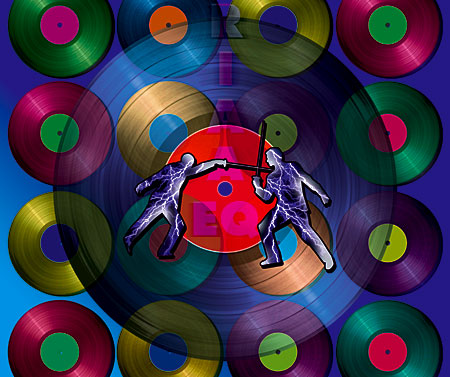
Cut and Thrust: RIAA LP Equalization

Until the Recording Industry Association of America hit the headlines in recent years with its antipiracy campaign, the initials RIAA meant one thing to seasoned audiophiles: the vinyl-disc equalization characteristic introduced in the 1950s to standardize what had previously been an anarchy of different EQs. Three decades later, as CD gained ascendance, a large proportion of audiophiles still knew what RIAA equalization was, and a good number of them had some idea or better of what the RIAA EQ curve looked like, and why it was applied.
Advertisement
Advertisement
Advertisement