PAUL MESSENGER
Was (Not Was): Born to Laugh at Tornadoes
Geffen GEF 25592 (UK LP). 1983. Don Was, prod., mix; Jack Tann, David Was, prods.; Robert Kinkel, asst. eng.; Duane Bradley, Ken Collier, mix. AAA. TT: 35:31 I don't know how this LP found its way into my collection in the early 1980s, but I've no regrets. Having lost it for years, I've now rediscovered what turns out to be a real gem. It's beautifully recorded throughout, and shows such great variety in both style and personnel that categorization is impossible. Each track comes as a fresh surprise, and none more than the last, "Zaz Turned Blue," which features a delightful performance by classic torch singer Mel Tormé. Other guest singers include Mitch Ryder and Ozzy Osbourne. And the front cover is wonderful, so go for the vinyl.
 Nitty Gritty Dirt Band: Will the Circle be Unbroken
EMI America GFX-2071-3 (3 LPs), E2-46589 (2 CDs). 1972/1985. William E. McEuen, prod.; Derio Zappas, eng.; Rick Horton, Rex Collier, engs., mix; Doug Sax, mastering. AAA/AAD. TT: 119:30
FRED MILLS
 Funkadelic: Funkadelic
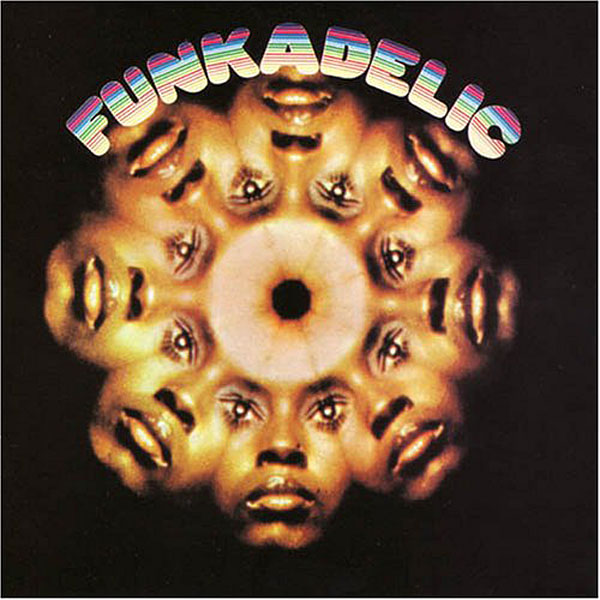
Westbound/Ace CDSEWM210 (CD). 1970/2005. George Clinton, prod.; Milan Bogden, Russ Terrana, Ed Wolfrum, Bryan Dombrowski, engs. AAD. TT: 75:06 Though Maggot Brain (1971) and its Afrodelic freak-out title track are perhaps most often namechecked when singing the praises of early George Clinton, the self-titled 1970 debut of Funkadelic, his Detroit-based, LSD-gobbling soul-funk-rock outfit, is where true acolytes learn to free their minds. The rest will follow, natch. From the Horace Silver–tipping blues strut "Music for My Mother" to the swaggering rocker "I'll Bet You" to the loony "What Is Soul"—which would make Jimi Hendrix hoist his freak flag in salute—Funkadelic is seamless, sinewy, and, per the times, savvy. Grab this 2005 UK reissue, which boasts extensive notes and no fewer than seven proximate and choice bonus tracks.
Highway 20 H2001 (2 CDs). 2014. Lucinda Williams, Greg Leisz, Tom Overby, prods.; David Bianco, eng. AAD? TT: 103:12 This is the kind of collection that, once upon a time in the 1970s, gave two-disc sets a legendary luster. A throwback to vintage country-funk swamp pop, it conjures the contradictory elements that made us fall in love with Williams in the first place: saucy yet sensitive vocals abetted by rutting-in-the-dirt twang and leavened-by-angels jangle, plus intimate turns of phrase that betray the hurt of an old soul and the ecstasy of one eternally young. It may be cheating to predict Desert Island Disc status for an album barely four months old as this sees print, but given the stark contrast between Williams's initial run of classics and her string of latter-day letdowns, DWTSMTB is more than just a comeback—it's a goddam reaffirmation.
HERB REICHERT
 John Tavener: Eternity's Sunrise
Paul Goodwin, Choir & Orchestra of the Academy of Ancient Music
Harmonia Mundi HMU 907231 (CD). 1998. Robin G. Young, prod.; Mike Hatch, Floating Earth, engs. DDD. TT: 65:03
Sugar Hill SHCD-1050 (CD). 1996. Terry Allen, Lloyd Mains, prods.; Alan Crossland, Jay Hudson, engs. ADD? TT: 54:04 "Gone to Texas": "I don't need no chicken shit businessman telling me what to do . . . / I don't need no sweet-faced woman goin' sour-mouthed on me . . . / I don't need no weekend warrior protecting me / he's as dumb with his gun as he is with his tongue / and he's shooting off on TV!" I've always wanted to tell the world about the internationally esteemed conceptual artist and outlaw country singer Terry Allen, here singing with a star-studded bunch of Armadillo World Headquarters graduates that includes David Byrnes, Charlie Sexton, Joe Ely, and Lucinda Williams. Before Sugar Hill bought up Allen's catalogue, you could buy his records only at art museums. Art meets the Trickster (again)—at the crossroads!
ROBERT J. REINA
 Rimsky-Korsakov: Scheherazade
RCA Living Stereo/Acoustic Sounds LSC 2446 (LP). 1960/2013. TT: Not noted
Mussorgsky-Ravel: Pictures at an Exhibition
RCA Living Stereo/Acoustic Sounds LSC-2201 (LP). 1957/2013. TT: Not noted
Both: Fritz Reiner, Chicago Symphony Orchestra
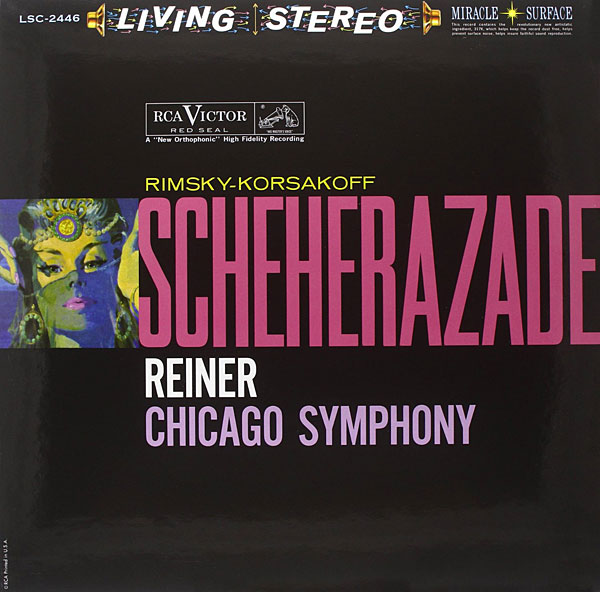
Richard Mohr, prod.; Lewis Layton, eng. AAA. All collectors of RCA Living Stereo LPs have their favorites, and these are mine. Reiner's reading of Scheherazade is the pinnacle of grace, precision, delicacy, and drama, and it's no wonder it commands the highest prices in the market for used shaded dogs. The late Harry Pearson once told me that he could learn anything he needed to know about an audio component by playing the final movement of this recording. I prefer the relatively less popular Pictures. The interpretation is lively, refined, and subtle, but bombastic when it needs to be. At times, Reiner could make the CSO swing. I hear wider dynamic contrasts, sense of drama, deeper bass, and more clearly delineated room sound in Pictures than in Scheherazade. I'm talking about original shaded-dog pressings. I've been disappointed by all the reissues released over the last 20 years that have promised better sound than the originals but have fallen far short of that. I had much higher expectations of these new reissues, from Chad Kassem's Quality Record Pressings, having been very impressed by some of QRP's rock and jazz reissues. When I spun them, I was floored. After comparing them to early shaded-dog pressings of the same recordings, I felt the only area in which the originals were still superior was the subtle, additional layer of air and sparkle in the highs (master-tape age, perhaps?). But the reissues' quality and extension of bass and high-level dynamic contrasts were superior. And the surfaces of the new pressings are so quiet they let each subtle midrange detail emerge from a "black" background. At times, the background is so silent I have to do a double take to verify that the needle is still in the groove and the platter is still turning.
KALMAN RUBINSON
 Dvorák & Janácek: Symphony 8, Symphonic Suite from Jenufa
Manfred Honeck, Pittsburgh Symphony Orchestra
Reference Fresh! FR-710SACD (SACD/CD). 2014. Dirk Subotka, prod.; Mark Donahue, Harold Chambers, John Newton, engs. DDD. TT: 62:04 In the 2014 R2D4, I ended my recommendation for Manfred Honeck and the Pittsburghers' Reference Fresh! release of tone poems by Richard Strauss with: "This is a thrilling disc. I look forward to hearing more from this team, and its performers on both sides of the microphones." Well, this year they've trumped themselves with even more idiomatic performances and an even more naturally dynamic recording. I early imprinted on Bruno Walter's Columbia LP of Dvorák's Symphony 8, and have since expanded my favorites to include Kubelik, Kertész, and Iván Fischer. Honeck displaces them all. The realization and performance of the suite from Janácek's Jenufa (conceptualized by Honeck, realized by Tomás Ille) is brilliant, and streets ahead of Peter Breiner's conducting of his own arrangement for Naxos. Conducted and played with appropriate style and verve and recorded in the best and most thrilling sound, this new disc immediately goes to the top of the list.
 Stockhausen: Stimmung
Paul Hillier, Theatre of Voices
Harmonia Mundi HMU 897408 (SACD/CD). 2007. Robina G. Young, Paul Hillier, prods.; Brad Michel, eng., ed. DDD. TT: 78:02