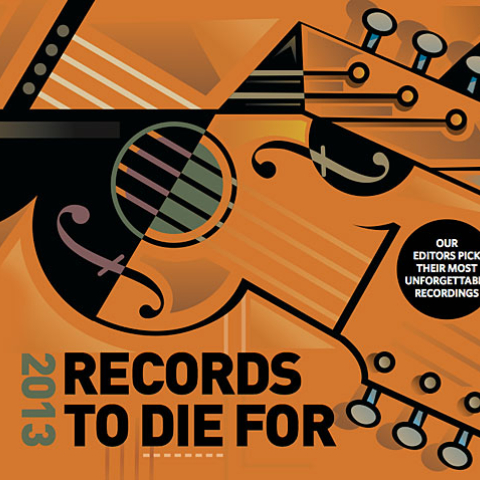
When this feature premiered in 1991, it was intended as a list of recordings that were, in the words of Richard Lehnert, the music editor at the time, "both musically and sonically impeccable—in other words, the best, the tops, to die for." RL went on: "such a list also makes for some strange procrustean bedfellows—obscure recordings that would never make the proverbial 'desert island' list snuggling up next to towering classics of the concert hall and control room."
Over time, that focus has shifted. The requirement that the selected recordings be "sonically impeccable" has been relaxed. Sure, we're a hi-fi magazine, and we care deeply about sound quality, yet we've come to realize that some of the recordings we value most are sonically flawed. Larry Archibald agreed. In the very first R2D4 listing, he complained and modified the "sonically impeccable" criterion: "No mono records? Why? What an outrage!" So he employed a different criterion for his own choices: "superb performances where the recording is good enough to not detract from the overall experience." In none of his choices, he vowed, "will the recording keep you away from the music, which is what matters."
In 2021, in the midst of the COVID plague—an intense experience for many, including those of us who lived through it here in New York City—the flippant phrase "To Die For" no longer seemed appropriate. We renamed the feature "Records to Live For." R2L4 was no longer a list of music worth dying for. It was, rather, a list of life-affirming music, a reason to stay alive.
Thirty-five years later, R2L4 remains one of the magazine's most popular features. Many of the works are well known, but also listed (as JA wrote in his introduction to the 2019 feature) are "forgotten masterpieces brought blinking into the light, hidden gems uncovered."
Today, R2L4 has just one rule: Don't choose a recording you've chosen before. We used to require that the recording be in print and available in some form. This requirement, too, has been relaxed—after all, as one writer said to me years ago, before the feature had been renamed, "It's Records to Die For, not Records to be Slightly Inconvenienced For." It follows that you may need to work to track some of them down.—Jim Austin