John Atkinson
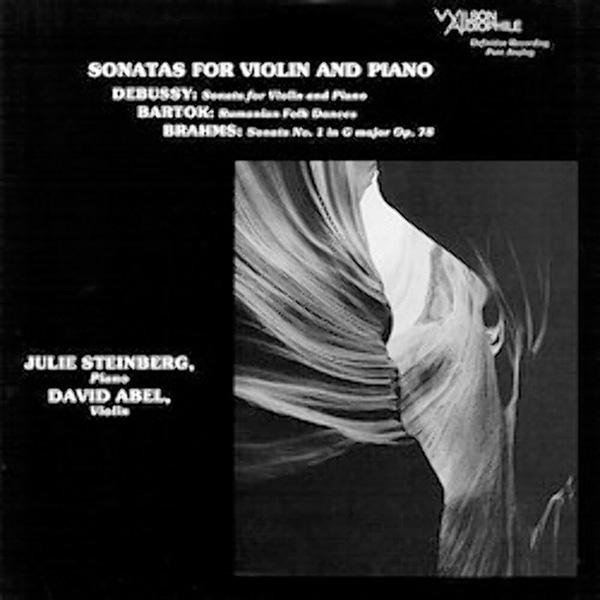 David Abel & Julie Steinberg: Sonatas For Violin & Piano
(Brahms, Violin Sonata No.1 in G; Debussy, Violin Sonata in G minor; Bartók: Rumanian Folk Dances, arranged for violin and piano)
David Abel, violin; Julie Steinberg, piano
Wilson Audiophile Recordings W-8722 (original LP), 0054536872228 (24/176.4 FLAC, Qobuz). 1987/2014. David A. Wilson, Sheryl Lee Wilson, Daryl C. Wilson, prods.; David A. Wilson, eng.; Bruce Brown, digital remastering. As an erstwhile violinist, I have always been bothered by recordings that exaggerate the size of the instrument. Jascha Heifetz's albums were notorious in this respect, the orchestra or the piano peeking around the oversized image of his violin. So when I first heard the late David Wilson's recording of an album of sonatas by Beethoven and Enescu, performed by violist David Abel and pianist Julie Steinberg, which Stereophile founder J. Gordon Holt had raved over in a 1984 review, where the spatial relationship between the instruments was faithful to what you would have heard in real life, I bought the LP, subsequently made a 24/192 needle drop, and made it one of my 2014 Records2Die4 choices. I am nominating another Abel/Steinberg/Wilson album for the 2026 list, which features a goosebump-raising 1987 performance of Brahms's Violin Sonata No.1. Like the earlier album, David Wilson recorded this at Mills College Concert Hall in Oakland, California, with a spaced pair of Schoeps microphones, tubed mike preamps, and the John Curl–designed Ultramaster open-reel recorder. The digital transfer was done with an EMM Labs A/D converter. With the album streamed at 24/176.4 with Qobuz, Abel's realistically sized Guarnerius violin sat at the center of the soundstage in front of Steinberg's Hamburg Steinway, both instruments sounding superbly lifelike. This is how it's done—appropriate technology and techniques in the service of the music!
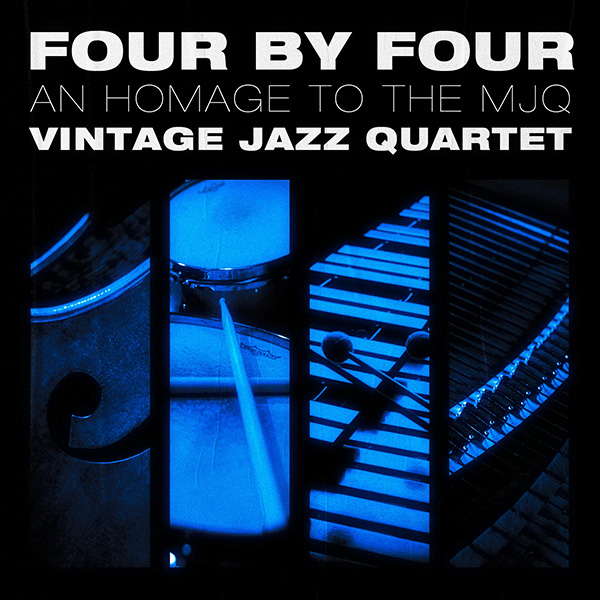 Vintage Jazz Quartet: Four By Four, An Homage to the MJQ
Juan Diego Villalobos, vibraphone; Sam Towse, piano; Dan Finn, double bass; Danno Peterson, drums
The Audiophile Society (24/192 PCM and DSD downloads, and a download package containing 48/24 WAV file formats in 3D Mega-Dimensional SoundTM). 2025. David Chesky, prod., Nicholas Prout, eng., Cole Flowers, asst. eng. I missed out on the Modern Jazz Quartet in its 1950s/1960s heyday—my love affair with jazz began in 1969 with Miles Davis's In a Silent Way, which was about as different in every way as could be from the MJQ's more traditional improvisations. But as I grew older (and, hopefully, wiser), I realized that I had missed out on some serious music making. Vintage's four young players take a fresh approach to six of the MJQ's timeless tunes, starting each track almost in a facsimile of the original but developing their own take on each melody and arrangement. (There are also two Modern Jazz Quartet–styled tracks, "Greenwich Street" and "Newport George," composed by The Audiophile Society's founder, David Chesky, who was a student of MJQ pianist John Lewis; the album's sleeve notes suggest that Chesky produced the album as a "tribute from a grateful student to a wise teacher.") Recorded with ribbon microphones and tube microphone preamps, the album was mixed "in Mega-Dimensional SoundTM." Chesky writes that "When you hear our new Audiophile Society recordings on speakers, you should feel like you are in the space with the musicians. The sound of our music is not stuck to the speaker [grilles] like a normal recording but should float up before you." I auditioned Four by Four as 24/192 ALAC "speaker mix" files—it is also available as a DSD or 24/48 WAV speaker mix and a DSD or 24/48 WAV headphone mix—and the images of the instruments did indeed float up before me, each natural-sounding and unambiguously and stably placed in a wide, subtly ambient soundstage. Again, this is how it's done!
Jim Austin
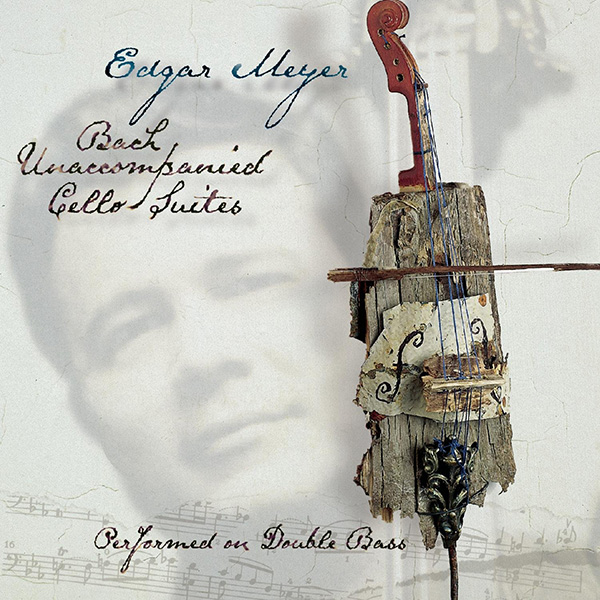 Edgar Meyer: Bach Unaccompanied Cello Suites Performed on Double Bass
Edgar Meyer, double bass
Sony Classical 89183 (ALAC CD rip). 2025. Steven Epstein, prod.; Todd Whitelock, Mark Betts, engs. On paper, this seems like a gimmick aimed at showing off Edgar Meyer's chops, which are indeed impressive. Heck, the cello suites themselves have become practically a gimmick—especially the Prélude from Cello Suite No.1 in G, especially the performance by Yo-Yo Ma. And I'll admit that when you first start listening, this comes across as a bit strange, as though at least one of you, player or listener—or both—is on serious downers. Ultimately, though, once you get used to the unusual timbre and pitch, Meyer's performance doesn't come off as a gimmick. It doesn't seem goofy or strange. The double bass forces a different approach to these pieces, but that's exactly the point. Meyer imbues it with, or finds within it, real, intense expression. I find real musical (and aural) satisfaction in this album, and it's very well-recorded.
 Ane Brun: Changing of the Seasons
Ane Brun, vocals, acoustic guitar, backing vocals, percussion; many others
DetErMine Records DEMCD08 (ALAC CD rip). 2008. Valgeir Sigurðsson, prod.; Jan Mikael Herrström, Pontus Olsson, Valgeir Sigurðsson, Christofer Stannow, engs.
Robert Baird
 Molly Tuttle: So Long Little Miss Sunshine
Nonesuch 075597896329 (LP). 2025. Jay Joyce, prod.; Jason Hall, eng.; Jimmy Mansfield, Bobby Louden, asst. engs.
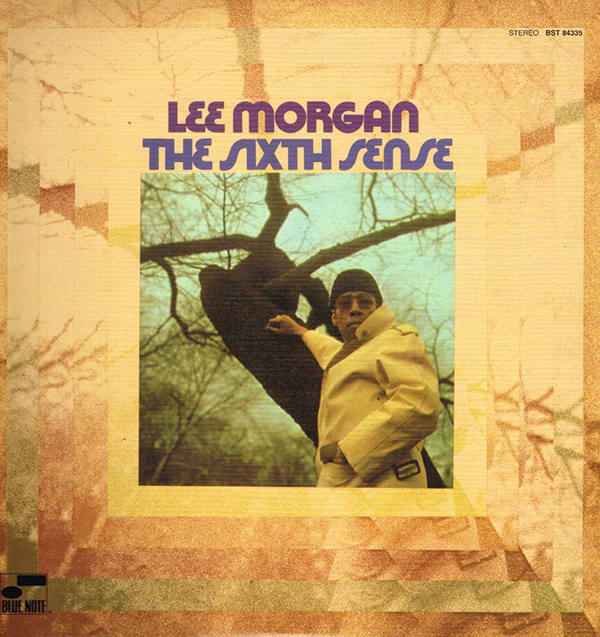 Lee Morgan: The Sixth Sense
Morgan, trumpet; Cedar Walton, piano; Victor Sproles, bass; Billy Higgins, drums; Frank Mitchell, tenor saxophone; Jackie McLean, alto saxophone
Blue Note BST 84335 (LP). 1969. Francis Wolff, Duke Pearson, prods.; Rudy Van Gelder, eng. By the late 1960s, the bop wave had passed, and jazz had again become niche music. This lesser-known Morgan title, recorded in 1967 but released in 1970, two years before his tragic death, show the trumpeter still firmly rooted in boppish small-group playing while beginning to feel the grooviness of the soul jazz that would produce so many classics in the early '70s. This oddly neglected collection is best known among Morgan obsessives for the track "Psychedelic," on which Morgan's approach to the trumpet sounds right at home in a boogaloo groove as McLean and Mitchell also dig in with gusto. "Short Count" is a snappy ride, at times deliberately imitating car horns on a busy street. Morgan's lyrical, sometimes rhythmically stuttering solo on "Afreaka," and his longer lines on the driving bop rhythms of "Anti Climax," show that his ideas and playing remained transcendent. And love it or not, Rudy Van Gelder's sonic vision is always distinct.
Miguel Barrio
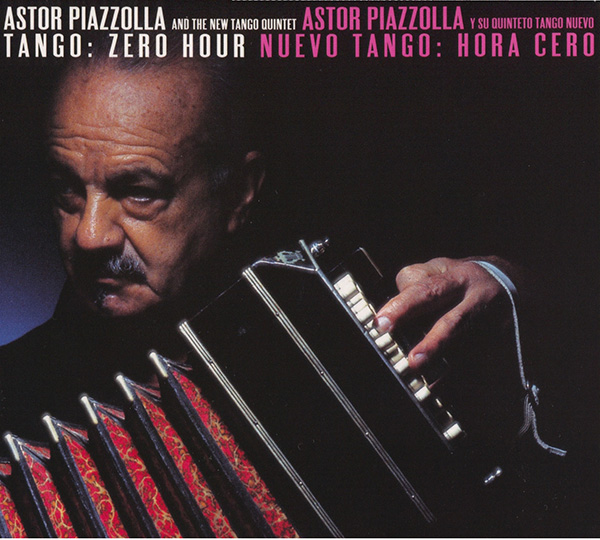 Astor Piazzolla and the New Tango Quartet: Tango: Zero Hour
Astor Piazzolla, bandoneon; Héctor Console, bass; Horacio Malvicino, guitar; Fernando Suárez Paz, violin; Pablo Ziegler, piano
American Clavé 1013 (LP). 1986. Kip Hanrahan, prod.; Kip Hanrahan, Jon Fausty, Greg Calbi, engs. Piazzolla himself called Tango: Zero Hour his best studio album. Recorded in NYC and released in 1986, it presents the most eloquent display of Piazzolla's art. Tango has its variants, just as there are different styles of jazz; Piazzolla's style is among the most elaborate and symphonic of these forms. Over the years, his compositions have had many passionate detractors, who argue against anything that is not traditional tango. It has also had fervent supporters, eager for a fresh look and receptive to his music's complexity. A particularly noteworthy (if less well-known) track is "Contrabajísimo," which skillfully traverses every emotion in Piazzolla's repertoire: strength, bravado, reflection, romanticism, love. The recording quality is top-notch, and the original vinyl pressing is masterful. The 2009 remaster, The American Clavé Recordings, is available streaming, for download, and on vinyl; it includes this album and two other captivating releases that showcase Piazzolla's artistry. Zero Hour serves as both a great introduction to Piazzolla's music and its ultimate representative.
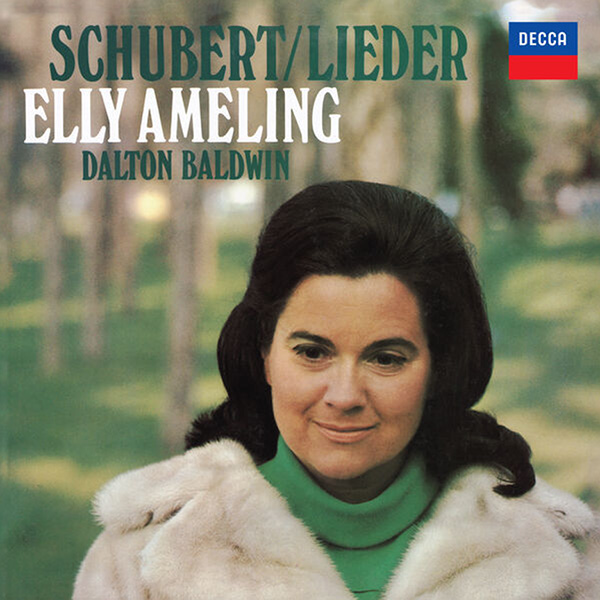 Elly Ameling, Dalton Baldwin: Schubert/Lieder
Elly Ameling, soprano; Dalton Baldwin, piano
Philips 6500704 (LP). 1974. Vittorio Negri, prod.; Willem Van Leeuwen, eng.