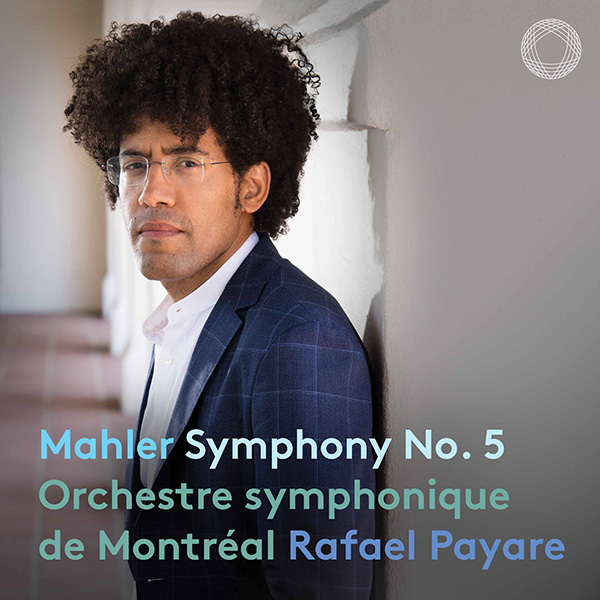
 Apparently accurate reproduction of a Bösendorfer piano is no small achievement, but the piano is just one instrument, albeit one with wide dynamic and frequency range. A large orchestra playing Mahler is a different kind of challenge. Jason Victor Serinus favorably reviewed Rafael Payare and Orchestre symphonique de Montréal's recording of Mahler's Symphony No.5 (Pentatone PTC5187067) in the September 2023 issue of Stereophile. His only caveat was that it "may lack ultimate transparency." Perhaps so but, listening to the 5.1 channel 24/96 download from pentatonemusic.com, I cannot fault it. The opening trumpet call leads to an orchestral explosion dominated by the full brass battery plus timpani and bass drum. The brass is clear and thrilling, and the drums pack a wallop—but try to direct your attention to the maelstrom going on in the lower strings.
Audio nerd that I am, I needed to compare this recording with some other modern recordings of this movement. None of the stereo versions could compete in sheer weight or the perceived size of the orchestra. None of the other multichannel recordings (footnote 7) revealed the interweaving surges of the cellos and basses with as much detail and the sense of proportion I heard from Payare and his Montrealers. What I heard played back via the Hapi and the rest of my 5.3-channel playback system may not be ultimate transparency—don't we always want more?—but it challenges disbelief.
Apparently accurate reproduction of a Bösendorfer piano is no small achievement, but the piano is just one instrument, albeit one with wide dynamic and frequency range. A large orchestra playing Mahler is a different kind of challenge. Jason Victor Serinus favorably reviewed Rafael Payare and Orchestre symphonique de Montréal's recording of Mahler's Symphony No.5 (Pentatone PTC5187067) in the September 2023 issue of Stereophile. His only caveat was that it "may lack ultimate transparency." Perhaps so but, listening to the 5.1 channel 24/96 download from pentatonemusic.com, I cannot fault it. The opening trumpet call leads to an orchestral explosion dominated by the full brass battery plus timpani and bass drum. The brass is clear and thrilling, and the drums pack a wallop—but try to direct your attention to the maelstrom going on in the lower strings.
Audio nerd that I am, I needed to compare this recording with some other modern recordings of this movement. None of the stereo versions could compete in sheer weight or the perceived size of the orchestra. None of the other multichannel recordings (footnote 7) revealed the interweaving surges of the cellos and basses with as much detail and the sense of proportion I heard from Payare and his Montrealers. What I heard played back via the Hapi and the rest of my 5.3-channel playback system may not be ultimate transparency—don't we always want more?—but it challenges disbelief.
 It did not take symphonic power, multiple channels, or even a recent recording to demonstrate the Hapi's complete competence. That was achieved with just three instruments via the 50-year-old classic Waltz for Debby by the Bill Evans Trio, recorded live at The Village Vanguard in New York on June 25, 1961. Back when the recording was made, I had only a passing interest in jazz records, but much later I became hooked on the 2002 DSD remaster of this album (Analogue Productions, CAPJ 9399 SA). Now it has been remastered again, by Concord and Craft Recordings, offered on LP and as digital files. I downloaded 24/192 FLAC files, in stereo.
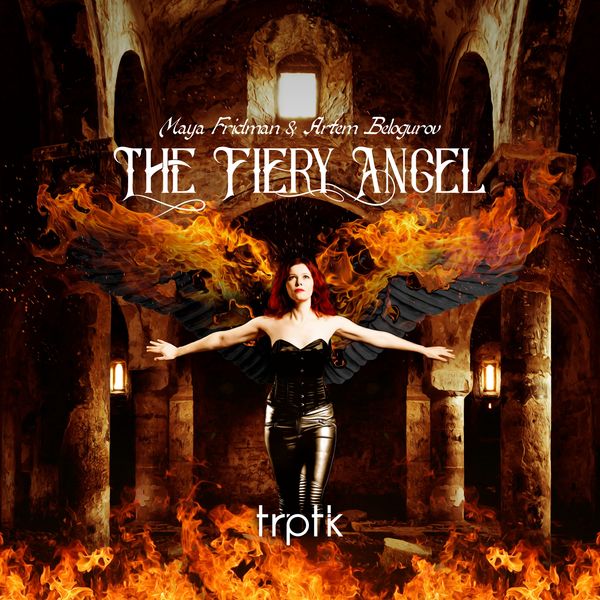 As one of my Records to Die For 2021, I selected the TRPTK recording of Prokofiev's The Fiery Angel, with Maya Fridman on cello and Artem Belogurov on piano (DXD download, TRPTK TTK0009), a collection of themes from the eponymous opera, arranged by Fridman for cello, piano, and gong! I concluded, "It is devastatingly realistic." Played now with the Hapi and KEF Blades with which it was mastered, it is even more remarkable, but I have no better words. This is turgid, uneasy music, punctuated by moments of soaring beauty. This performance kept me gripped and agape from beginning to end. The cello and piano were frighteningly present, about 10' from my listening seat. The presence of the loudspeakers was wiped from my consciousness. The impact was stunning.
Functionally, the three multichannel DACs compared—the Hapi MkII, the exaSound s88, and the Okto DAC8 Pro—are all somewhat different. All three use ESS D/A conversion devices, though different ones. With each change, I tweaked the gain settings with a pink-noise signal and monitored the output with a voltmeter at the speaker terminals to be sure they were equal in level. When that was accomplished, audible differences were elusive in A/B comparisons. I would be happy living with any of these DACs. However, I tend to choose the Hapi over the others due to my growing expectation of consistency and equanimity across the range of recordings. An example of what I mean: In the process of surveying some two dozen recordings of the Mahler 5, I realized how strikingly unique each recording sounded. The Hapi seemed simultaneously to favor all of them by realizing all their favorable qualities—and to favor none of them by exposing their various lapses and limitations. Crucially, the Hapi MkII, as configured, is unique in this trio in supporting more than eight channels. (Mike drop.)
 Conclusions
If you have read this review from the beginning, you know that this is a professional device and not a consumer-level "plug-and-play" component. Setup requires downloading and installing a couple of apps, yet it is less intimidating to do than to read about. A one-page quick-setup sheet, which comes in the box, is all you need to get started. The downloadable, 114-page user manual will help you with the details and to solve problems. The Merging website is rich in support, with a Knowledge Base and many tutorials, docs, and downloads. All it takes to employ the Hapi to its full potential is commitment and some patience.
Footnote 7: In alphabetical order, the other multichannel recordings were by Claudio Abbado, Ivan Fischer, Valery Gergiev, Helmut Haenchen, Mariss Jansons, Simon Rattle, Markus Stenz, Michael Tilson-Thomas, Benjamin Zander, and David Zinman.