A decade or so ago, I was giving seminars on how the way recordings had been made influenced what audiophiles hear from their systems. As an example of how different stereo microphone techniques resulted in different soundstage presentations, I used "The Turning" by Maura Bosch from While You Are Alive (Cantus CTS-1208). I had recorded all the tracks on this album from Minnesotan male-voice choir Cantus with three pairs of microphones: a close, central ORTF pair of cardioids, a close, spaced pair of omnis, and a distant pair of omnis mounted on a Jecklin disc. (You can see a photo of the three pairs of mikes by scrolling down this page.) For the CD, I mixed the outputs of the three pairs, but for the seminars, I played the three outputs separately. I wish I had used the Weiss DAC502 at those seminars, because the differences in perspective, ambience, and tonal character from each of the microphone pairs were superbly audible: clean and clear, with precise stereo imaging but insufficient reverberation and no low bass from the cardioids; rich, but a stereo image that was pulled to the sides with the close-in spaced omnis; and richly reverberant but insufficient stereo spread from the distant omnis.
This soundstage clarity was a consistent feature of my time with the Weiss processor. The first track on Caverna Magica, the second album from Swiss New Age harpist Andreas Vollenweider (16/44.1k ALAC, ripped from Columbia MK 37827), opens with a man and woman having a conversation; the recorded acoustic, excited by their footsteps and the sound of dripping water, opens up as they step into a cave. I've never heard this so clearly delineated as with DAC502. The layering of the soundstage on this album, with various different instruments accompanied by different amounts of reverb, was also very audible.
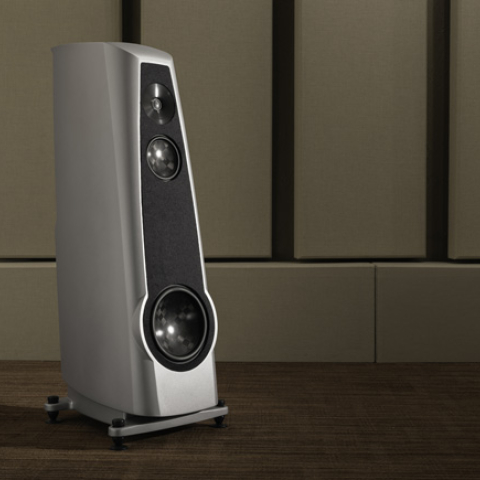
 The DAC502's low frequencies combined clarity with an excellent sense of what the late Art Dudley used to call "force"—even with both ports open on each of the Vimberg Mino loudspeakers, there was an excellent sense of forward momentum with the bass guitar and kickdrum on such rock classics as the intricate arrangement of Paul Simon's "America" from the 2002 reissue of the Yes album Fragile (24/96 ALAC, ripped from DVD-A, Elektra/Rhino R9 78249). Similarly, the double basses in Peter Gabriel's reimagining of "Don't Give Up" from New Blood (Special Edition) (16/44.1k ALC file, ripped from CD, Real World 00038) were superbly well-defined but with good weight. On both these albums, I was again struck by the well-differentiated layering of the soundstage.
Special effects
The DAC502's low frequencies combined clarity with an excellent sense of what the late Art Dudley used to call "force"—even with both ports open on each of the Vimberg Mino loudspeakers, there was an excellent sense of forward momentum with the bass guitar and kickdrum on such rock classics as the intricate arrangement of Paul Simon's "America" from the 2002 reissue of the Yes album Fragile (24/96 ALAC, ripped from DVD-A, Elektra/Rhino R9 78249). Similarly, the double basses in Peter Gabriel's reimagining of "Don't Give Up" from New Blood (Special Edition) (16/44.1k ALC file, ripped from CD, Real World 00038) were superbly well-defined but with good weight. On both these albums, I was again struck by the well-differentiated layering of the soundstage.
Special effects
While the D-Esser and Dynamic Adaptation functions held little appeal, I did experiment with the Vinyl Emulator. Setting the Saturation control to "–3dB" gave a subjectively satisfactory effect. Even so, I ended up leaving the Emulator bypassed. A little of this effect goes a long way—an occasional splash of Sriracha sauce is nice, but the spicy effect is too much of a good thing when it is used with everything you eat. Over the years, I have made several binaural/dummy-head recordings, but these need to be auditioned with headphones to project the soundstage outside my head. Played back on loudspeakers, binaural recordings tend to resemble "fat mono." Using the DAC502's local webpage for the XTC function, I entered the width of my head in centimeters, the distance of the speakers to my listening position in meters, and the distance between the loudspeakers. The maximum setting appears to be 2m; the manual says that the speakers need to be fairly close together, and if the geometry is suboptimal, the settings background turns yellow, which it did in my setup. I left the Mid Frequency and High Frequency attenuation at the factory settings of –5dB. I resisted the temptation to play any tracks by Andy Partridge and cued up my binaural recording from the 1992 Formula One Grand Prix in Montreal, from Stereophile's Test CD 3 (16/441.k ALAC, STPH006-2). I had made the recording sitting in the grandstand at the hairpin, and on headphones the cars rush toward me on the right outside my head, slow down to take the turn, then accelerate away into the distance on the left. With XTC bypassed and this track played back on speakers, everything sat in a wodge between the speakers, with some sounds smeared toward the left and right but with very little depth. Enabling XTC opened up the stereo image, the cars moved from the right speaker position to the left, and now there was excellent depth apparent as they zoomed away on the straight. But the degree of the effect was very dependent on how far away I sat and the separation between the speakers—easier to arrange with the stand-mounted KEF LS50s than the massive Vimberg Minos. The closer together the speakers, the better XTC appears to work; it would be a great function to use with desktop speakers.
The DAC502's Room Equalizer comprises five filters that can be set to peak/cut or high shelf for left and right speakers individually or together. To make use of this function, you download a FLAC or WAV file from the Weiss website that sweeps down from 200Hz to 20Hz. While playing this file, you note the time when the loudness is at a maximum. The Weiss processor's manual includes a table that correlates the time with the frequency of the sinewave. You then manually create up to five correction filters, a complex process that would be more user-friendly if integrated with an app like Room Equalization Wizard.
 The DSP function I found most useful was the "Creative EQ." With the full-range Vimberg speakers, I left the frequency extremes alone but slightly suppressed the presence region. With the KEF LS50s, which have limited low-frequency extension, I added a 3dB-high low shelf with a Q of 1.4 and its corner frequency set to 92.5Hz. As long as I set the volume at a reasonable level, the EQ effectively fleshed out the speakers' midbass behavior, so that the organ pedals on my unreleased recording of Jonas Nordwall performing the Toccata from Widor's Organ Symphony No.5 (footnote 2) had enough body.
With this small amount of boost in the bass, the KEFs' top octave now sounded a little depressed, so I added another filter, shelving up the frequencies above 10kHz by 1.5dB. This added a little top-octave air and better balanced the lows.
Comparisons
The DSP function I found most useful was the "Creative EQ." With the full-range Vimberg speakers, I left the frequency extremes alone but slightly suppressed the presence region. With the KEF LS50s, which have limited low-frequency extension, I added a 3dB-high low shelf with a Q of 1.4 and its corner frequency set to 92.5Hz. As long as I set the volume at a reasonable level, the EQ effectively fleshed out the speakers' midbass behavior, so that the organ pedals on my unreleased recording of Jonas Nordwall performing the Toccata from Widor's Organ Symphony No.5 (footnote 2) had enough body.
With this small amount of boost in the bass, the KEFs' top octave now sounded a little depressed, so I added another filter, shelving up the frequencies above 10kHz by 1.5dB. This added a little top-octave air and better balanced the lows.
Comparisons
The PS Audio DirectStream ($5999) has been my go-to D/A processor since I purchased our review sample in 2014. While not the last word in resolution, its smooth-sounding presentation allows the music to communicate and, since I added the original Network Bridge card ($899), allows me to use Roon to explore my music library. For the comparisons with the Weiss DAC502, the PS Audio was running the Snowmass firmware—I haven't yet installed the current Windom firmware, as I needed to keep the PS Audio's character, which I have become used to, unchanged. With levels matched using the 1kHz warble tone from my Editor's Choice CD (STPH016-2) and the DAC502's EQ bypassed, the PS Audio's low frequencies sounded less well-defined than those of the Weiss DAC. With the big Vimberg speakers, I felt I needed to reinsert the plugs in their uppermost ports with the PS Audio—without the plugs, the Minos' lows were too loose-sounding—and with the little KEFs, I didn't feel the need to add midbass boost as I had with the Weiss. Nevertheless, listening to Martha Argerich's live performance with Nelson Goerner of Rachmaninoff's Symphonic Dances, arranged for two pianos (ALAC ripped from CD, Warner Classics 623594), the leading edges of the pianos' bass notes were still better defined with the Weiss. The Rachmaninoff recording's midrange was warmer-sounding with the PS Audio but with less space around the pianos. Hugh Laurie's close-miked piano on "The Weed Smoker's Dream," from Didn't It Rain (16/44.1k ALAC ripped from CD, Warner Bros 535893), also sounded warmer on the PS Audio than it did on the Weiss, but Gaby Moreno's despairingly evocative vocal on this slow drag was equally engaging with both DACs, if a little more forward-sounding with the DAC502.
The PS Audio gets the nod for its warm, easy-on-the-ear balance, the more-incisive Weiss for its transparent window into the recording's soundstage.
Headphone listening
I was editing one of my recordings with Adobe Audition while I had the DAC502 in-house. I took advantage of that processor's balanced headphone output to audition it with my Audeze LCD-Xes using a balanced Nordost Heimdall 2 cable. When you are creating a master file by splicing together musical selections from two different takes, it is critically important to be able to hear if there were differences in the reverberation and the noise floor between the outgoing and incoming takes. If there are differences, you get a "gear-change" effect at the splice point that gives the game away. Crossfades that I thought were okay with a pair of Sony MDR-7506 closed-back 'phones plugged into my MacBook Pro were revealed as needing more work when I listened to them with the Audezes driven by the DAC502.
Work done, I played a favorite Bill Frisell album, East/West (16/44.1k FLAC file ripped from CD, Nonesuch). I am enthralled by both Frisell's multifaceted electric guitar skills and his skillful arrangements. "Shenandoah," on East/West, starts off quietly with the guitar backed by a subtle loop then swells as the other three members of the quartet enter. Driving the Audeze headphones, the Weiss processor preserved the dynamics, the subtle ambience around the drums, the weight of the double bass, and the sheer force of Frisell's playing. Nice!
Conclusion
The Weiss DAC502 retrieves more information from the digits than any other DAC I have auditioned, with the possible exceptions of the Chord DAVE and dCS Vivaldi, both of which are long gone from my system and neither of which has either a headphone output or DSP functions. Both of those DACs are also more expensive than the DAC502. But the Weiss's resolution does come at a price: it is intolerant of problems with the rest of the system it is used with that would not be noticed with lesser DACs. During the six weeks I used the DAC502, I found I was continually fine-tuning my system before I could get the most enjoyment from my music. But ultimately, musical enjoyment is what this product is all about. As I write this conclusion, I am listening to Stanford's hauntingly engaging song "The Blue Bird," performed by the Gabrieli Consort directed by Paul McCreesh (from Silence & Music, 16/44.1k FLAC, Signum Classics/Tidal). The interplay between the unaccompanied voices, the bell-like interjections of the high soprano, the setting of all the singers within a supportive chapel acoustic—the Weiss DAC502 made all these aspects clear, in service of the music. Which is what a great audio component should do.
Footnote 2: Readers are welcome to download this track here.
The DAC502's low frequencies combined clarity with an excellent sense of what the late Art Dudley used to call "force"—even with both ports open on each of the Vimberg Mino loudspeakers, there was an excellent sense of forward momentum with the bass guitar and kickdrum on such rock classics as the intricate arrangement of Paul Simon's "America" from the 2002 reissue of the Yes album Fragile (24/96 ALAC, ripped from DVD-A, Elektra/Rhino R9 78249). Similarly, the double basses in Peter Gabriel's reimagining of "Don't Give Up" from New Blood (Special Edition) (16/44.1k ALC file, ripped from CD, Real World 00038) were superbly well-defined but with good weight. On both these albums, I was again struck by the well-differentiated layering of the soundstage.
While the D-Esser and Dynamic Adaptation functions held little appeal, I did experiment with the Vinyl Emulator. Setting the Saturation control to "–3dB" gave a subjectively satisfactory effect. Even so, I ended up leaving the Emulator bypassed. A little of this effect goes a long way—an occasional splash of Sriracha sauce is nice, but the spicy effect is too much of a good thing when it is used with everything you eat. Over the years, I have made several binaural/dummy-head recordings, but these need to be auditioned with headphones to project the soundstage outside my head. Played back on loudspeakers, binaural recordings tend to resemble "fat mono." Using the DAC502's local webpage for the XTC function, I entered the width of my head in centimeters, the distance of the speakers to my listening position in meters, and the distance between the loudspeakers. The maximum setting appears to be 2m; the manual says that the speakers need to be fairly close together, and if the geometry is suboptimal, the settings background turns yellow, which it did in my setup. I left the Mid Frequency and High Frequency attenuation at the factory settings of –5dB. I resisted the temptation to play any tracks by Andy Partridge and cued up my binaural recording from the 1992 Formula One Grand Prix in Montreal, from Stereophile's Test CD 3 (16/441.k ALAC, STPH006-2). I had made the recording sitting in the grandstand at the hairpin, and on headphones the cars rush toward me on the right outside my head, slow down to take the turn, then accelerate away into the distance on the left. With XTC bypassed and this track played back on speakers, everything sat in a wodge between the speakers, with some sounds smeared toward the left and right but with very little depth. Enabling XTC opened up the stereo image, the cars moved from the right speaker position to the left, and now there was excellent depth apparent as they zoomed away on the straight. But the degree of the effect was very dependent on how far away I sat and the separation between the speakers—easier to arrange with the stand-mounted KEF LS50s than the massive Vimberg Minos. The closer together the speakers, the better XTC appears to work; it would be a great function to use with desktop speakers.
The DSP function I found most useful was the "Creative EQ." With the full-range Vimberg speakers, I left the frequency extremes alone but slightly suppressed the presence region. With the KEF LS50s, which have limited low-frequency extension, I added a 3dB-high low shelf with a Q of 1.4 and its corner frequency set to 92.5Hz. As long as I set the volume at a reasonable level, the EQ effectively fleshed out the speakers' midbass behavior, so that the organ pedals on my unreleased recording of Jonas Nordwall performing the Toccata from Widor's Organ Symphony No.5 (footnote 2) had enough body.
With this small amount of boost in the bass, the KEFs' top octave now sounded a little depressed, so I added another filter, shelving up the frequencies above 10kHz by 1.5dB. This added a little top-octave air and better balanced the lows.
The PS Audio DirectStream ($5999) has been my go-to D/A processor since I purchased our review sample in 2014. While not the last word in resolution, its smooth-sounding presentation allows the music to communicate and, since I added the original Network Bridge card ($899), allows me to use Roon to explore my music library. For the comparisons with the Weiss DAC502, the PS Audio was running the Snowmass firmware—I haven't yet installed the current Windom firmware, as I needed to keep the PS Audio's character, which I have become used to, unchanged. With levels matched using the 1kHz warble tone from my Editor's Choice CD (STPH016-2) and the DAC502's EQ bypassed, the PS Audio's low frequencies sounded less well-defined than those of the Weiss DAC. With the big Vimberg speakers, I felt I needed to reinsert the plugs in their uppermost ports with the PS Audio—without the plugs, the Minos' lows were too loose-sounding—and with the little KEFs, I didn't feel the need to add midbass boost as I had with the Weiss. Nevertheless, listening to Martha Argerich's live performance with Nelson Goerner of Rachmaninoff's Symphonic Dances, arranged for two pianos (ALAC ripped from CD, Warner Classics 623594), the leading edges of the pianos' bass notes were still better defined with the Weiss. The Rachmaninoff recording's midrange was warmer-sounding with the PS Audio but with less space around the pianos. Hugh Laurie's close-miked piano on "The Weed Smoker's Dream," from Didn't It Rain (16/44.1k ALAC ripped from CD, Warner Bros 535893), also sounded warmer on the PS Audio than it did on the Weiss, but Gaby Moreno's despairingly evocative vocal on this slow drag was equally engaging with both DACs, if a little more forward-sounding with the DAC502.
I was editing one of my recordings with Adobe Audition while I had the DAC502 in-house. I took advantage of that processor's balanced headphone output to audition it with my Audeze LCD-Xes using a balanced Nordost Heimdall 2 cable. When you are creating a master file by splicing together musical selections from two different takes, it is critically important to be able to hear if there were differences in the reverberation and the noise floor between the outgoing and incoming takes. If there are differences, you get a "gear-change" effect at the splice point that gives the game away. Crossfades that I thought were okay with a pair of Sony MDR-7506 closed-back 'phones plugged into my MacBook Pro were revealed as needing more work when I listened to them with the Audezes driven by the DAC502.
The Weiss DAC502 retrieves more information from the digits than any other DAC I have auditioned, with the possible exceptions of the Chord DAVE and dCS Vivaldi, both of which are long gone from my system and neither of which has either a headphone output or DSP functions. Both of those DACs are also more expensive than the DAC502. But the Weiss's resolution does come at a price: it is intolerant of problems with the rest of the system it is used with that would not be noticed with lesser DACs. During the six weeks I used the DAC502, I found I was continually fine-tuning my system before I could get the most enjoyment from my music. But ultimately, musical enjoyment is what this product is all about. As I write this conclusion, I am listening to Stanford's hauntingly engaging song "The Blue Bird," performed by the Gabrieli Consort directed by Paul McCreesh (from Silence & Music, 16/44.1k FLAC, Signum Classics/Tidal). The interplay between the unaccompanied voices, the bell-like interjections of the high soprano, the setting of all the singers within a supportive chapel acoustic—the Weiss DAC502 made all these aspects clear, in service of the music. Which is what a great audio component should do.
Footnote 2: Readers are welcome to download this track here.