

MQA, DRM, and Other Four-Letter Words

In an article published in the March 2018 Stereophile, I wrote that critics have been attacking MQA, the audio codec developed by J. Robert Stuart and Peter Craven, by accusing it of being lossy. The critics are right: MQA is, in fact, a lossy codecthat is, not all of the data in the original recording are recovered when played back via MQAthough in a clever and innocuous way. For MQA's critics, though, that's not the point: They use lossy mainly for its negative emotional associations: When audiophiles hear lossy, they think MP3.
MQA: Aliasing, B-Splines, Centers of Gravity
The right thing at the wrong time is the wrong thing.Joshua Harris
The sampling theory formulated by Claude Shannon in the late 1940s had a key requirement: The signal to be sampled must be band-limitedthat is, it must have an absolute upper-frequency limit. With that single constraint, Shannon's work yields a remarkable result: If you sample at twice that ratetwo samples per period for the highest frequency the signal containsyou can reproduce that signal perfectly. Perfectly. That result set the foundation for digital audio, right up to the present. Cue the music.
MQA: Questions and Answers

Author's Note: We are grateful to Stereophile for the opportunity to address some frequently repeated technical questions appearing in comments to articles. Recently this has included misunderstandings about noise calculation, dynamic range, resolution, definition, music spectra, channel capacity, lossless processing and temporal aspects of digital channels.
To simplify this document we have grouped the topics and set them as questions and answers either as response, tutorial or axiom. Some months ago we published a comprehensive Q&A for an online forum and to avoid repetition we occasionally refer to topics already discussed there (see [37] in the "References" sidebar).J. Robert Stuart
Nelson Pass: Circuit Topology and the End of Science
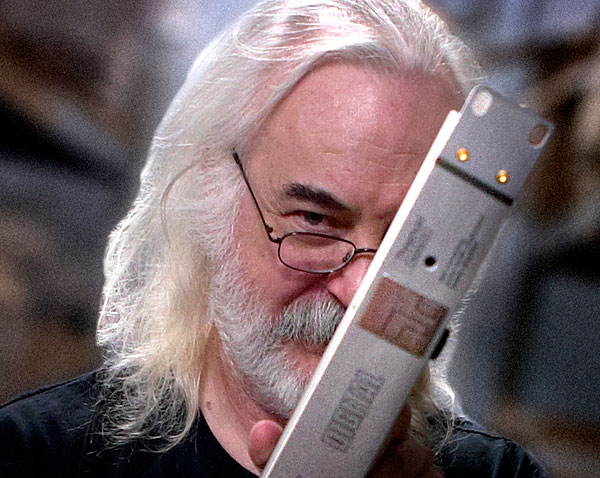
Nelson Pass is a consummate engineer, but he got his start in physics, earning a bachelor's degree from UC Davis. As he worked on his degree, he was already an audio designer, focusing on loudspeakersgreat training for a designer of audio amplifiers. Soon, in 1974, he cofounded Threshold Audio with René Besne, of audio and folk-dancing fame; their goal was to build electronics, partly because the field is less competitiveit's harder than building speakers.
New Media Metrics
Looked at from one viewpoint, DVD-Audio and SACD appear to be exercises in sheer profligacy. In the case of DVD-A, why provide a maximum">http://www.stereophile.com/features/282">maximum bandwidth almost five times what is conventionally taken to be the audible frequency range, and couple it to a dynamic-range capability far in excess of that achievable by the microphones used to record the sound? In the case of SACD, why provide a potential bandwidth in excess of 1.4MHz, only to fill more than 95% of it with quantization">http://www.stereophile.com/features/374">quantization noise?
Noise, Modulation, & Digital/Analog Conversion
At the February 1991 Audio Engineering Society Convention in Paris, Audio Precision's Dr. Richard Cabot (see my">http://www.stereophile.com/interviews/850">my interview in January 1991, Vol.14 No.1) proposed a new technique for measuring noise modulation in D/A converters (footnote 1). The method, based on psychoacoustic principles, attempts to predict the audible performance of D/A converters. Now that Stereophile has added digital-domain signal generation and analysis to our Audio Precision System One, we can employ Dr. Cabot's technique and see if there are any correlations with subjective performance.
NWAA Labs: Measurement Beyond The Atomic Level
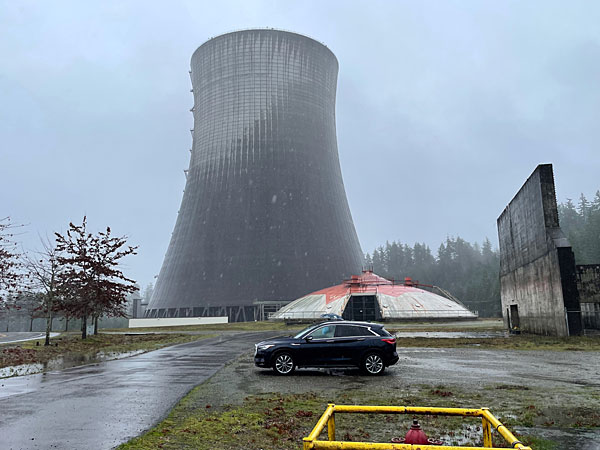
The setting is surreal. As you drive into the Satsop Business Park in rural Elma, Washington (pop. 3500, max), eyes immediately fixate on the looming 481'-tall cooling towers of an abandoned nuclear facility. Remnants of the largest nuclear power plant construction project in the United States, the site was mothballed in 1983, in part due to concerns triggered by reports of what had happened at Pennsylvania's Three Mile Island four years earlier.
Pace, Rhythm, & Dynamics
Martin Colloms (footnote 1) suggests that the traditional ways of assessing hi-fi component problems overlook the obvious: does the component dilute the recording's musical meaning?
PASC & Philips' DCC
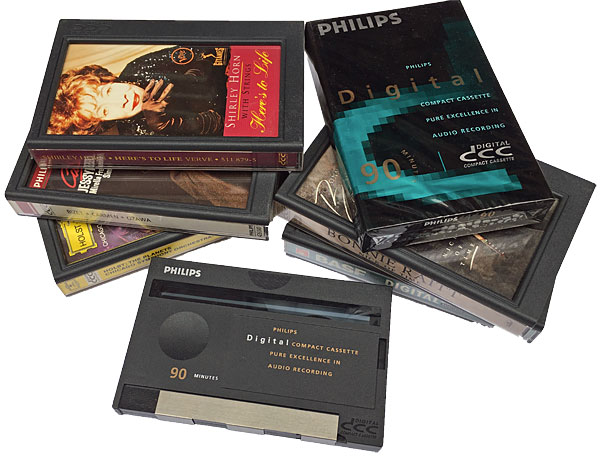
Editor's Note: In the 21st Century, lossy audio data compression, in the form of MP3 and AAC files, Dolby Digital and DTS-encoded soundtracks, and YouTube and Spotify streaming, is ubiquitous. But audiophiles were first exposed to the subject a quarter-century ago, when Philips launched its ill-fated DCC cassette format. What follows is Stereophile's complete coverage on both DCC and its PASC lossy-compression encoding from our April 1991 issue.John Atkinson
PDM, PWM, Delta-Sigma, 1-Bit DACs

Editor's Note: One-bit DAC chips in the 21st century, where the analog output signal is reconstructed from a very high-rate stream of pulses, are ubiquitous. But a quarter-century ago, those chips were only just beginning to stream from the chip foundries. In this feature, we aggregate Stereophile's 1989 coverage of the then-new technology, starting with Peter van Willenswaard on the basics.John Atkinson.
1989 may well become the year of the D/A converter (DAC). CD-player manufacturers have, almost without exception, launched research projects focusing on this problem area of digital audio; many of these projects are already a year old. This is, however, by no means the only imperfection keeping us away from the high-quality sound we have come to suspect is possible with digital audio media, and maybe not even the most important.