

MQA, DRM, and Other Four-Letter Words

In an article published in the March 2018 Stereophile, I wrote that critics have been attacking MQA, the audio codec developed by J. Robert Stuart and Peter Craven, by accusing it of being lossy. The critics are right: MQA is, in fact, a lossy codecthat is, not all of the data in the original recording are recovered when played back via MQAthough in a clever and innocuous way. For MQA's critics, though, that's not the point: They use lossy mainly for its negative emotional associations: When audiophiles hear lossy, they think MP3.
MQA: Aliasing, B-Splines, Centers of Gravity
The right thing at the wrong time is the wrong thing.Joshua Harris
The sampling theory formulated by Claude Shannon in the late 1940s had a key requirement: The signal to be sampled must be band-limitedthat is, it must have an absolute upper-frequency limit. With that single constraint, Shannon's work yields a remarkable result: If you sample at twice that ratetwo samples per period for the highest frequency the signal containsyou can reproduce that signal perfectly. Perfectly. That result set the foundation for digital audio, right up to the present. Cue the music.
MQA: Questions and Answers

Author's Note: We are grateful to Stereophile for the opportunity to address some frequently repeated technical questions appearing in comments to articles. Recently this has included misunderstandings about noise calculation, dynamic range, resolution, definition, music spectra, channel capacity, lossless processing and temporal aspects of digital channels.
To simplify this document we have grouped the topics and set them as questions and answers either as response, tutorial or axiom. Some months ago we published a comprehensive Q&A for an online forum and to avoid repetition we occasionally refer to topics already discussed there (see [37] in the "References" sidebar).J. Robert Stuart
Music Served: Extracting Music from your PC
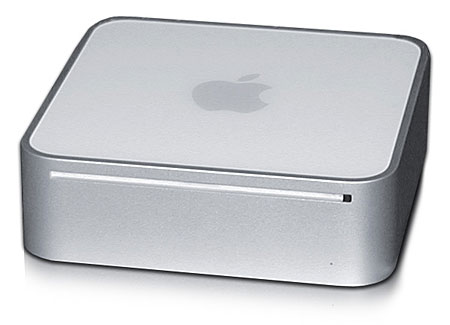
"Physical discs seem so 20th century!" That's how I ended my eNewsletter">http://www.stereophile.com/images/newsletter/406Bstph.html">eNewsletter review of the Logitech (then Slim Devices) Squeezebox WiFi music server in April 2006, and it seems that increasing numbers of Stereophile readers agree with me. In our website">http://cgi.stereophile.com/cgi-bin/showvote.cgi?551">website poll of January 5, 2008, we asked, "Are you ready for an audiophile music server?" The response to that question was the highest we have experienced: 32% of respondents already listen to music via their computer networks, many using home-brewed solutions, and 44% intend to. We've published a lot of material on this subject in the last five years, and it seemed a good idea to sum it up in this article.
New Media Metrics
Looked at from one viewpoint, DVD-Audio and SACD appear to be exercises in sheer profligacy. In the case of DVD-A, why provide a maximum">http://www.stereophile.com/features/282">maximum bandwidth almost five times what is conventionally taken to be the audible frequency range, and couple it to a dynamic-range capability far in excess of that achievable by the microphones used to record the sound? In the case of SACD, why provide a potential bandwidth in excess of 1.4MHz, only to fill more than 95% of it with quantization">http://www.stereophile.com/features/374">quantization noise?
Noise, Resolution & Benchmark
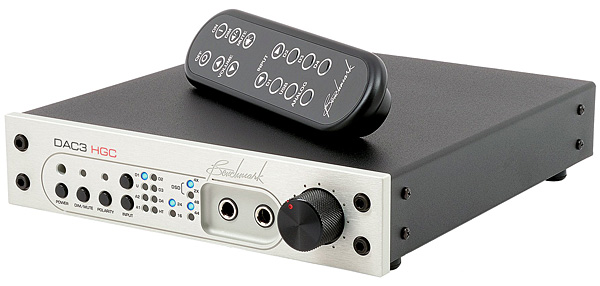
The most notable aspect of Benchmark Media Systems' DAC3 HGC ($2195), which I favorably reviewed in the November 2017 Stereophile (footnote 1), is its low noise floor. John Atkinson's measurements corroborated Benchmark's claim that the DAC3 is capable of "at least" 21-bit performance. While significantly less than the theoretical potential of a 24-bit data format, 21 bits is still the state of the art, and corresponds to a dynamic rangethe ratio of the highest achievable digital-domain volume to the DAC's internal noiseof 128dB. That's well above the dynamic range that most power amplifiers can achieve. A good-measuring high-end solid-state amplifier is likely to have a dynamic rangethe highest attainable ratio of signal to noiseof about 100dB ref. its maximum power.
NWAA Labs: Measurement Beyond The Atomic Level
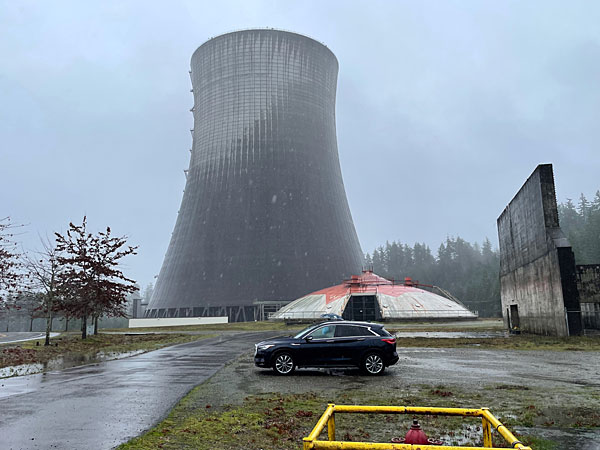
The setting is surreal. As you drive into the Satsop Business Park in rural Elma, Washington (pop. 3500, max), eyes immediately fixate on the looming 481'-tall cooling towers of an abandoned nuclear facility. Remnants of the largest nuclear power plant construction project in the United States, the site was mothballed in 1983, in part due to concerns triggered by reports of what had happened at Pennsylvania's Three Mile Island four years earlier.
Of Headphones to Come
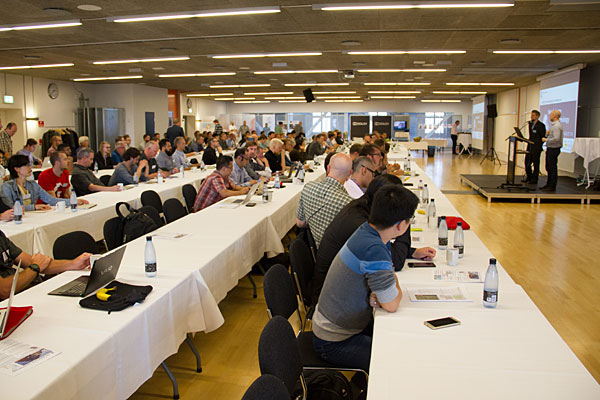
Some 100 engineers and scientists from around the globe assembled for the Audio Engineering Society's 2016 International Conference on Headphone Technology, in Aalborg, Denmark.
I figured it was coming, but it wasn't until just after I'd returned from the Audio Engineering Society's 2016 International Conference on Headphone Technologyheld last August in Aalborg, Denmarkand was writing up my report and summary on the event for InnerFidelity.com (footnote 1) that I knew for sure: Headphones are about to change . . . a lot.One by One: the Cantus Recording Project
 Just who were these guys?—Wes Phillips
Pavane Pour Un Dealer Défunt
In Xanadu did Kubla Khan
A stately pleasure dome decree...---Coleridge
A stately pleasure dome decree...---Coleridge