

The Joy of Music
"The whole band was in the hot tub. As water frothed over my bare breasts in the moonlight..."
The Kids Are Alright

It's one of audiophiledom's eternal questions: What can we do to draw more music lovers into the audiophile fold?
Of the proposals bandied about on audio forums, two seem predominant: a) sell stuff more people can afford, and b) sit your neighbor or the cable guy in front of your stereo, cross your fingers, and let 'er ripthe theory behind b) being that the experience will be so epic as to transform the reluctant participant into an audiophile butterfly. As if.
The Last Word on Fidelity
Last October, in Vol.11 No.10, Stereophile's Founder and Chief Tester J">http://www.stereophile.com/interviews/66">J. Gordon Holt stated, in his acerbic editorial "The">http://www.stereophile.com/asweseeit/111">The Acoustical Standard," that, in his opinion, only recordings for which there is an original acoustic reference—ie, typically those of classical music—should be used to evaluate hi-fi components. And that in the absence of a consensus over such a policy, high-end component manufacturers were losing their way over what does and does not represent good sound quality.
The Law and the Prophets: Stereophile's Review Policies
I began writing this essay on New Year's Day 2007. The passing of the old year reminded me that I am now in the 21st year of editing Stereophile, my 25th of being the editor-in-chief of a mainstream audio magazine, and my 31st of working full-time as an audio journalist. (Prior to joining Stereophile in 1986, I had worked for 10 years at British magazine Hi-Fi News & Record Review, the final four as its editor.) Back in the innocent 1970s, reviewers and editors generally picked and chose what products to review based on their own interest and what they felt appropriate for their readers to know about. Back then, there was only a tiny fraction of the audio brands now available to the audiophile, and even with fewer review pages than we now have, it was possible each year to cover a representative sample of the products being offered our readers. But such was the explosion in high-end audio throughout the 1980s that, by 1989, I felt it necessary to impose some restrictions on what products we choose for full review coverage in Stereophile.
The Listening Room: the Forgotten Factor
Question: What is it that almost every audiophile takes for granted, yet has more effect on the sound of his system than does any single component in that system? Answer: His listening room.
The Missing Specification
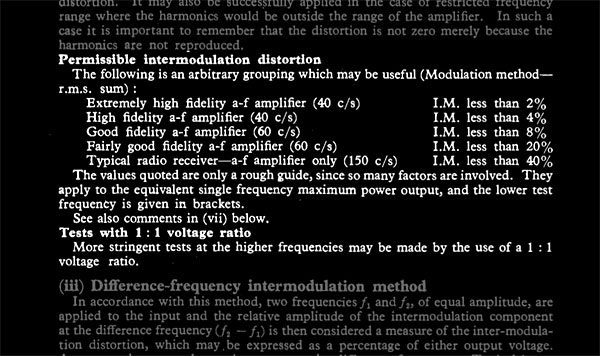
In the 1952 edition of the Radiotron Designer's Handbook, long recognized as the "bible" of the industry, the permissible level of IM distortion for a high-fidelity amplifier was given as 3%, with the alternate figure of 2% being cited as a "rather extreme" specification. We wonder what the author of that statement would think of today's solid-state amplifiers with their measured IM of 0.01% and less. And we wonder what he would think about the fact that these super-amplifiers still have audible distortion.
The Moment of Truth
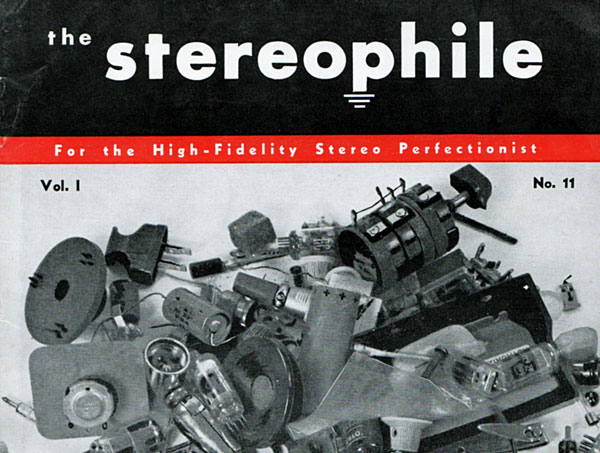
Well, it's that time. The time of reckoning, the moment of truth. It's renewal time.
Most of you have noticed the hyphenated numbers on your address labels, and most of you guessed what they were: Expiration codes. If your label has a 1-12 number on it (or no hyphenated code at all), the next issue of The Stereophile, Issue Number 12 [published in September 1966Ed.], will be the last one that will arrive on your present subscription.
The More I Know, the Less I Know
Hanging above the expensive desk in my penthouse office atop Manhattan's prestigious Stereophile Tower is a photocopy of a New Yorker cartoon, in which a bewildered-looking guy complains, "There has been an alarming increase in the number of things I know nothing about."
The Mystery of Music
The debates may be old, but they're not tired. They rage on with a virulence that suggests there's plenty of life in these old dogs yet. Online forums and Letters to the Editor are filled with them: objectivist vs subjectivist, engineer vs audiophile, double-bind vs doubly blind. The divisions may be artificial or downright specious—false dichotomies perfectly set up for cheap shots—but that doesn't dissuade people from drawing sides, driving stakes into the ground, and firing off volley after volley of accusation and retaliation.
The new aether
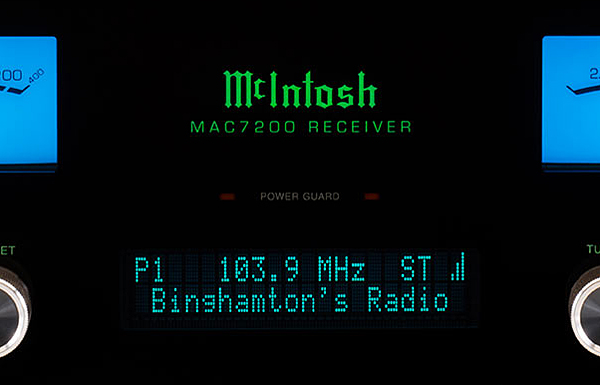
When I decided that Stereophile should review the McIntosh MAC7200 receiver (see the review in the January 2021 issue), I had several reasons for doing so. First, McIntosh is known for the quality of its radio tuners and amplifiers, so I was confident it would be an impressive product. (It was.) Second, a review of a terrestrial radio receiver in 2021 had a certain retro appeal that I thought Stereophile readers might appreciate. Third, as Larry Greenhill wrote in the introduction to that review, I like terrestrial radio.