

We Did It!
In 1960 the high-fidelity field was in a period of stasis. The hi-fi boom was starting to crest out, and there were three magazines for audiophiles: High Fidelity, Stereo Review, and Audio. The first two were (and still are) little more than vehicles for their advertising, more dedicated to promoting their advertisers' wares than in advancing the state of the art. Audio was more into equipment testing than either of the mass-hi-fi magazines, but it too was contributing to the stagnation by listening to its test results rather than to the components.
We Don't Get No Respect

It never fails. Browse Stereophile's Facebook page, scroll through the comments to an article that refers to life as an audiophile, and splatappearing like bird droppings on your glistening screen are anti-audiophile wisecracks pointing out exactly how far off the "normal" track our hobby has derailed. Occasionally, I catch myself in mid-sentence, already replying to one of these droppings, the gist of my intended message invariably being: "If you're an anti-audiophile, what are you doing using up what life you have left reading a webpage devoted to a hobby you don't get? Shouldn't you be hanging out with your own friends?" Then, realizing that I'm wasting my time.
We Get Letters
One of my mentors, John Crabbe—my predecessor as editor of the English magazine Hi-Fi News—used to insist that a magazine's soul is its "Letters" column. If a magazine was able to publish a lively collection of readers' letters, said John, it would enjoy a lengthy life. Conversely, if its letters column was dull or nonexistent, then no matter how much advertising it had or how many readers it could boast, it was just a matter of time before it had the lid shut on it. In the 28 years since John told me this, I have not found an exception. The kicker, of course, is that there's no easy way of ensuring that a magazine has lively letters to publish.
Were Those Ears So Golden? (DCC & PASC)
The whole field of subjective audio reviewing—listening to a piece of equipment to determine its characteristics and worth—is predicated on the idea that human perception is not only far more sensitive than measurement devices, but far more important than the numbers generated by "objective" testing. Subjective evaluation of audio equipment, however, is often dismissed as meaningless by the scientific audio community. A frequent objection is the lack of thousands upon thousands of rigidly controlled clinical trials. Consequently, conclusions reached by subjective means are considered unreliable because of the anecdotal nature of listening impressions. The scientific audio community demands rigorous, controlled, blind testing with many trials before any conclusions can be drawn. Furthermore, any claimed abilities to discriminate sonically that are not provable under blind testing conditions are considered products of the listeners' imaginations. Audible differences are said to be real only if their existence can be proved by such "scientific" procedures (footnote 1).
Wes Phillips Bids a (Temporary) Farewell
The March 1999 issue of Stereophile is my last as the magazine's Equipment Reports Editor. I have accepted a job elsewhere in the industry, and, as a public relations consultant, will be actively promoting this wonderful hobby of ours in a different capacity.
What Did He Have?
There is an old hi-fi joke that goes thus:
What If Digital Had Never Happened?

Digital audio forever disrupted the way music is recorded, mixed, and masteredand, to even greater extents, how music is distributed, sold, played, and consumed. Music unmolested by zeros and ones is now nearly extinct.
There's no going back, but what if, in 1983, the Compact Disc had bombed? What if music lovers worldwide had rejected the shiny new digital format because they thought LPs sounded so much better? And what if later attempts at digital formats with higher resolutions also shriveled and died, due to lack of interest by recording engineers and consumers? What if, to this day, music had remained blissfully all-analog?
What If They Gave a CES and Nobody Came?
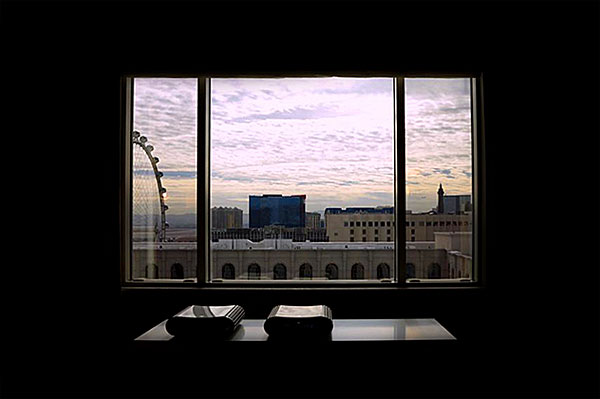
Last January, in Las Vegas, a record 170,000 people attended the 2016 Consumer Electronics Show. Most of them neither saw nor heard a trace of high-end audio gear. Not only was all mention of what CES calls "high performance audio" absent from the show's official Attendee Guide, but the hallways of the Venetian Tower, which in past CESes were filled with high-end manufacturers, dealers, and distributors, were anything but crowded.
What is the Absolute Sound?
Just what is the absolute sound, and how do you get there from here? What the heck are we looking for as we endure the mirth of others while purposefully setting up our high-end systems? Is it, indeed, the sanctified sound of acoustic instruments in real space? Can we ever really achieve that? Or is it the accurate realization of the signal on the master tape? Or—as was recently suggested at the New York Noise single-ended lovefest, covered in this issue's "Industry Update"—are some of us looking for the emotion and the artist's intent?
What it is we do when we do this thing we do
Back on April 13, Stereophile assistant editor Stephen Mejias posted the following thought on his "Elements of Our Enthusiasm" blog: "Is it possible to listen to music and listen to the hi-fi? Or are they two entirely different activities, incomparable and incompatible? Right now, for me, they seem to have nothing in common, whatsoever."