

When the Music's Over

It's one of those good news/bad news stories: more people are listening to music than ever before, but the major record labels are in dire straits. Some of the reasons for the record industry's malaise are easy to spotteenagers and grandmas grooving to music-streaming services like Spotify, Pandora, and MOG, or ripping each other's CDsbut the music industry's problems run deeper than lost sales. Digital audio mortally wounded recorded music's creative mojo in 1982, and the record industry never fully recovered.
When Things Go Wrong...
Michael Fremer's review of the AudioPhysic Caldera III loudspeaker in this issue (p.81) reminded me of a subject I have written about many times in the past: what happens when a manufacturer submits a faulty sample for review. I formalized Stereophile's policy on this matter in late 1988, following both an unfortunate series of reviews in which the samples either arrived broken or broke during the auditioning, and my learning about how much went on behind closed doors at other audio magazines, where reviewers and editors too often appeared to collude with manufacturers.1 I wrote back then that:
When video rides shotgun
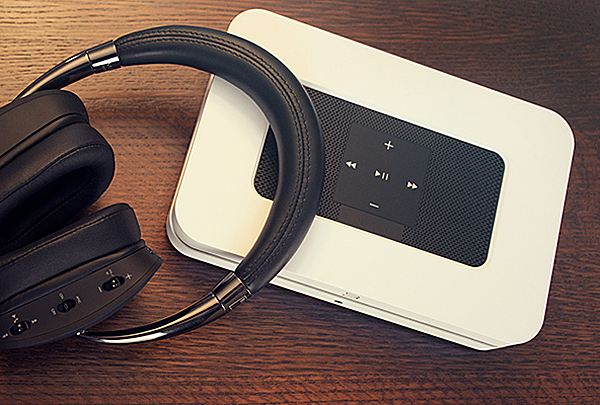
I was planning one of my occasional long drives, for music and photography. I had scheduled two nights in Nashville, so I asked around: Where should I go for live music after a dinner of Hattie B's hot chicken? Art Dudley recommended the Station Inn, perhaps the world's best venue for live bluegrass music. You can read about my experience there in the November 2019 Stereophile. The Station Inn has now added a streaming service. For $8.99/month or $99/year, you get between 10 and 20 live-streamed performances every month plus access to the archives. If you're a bluegrass fan or merely bluegrass-curious, I encourage you to check it out. It's not as good as being there, but it's still good.
Where Did We Go Wrong?
Editor's Introduction: Thirty years ago this month, in September 1962, J">http://www.stereophile.com//interviews/66/">J. Gordon Holt, lately Technical Editor of High Fidelity magazine, was working on the contents of the first issue of his">http://www.stereophile.com//features/708/">his brainchild The Stereophile, a magazine that would judge">http://www.stereophile.com//asweseeit/711/">judge components on how they actually sounded. We thought it appropriate, therefore, to use the occasion of the 1992 Summer Consumer Electronics Show, held in late May in Chicago, to invite some 200 members of the international high-end industry to a dinner to celebrate the occasion. Larry Archibald dug deep into the magazine's coffers; Ralph Johnson took time off from organizing the 1993 High End Hi-Fi Show to burn up the long-distance telephone lines faxing invitations; the conversation was excellent, the food superb, and the wine even better. Which is probably why the venerable JGH took the opportunity to remind the assembled luminaries what this whole business is supposed to be about. Here follows the text of his speech. I hope you find it as stimulating reproduced in these pages as did those who heard it live.—John Atkinson
Where We Are & How We Got Here
1987 will mark Stereophile's 25th year of continuous (if initially sometimes sporadic) publication. And while we haven't yet decided what we're going to do in celebration, the first issue of 1987 does seem to be as good a time as any to contrast the state of the audio art when we began publication with what is routinely possible today.
Where We Are and How We Got Here
As another Consumer Electronics Show rolls around, we are seeing some interesting and not-entirely encouraging things taking place in the audio field. The people for whom high fidelity was originally intended—so-called serious music listeners —have abandoned audio almost completely, leaving the pursuit of perfect music reproduction to a group of hobbyists who have more interest in hardware than in music. This, plus the recession, has almost killed middle-fi, which is now flailing out in all directions looking for a new market. Here's how it all came to pass:
Who Are You?
In the four years since our last readership survey, Stereophile's circulation has grown by one third, from 45,000 to over 60,000 (footnote 1). We thought it time, therefore, to commission new numbers, from specialists Mediamark Research Inc. (footnote 2). Table 1 shows the demographic breakdown of the magazine's readers. While the launch of CD did bring more women into the audiophile fold almost 10 years ago, the proportion of Stereophile's female readers has not changed since 1988, at just over 1% (footnote 3). At one of the panel sessions at the 1992 High End Hi-Fi Show in Los Angeles, a man in the audience asked why high-end audio was so testosterone-bound when women were just as interested in music as men? The answers given by some of the many women at the show ranged from the fact that women only earn 47 cents on the dollar compared with men to conjecture that women are turned off by the hobby's tweak aspect. Certainly dealer Andrew Singer felt last October (footnote 4) that the high-end industry is hobbling itself by ignoring half the US's population.
Who Watches the Watchers?

When we launched Stereophile's website at the end of 1997, we decided that we would not reprint the magazine's most popular features, including the biannual "Recommended Components" listings and Michael Fremer's monthly "Analog Corner" column. We were concerned that doing so would cannibalize magazine sales. As it turned out, we were wrongand so the latest "Recommended Components" is available on our free-access website day-and-date with the publication of the April and October issues in which it appears. And starting with Mikey's very first "Analog Corner," from July 1995, I have been posting his column on our AnalogPlanet.com website.
Who's Right? Accuracy or Musicality
 Many years ago, the now-defunct Life magazine ran a feature article about science and its sacred cows, in which a cartoon showed a huge inverted pyramid-shaped structure of great complexity, tapering downward to a single support at its base: a toothpick. The toothpick was labeled "basic premise," the inverted pyramid was the entire body of scientific knowledge.
Everything we do or think or know is based upon assumptions, some of which are rather more justified than others. When we set the alarm clock, we assume there will be a tomorrow. When we reach for the car's brake pedal without glancing at it, we assume it will be where it was yesterday, and that it will stop the car. When we scorn a phono cartridge because it is too bright, we assume the brightness is in the cartridge, not in the rest of our system. We have to trust our toothpicks or live in a world totally devoid of securitya world where 2+2 can equal anything from 3 to 11, all the laws change unannounced every few days, and Greenwich Mean Time is determined by a roulette wheel.
Many years ago, the now-defunct Life magazine ran a feature article about science and its sacred cows, in which a cartoon showed a huge inverted pyramid-shaped structure of great complexity, tapering downward to a single support at its base: a toothpick. The toothpick was labeled "basic premise," the inverted pyramid was the entire body of scientific knowledge.
Everything we do or think or know is based upon assumptions, some of which are rather more justified than others. When we set the alarm clock, we assume there will be a tomorrow. When we reach for the car's brake pedal without glancing at it, we assume it will be where it was yesterday, and that it will stop the car. When we scorn a phono cartridge because it is too bright, we assume the brightness is in the cartridge, not in the rest of our system. We have to trust our toothpicks or live in a world totally devoid of securitya world where 2+2 can equal anything from 3 to 11, all the laws change unannounced every few days, and Greenwich Mean Time is determined by a roulette wheel.Why Argue?
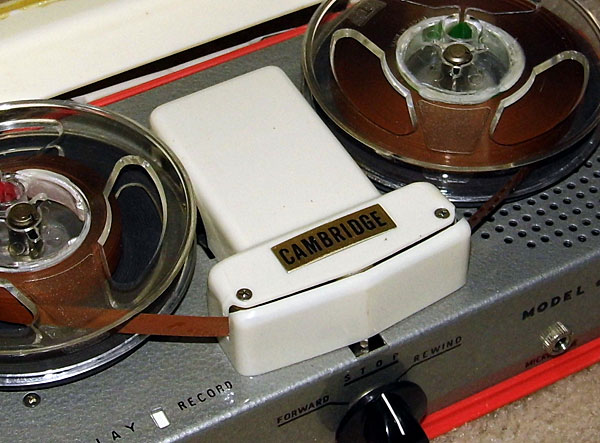
While we were preparing our list of specifications for our perfectionist's tape recorder discussed elsewhere in this issue, we suddenly came to a screeching halt at the spec which started "Scrape flutter less than . . ."
What, we wondered, was the scrape flutter percentage in a recorder in which scrape flutter is audible? Would it be 0.5%? Or 1%? Or even 5%? We perused the readily available literature, and were informed that "scrape flutter is caused by the tape's tendency to move past the heads in a series of tiny jerks in stead of in a smooth gliding motion." We were also told that scrape flutter is due to friction between the tape and the head surfaces, plus the slight elasticity of the tape that allows it to stretch slightly before being dragged along by another silly millimeter, and that it sounds like a rough edge riding on all signal frequencies between about 3kHz and 8kHz.