

Why Stereophile Makes Recordings
This morning, John Atkinson passed along to me an e-mail he received from one of our most attentive correspondents—a reviewer, in fact, for an erstwhile competitor. We know that this particular writer ranks among our closest readers because an issue seldom comes out but that he writes an analysis of it, including, and down to, what he considers our excessive political correctness in choice of pronouns.
Why Hi-Fi Experts Disagree
Dateline: late August 1989. The scene: my palatial office in the Stereophile Tower. Present were the magazine's official technowizard Robert Harley, Circulation Kahuna Michael Harvey, and myself. The subject under discussion was the program for the Stereophile Test CD, launched in this issue, and Bob had been dazzling Michael and myself with a description of the sophisticated signal-processing power offered by the Digidesign Sound Tools music editing system with which he had outfitted his Macintosh IIX computer. (He had to fit it with a 600-megabyte hard-disk drive!) "It'll even do edits as crossfades as well as butt joins," enthused Bob. "Let me tell you about the crossfade I once did when editing a drum solo for a CD master that lasted ten seconds..."
Why Hi-Fi Prices Have Risen

I wrote much of this column, including the title, in early April before the Trump administration announced "reciprocal" tariffs on imported goods. A random example: Switzerland, home of CH Precision, darTZeel, Goldmund, Orpheus Lab, Piega, Stenheim, Thorens, and Wattson, among other hi-fi companies, where the tariff is 31%. Before this issue closed, the Trump administration announced a 90-day reprieve for everyone but China, then exempted computers and smartphones (and a few other categories) from the China tariffs. Importers and foreign manufacturers I talked to at AXPONA in April were happy for the reprieve but remained on edge. Uncertainty reigned.
Why I Can't Stop Being an Audiophile
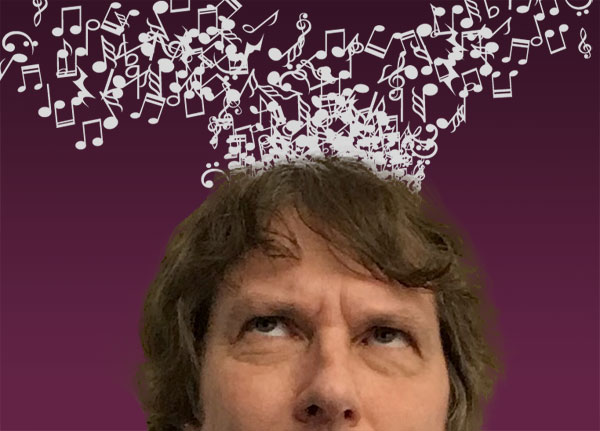
"Why can't you stop being an audiophile?"
The question took me off-guard. It didn't come from one of the usual suspectsa hostile anti-audiophile, or a non-audiophile who simply can't fathom why we should care so much about something as nonessential as sound reproductionbut from Louis, a sharp dressed, goateed, middle-aged man who was known, among his audio repair shop's clientele, for not only his virtuosity as a classical solo violinist, but his expertisesome would say his preternatural abilityin setting up turntables to sound their very best.
Why Music Matters Most
"Stanley, see this? This is this. This ain't something else. This is this."—Michael, inThe Deer Hunter
Why Music?
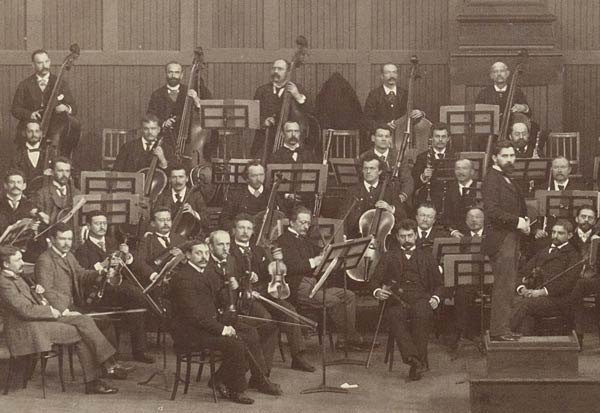
Why does music matter so much to so many of us? Some, like Stereophile's readers, go to great lengths to reproduce it in their homes with accuracy and impact, and build libraries of their favorite works. Others, like my daughters, don't care much about equipment, but find it hard to spend more than five minutes in a car without listening to music. We go to concerts, play instruments, hum tunes, sing. Why? Why does music seem to speak to so many more of us than do, say, painting, sculpture, poetry, architecture, or even literature?
Why Pay More?
A very popular myth among the audio unwashedand one still perpetuated by the pop hi-fi writersis that nothing is to be gained by paying more than $1000 for a stereo system (footnote 1). Members of the general public, including masses of people who enjoy live, unamplified music, have the impression that more money simply buys one wider and wider frequency range, and defend their $500 "compact" systems with the lame excuse that their ears aren't all that good, and who needs to hear what bats hear anyway? This is no doubt a soothing emollient for one's disinclination to invest more money in audio gear, but it is a supreme self-deception.
Why They Scorn Us—and Why We Should Care
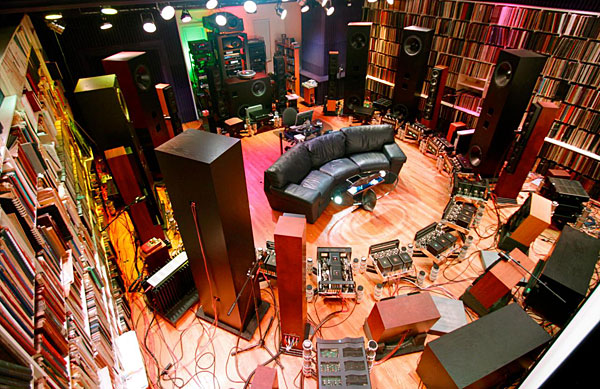
Photo © Kipnis Studios 2015
Are you on Facebook? Twitter? Instagram? Reddit? Social media has done much to bring together people of every interest imaginable to share their fascinations, desires, and, occasionally, delusions. From fans of frogs (FrogStomp) and proponents of clean public toilets (Benjyo Soujer) to a group that challenged an Iranian cleric's statement that women's flimsy attire causes earthquakes (Boobquake), social media is a global town square in which anyone with a keyboard and an attitude has an equal voice.
Wired!!!
Compuserve's CEAUDIO forum has been buzzing in recent weeks about audio cables. The subject even spilled over into an April meeting of the New York chapter of the Audio Engineering Society (see Wes Phillips's report in this month's "Industry Update"). Nearly two decades after Polk, Fulton, and Monster Cable raised our collective consciousness about the differences cable choice can make in an audio system, the debate still rages between audiophiles and some members of the engineering community. "High-priced tone controls" is how some engineers dismiss the subject of cables, while admitting that they can sound different. Other engineers adopt the "Hard Objectivist" line that if there are differences to be heard between cables, differences in the lumped electrical parameters of resistance (R), inductance (L), and capacitance (C) are all that are required to explain such differences.
Won't get fooled again
I'm excited about the return of live music to New York City. I've attended several classical concerts in the last few weeks, and in a week or so, I'll take in a show at the City Winery: Suzanne Vega. I haven't yet made it back to New York's amazing jazz clubsthe Vanguard, the Blue Note, Smallsbut I look forward to doing so soon, especially to dropping in on my jazz local, Smoke, when it reopens in a few weeks in new, larger digs.