

What Makes a Good Recording?
The sound, of course, but here's a checklist of 16 specifics to consider when evaluating your own or somebody else's live-recording efforts.
What Price Audio?
Few topics ignite more heated arguments among audiophiles than the price of audio equipment. How much do you have to spend to get really good sound? Are people who buy expensive gear wasting their money, or is it simply a matter of getting what you pay for? There are many such issues, most of which have been discussed at length in Stereophile and various online forums; here are a few I haven't seen addressed except in passing.
What We Lose With Streaming

Photo by Alex Carvalho
In the August issue's As We See It, Tom Fine and I encouraged readers to hold on to their physical mediathose black and silver discseven if they're stashed away in a closet or attic, replaced by hi-rez streaming. An important reason we gave is that with physical media (in contrast to streaming), you know exactly what you're listening toor at least you can know, with a little work.
Also if you want to, you can do a lot of work, since there is much to know and to learn, especially about vinyl records (and shellacs), and learning about themabout the labels and those arcane codes in the runout groove areais a big part of the music-collecting hobby. Serious record collectors are likely to have several pressings of favorite albums and to know the provenance of each one. With streaming, you're limited to whichever version they end up with, and usually they don't bother to tell you which version it is. An example is Rock for Light by Bad Brains, which is considered by Robert Baird in this month's Aural Robert.What's an Audiophile? (Part 634)

Most of us have experienced the proverbial curveball that comes out of nowhere to smack us right in the head. My most recent such encounter was pitched by Stereophile contributor Steve Guttenberg.
Steve's whammy arrived amid an e-mail exchange among Stereophile writers concerning a rather clueless column in another publication on the dearth of women audiophiles. After asking how many female audiophiles each of us knew, Steve G. defined what he meant by audiophile: "a person who frets over their system, agonizes over choices, loves gear, and sometimes music. You know, the kind of person who reads Stereophile or The Abso!ute Sound. Merely owning a nice stereo doesn't make you an audiophile. Owning a Leica doesn't make you a photographer. You have to be at least a little obsessed."
What's New?
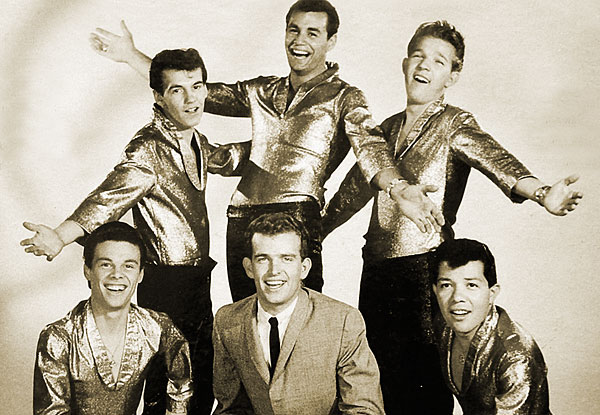
Do you remember your very first record? I started with the Hollywood Argyles' "Alley Oop" in 1960, and played that silly 45 on repeat until my mother begged me to stop. My tastes quickly evolved, thanks to WWRL AM radio's steady diet of tunes by Jackie Wilson, Bobby Bland, Etta James, and Gary U.S. Bonds. It didn't take me long to gather a sizable collection of singles, but I switched to LPs with Meet the Beatles! in 1964, and since then the craving for new sounds has never let up.
What's Real?
I couldn't believe it. Something was off.
What's Right?
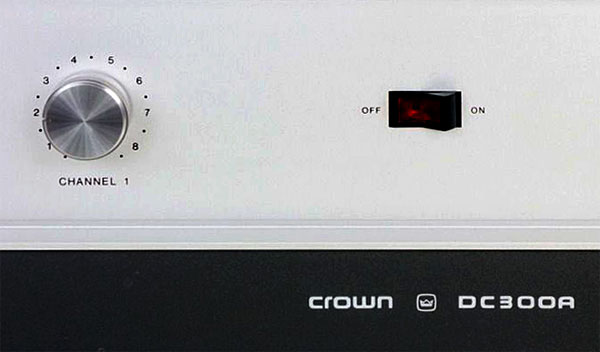
A recent experience with two excellent loudspeaker systems and two of the top power amplifiers raised a question that has been cropping up more and more frequently these days: When one component sounds more toppish or more bassy than another, which one is really flat and which isn't?
The question arose this time in connection with some listening tests on a pair of FMI 80 speakers and a pair of IMF Monitor III speakers, using Audio Research Dual 75 and Crown DC-300A power amplifiers.
Whatever happened to 5.1-channel music?
I love two-channel stereo. A great stereo recording can produce such a full-bodied, three-dimensional soundstage that surround sound seems superfluous. Multichannel is just peachy for home theater, but good ol' stereo suits music just fine, thanks very much.
When Caruso Was King
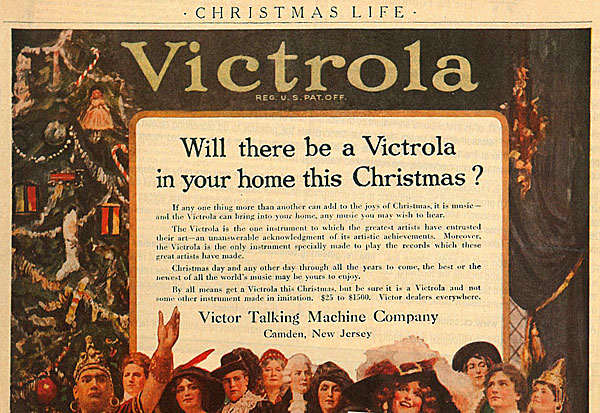
One of the benefits of belonging to the Institute of Electrical and Electronics Engineers (IEEE) is a subscription to their monthly magazine, IEEE Spectrum. Superbly written and edited, this journal keeps me up to date on emerging technology, and entertains me with things like reprints, on the final page, of vintage advertisements. Their January 2016 issue, for example, featured an ad from December 1920, promoting the Victor Talking Machine Company's Victrola: "By all means get a Victrola this Christmas, but be sure it is a Victrola and not some other instrument made in imitation. $25 to $1500. Victor dealers everywhere."
When The Music Stops
An acquaintance in the world of CD distribution recently gave me an astonishing statistic: that the average classical title sells fewer than 2000 copies worldwide in its first year of release; which in turn means that many titles sell only about 500 copies! Given that the cost of producing a classical orchestral album can include up to $100,000 in union-mandated musician fees, such minimal sales guarantee financial disaster.