

"What I Mean..." (review terminology)
As you may have noticed, Stereophile's approach to equipment testing is quite different from that of "mainstream" audio publications. Instead of throwing a bunch of measurements at you, and telling you how we think components ought to sound because of those measurements, we test them as you would: by listening. But we have an extra problem: we have to convey to someone else—you—a feeling for what we hear from that component. It ain't always easy.
"When things go wrong...it hurts me too"
I am writing this copy on a venerable Radio Shack TRS-100 portable computer while flying via TWA from St. Louis to Albuquerque, the very fact of doing so having reminded me of what I wanted to write about in this month's column: hardware reliability. J. Gordon Holt touched on this subject in last June's "As We See It," but I felt it worth readdressing in light of recent events.
"Where's the Real Magazine?"

The affair started quietly enough, with the following exchange that appeared in Stereophile's January 2001 "Letters" section, following my decision to put the Digital">http://www.stereophile.com//digitalsourcereviews/280/">Digital Audio Labs CardDeluxe high-end PC soundcard on the cover of our September 2000 issue:
"Where's the Real Magazine?" Part 2
"Jonathan Scull told me there'd be trouble when I decided to put the Denon">http://www.stereophile.com/integratedamps/1200denon/">Denon AVR-4800 surround receiver on our December cover."
"You love your audio more than you love me!"
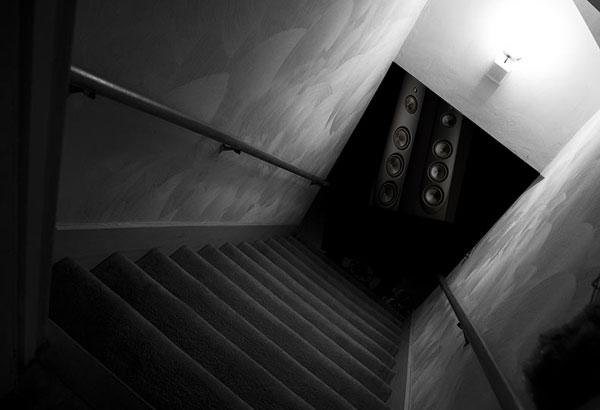
The blowout happened as I climbed the stairs from the basement, where I'd just spent two hours listening to musi on my hi-fi. Standing rigidly in the archway, a wet sheen of hurt trembling in her eyes, my wife shouted: "You love your audio more than you love me!"
It erupted with such raw emotional force that I knew exactly what she meant, and that she was right: I spent more quality time with my audio than I did with heror, for that matter, with either of my two homebound teenagers. It was nothing personal; my listening room is my private safe place, conceived and realized in my own image.
Stereophile on the Web

There has always been something uniquely satisfying about holding a paper magazine in your hand and riffling through its pages. Images and textures are of higher resolution than any video screen, and the ease of use of the paper-page bundle can not easily be replaced. People are developing electronic substitutes for paper, but the interesting thing is that these researchers are endeavoring to imitate the look, feel, and functionality of paper—but with digital inks and charged surfaces. For now, plain old paper and ink are just too perfect a medium to toss when it comes to packing information into a compact, portable, high-quality package.
Stereophile's Writers on an Audio Quest
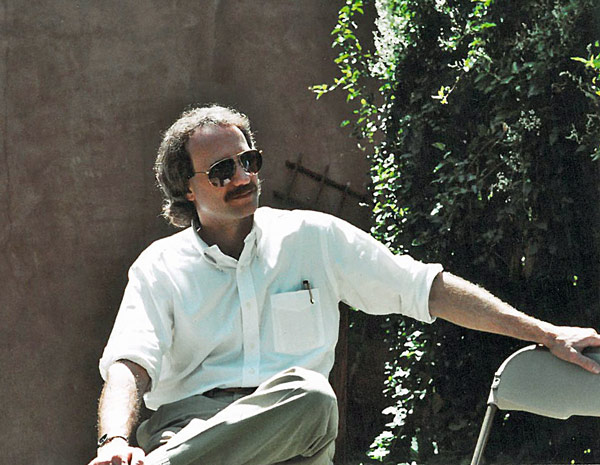
One Saturday afternoon in August 1990, a number of Stereophile's writers—John Atkinson, Arnis Balgalvis, Robert Deutsch, Larry Greenhill, Robert Harley, J. Gordon Holt, Richard Lehnert, Guy Lemcoe, Lewis Lipnick, Peter Mitchell, Tom Norton, Dick Olsher, Don Scott, and Bill Sommerwerck—gathered together in the magazine's Santa Fe, NM listening room to discuss the "Recommended Components" listing that was due to appear in the October 1990 issue. To add a little Tabasco to the proceedings, JA had invited AudioQuest's main man Bill Low (above) to give a short talk on whatever subject was uppermost in his mind that weekend, to be followed by an open discussion.
10 Years After
"Words are pegs to hang ideas on."—Henry Ward Beecher
35 Years...And Just Getting Started
Thirty-five years ago this month, the first issue of a new">http://www.stereophile.com/features/708">new audio magazine—cover price 50 cents—cautiously made its way out of a Philadelphia suburb. Its black'n'white cover featured a chessboard adorned with tubes and XLR plugs. Its 20 advertising-free pages included a feature on how">http://www.stereophile.com/historical/108">how to write an ad for an audio product, which had been penned by one Lucius Wordburger, a footnote helpfully pointing out that this was the nom de plume for one J">http://www.stereophile.com/historical/712">J. Gordon Holt, "who wishes to remain anonymous."
40 Years of Stereophile

 "The monthly miracle," it's called in publishing: that magical moment when the new issue of your magazine arrives in the mailbox hot from the printer. And with this issue of Stereophile—No.274, or Vol.25 No.11—we celebrate the 40th anniversary of the start of our "miracle." With the 20 pages of Issue No.1, Vol.1 No.1, cover-dated September-October 1962, "Ye Editor & Publisher" J. Gordon Holt introduced both a new audio magazine and the philosophy that an audio product is best reviewed by doing exactly what its purchasers will do: listen to it. On that small rock of an idea was founded not only Stereophile but the entire high-end audio industry. Here, reprinted from a 1974 anthology of the first 12 issues, is J. Gordon Holt's description of the events that led up to the founding of Stereophile: