

The Blind leading the Deaf
As the person who "invented" subjective testing, I have followed with great interest the many articles in the mainstream audio press which purport to prove that none of us can really hear all the differences we claim to hear, particularly those between amplifiers. My reaction has usually been: "Why didn't they invite me to participate? I would have heard the differences under their double-blind listening conditions." I could make that assertion with supreme confidence because I had never been involved in any such test.
The Carver Challenge

Is it possible to make a $700 "mainstream-audio" power amplifier sound exactly like a high-priced perfectionist amplifier? Bob Carver, of Carver Corporation, seemed to think he could, so we challenged him to prove it.
The Case Against Show Reports
Now that Stereophile's reporting on the 1985 Summer Consumer Electronics Show has ended (I hope!), I would like to express strong dissent with its style and content. In fact, I believe that most of it should never have appeared in print.
The Colossus of Audio
About 2200 years ago, a Greek writer named Antipater of Sidon compiled a list of the seven wonders of the world, which included a 100'-high statue of the Sun god Helios, erected next to the harbor of Rhodes on the Aegean sea. A of S called it the Colossus of Rhodes, for an obvious reason. Now there's a new Colossus, the derivation of whose name is a little less obvious, but which could justifiably be included in any contemporary listing of the seven wonders of the audio world.
The Comparable Cassette

Thanks to two developments and a promise, the compact cassette has finally become, as they say, a force to be reckoned with.
Development one, perhaps the most significant factor in the changing picture, is the ready availability of B-type Dolby devices (which are single-band Dolbys, acting only on hiss frequencies). Advent makes two that can be used with any tape machine, cassette or otherwise, while Fisher, Advent, and Harman-Kardon (as of this moment) are producing cassette recorders with built-in Dolby-B. No doubt there will be others by the time this gets in print.
The Dilemma of Exotica
A persistent complaint from some of our readers concerns our seeming preoccupation with exotic components. (Presumably what they mean are scarce, unusual, or hard-to-find components, because "exotic" really means "from a foreign country," and there is sure as hell nothing hard-to-find about a Panasonic receiver.) "Why," you ask, "do you devote so much space to reports on components we can't buy from our local audio discounter? Why can't we have more reports about products from the old, established, reliable companies like KLH, Harman/Kardon, Electro-Voice and Sansui, whose stuff we can listen to at a local dealer before we commit our hard-earned dollars to a purchase?" One subscriber even cancelled his subscription because of this, claiming that the unavailability of the products we review makes our reports "irrelevant." Well, he had a point, but not a very good one.
The Flexible Firms
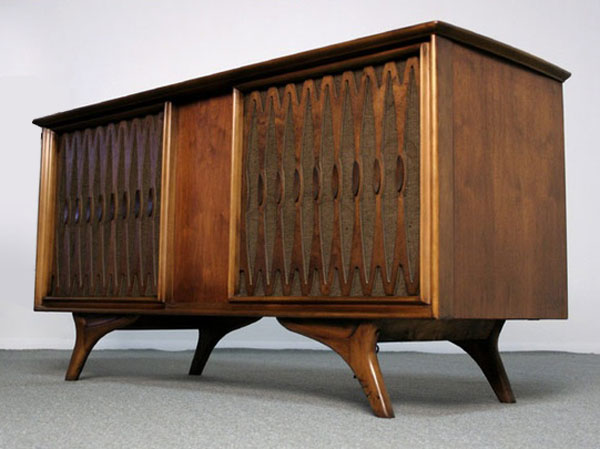
Some years ago, we attended a hi-fi show in New York City where one of the exhibitors was RCA Victor. Their presence there would have been forgotten were it not for the fact that their exhibit, featuring their own discs played on their own line of phonographs, was producing some of the filthiest sound at the entire show. And that, in the proverbial nutshell, is why you never see reports in Stereophile on equipment made by RCA, Philco or General Electric.
The Highs & Lows of Double-Blind Testing
Editor's Note: In 1985 and 1986, an argumentative thread ran through Stereophile's pages, discussing the benefits or lack of double-blind testing methods in audio component reviewing, triggered by J. Gordon Holt's review">http://www.stereophile.com//asweseeit/121/">review of the ABX Comparator. As this debate is still raging nearly 15 years later, we present here the entire discussion that bounced back and forth between the magazine's "Letters" section and features articles. It was kicked off by a letter from C.J. Huss that appeared in Vol.8 No.5.—John Atkinson
The Last Word on Fidelity
Last October, in Vol.11 No.10, Stereophile's Founder and Chief Tester J">http://www.stereophile.com/interviews/66">J. Gordon Holt stated, in his acerbic editorial "The">http://www.stereophile.com/asweseeit/111">The Acoustical Standard," that, in his opinion, only recordings for which there is an original acoustic reference—ie, typically those of classical music—should be used to evaluate hi-fi components. And that in the absence of a consensus over such a policy, high-end component manufacturers were losing their way over what does and does not represent good sound quality.
The Listening Room: the Forgotten Factor
Question: What is it that almost every audiophile takes for granted, yet has more effect on the sound of his system than does any single component in that system? Answer: His listening room.