

The Truth Should Out
This issue contains a report on a truly ingenious little device called the ABX Comparator, which takes the fraud out of subjective testing. It does this by making its own selection of source A or source B for each listening trial, without telling you which was selected. Only after all the tests will it reveal what you were listening to each time. "Score" sheets are provided so you can list your guesses, compare them with the cold, uncompromising truth, and file the results for posterity. Or better still, for the first hard evidence that has ever been presented that a lot of people can hear differences that cannot as yet be measured.
The Weakest Link
While we will not pretend for a moment that the millennium of high fidelity has arrived, we are finally having to face up to a fact that has been staring us in the face and nudging us in the ribs increasingly rudely of late: The state of the art of sound reproduction has gotten to be pretty damned sophisticated. Perfection is just as unattainable as it was almost 100 years ago when Thomas Edison was diddling with different diaphragm materials on his phonograph because some sounded better than others.
The Weakest Link
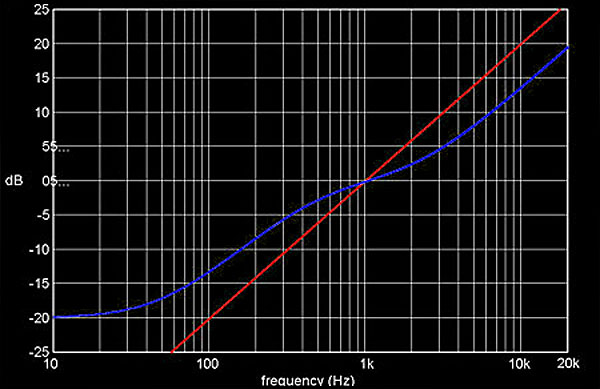
When the Record Industry Association of America adopted its standard disc playback equalization curve in 1954, hi-fi enthusiasts heaved a sigh of relief and bade fond farewell to years of confusion, doubt and virtual pandemonium. Before the RIAA curve there were six "standard" curves in use, and since nobody seemed to know who was using what, getting flat response from a disc was often more a matter of luck than anything else. The adoption of the RIAA standard playback curve heralded an end to all this.
The Well-Tempered Arm

Remember Rube Goldberg? He was a cartoonist during the late 1920s to early 1950s who specialized in devising the most outlandish and ingenious devices ever conceived by man, before or since. A Rube Goldberg mousetrap, for example, would occupy an entire small room. In taking the bait, the mouse would tip a balance beam, dropping a steel ball into a gutter, down which the ball would roll to strike a paddle whose spin would wind up a string that hoisted a weight into the air until it reached a trigger at the top, which would then release the weight to drop onto the unsuspecting mouse. Splat!
Thiel CS3 loudspeaker

Thiel is one of those loudspeaker manufacturers, like Spica and Dahiquist, among others, that pay close attention to detail.
Thiel Model 04 loudspeaker
These speakers inadvertently managed to put me in a good mood even before I listened to them, because of a dumb little gaffe committed by Thiel's packing department. Each speaker came with an Owner's Information sheet, which is nice. Each sheet included Unpacking (and Repacking) Instructions, which is nicer. But each sheet came packed inside the carton, underneath the speaker, where it was not accessible until after the speaker was dumped out of the box, which is pretty silly!
Thorens TD-150AB turntable and tonearm

This is an integrated arm-and-turntable unit using single-belt drive from a stepped motor pulley to an inside platter (under the main one), and having a three-point suspension similar to that in the AR turntable for isolation from acoustic feedback and floorborne vibrations. Speed change is accomplished by a two-pronged "fork" which, actuated by the speed selector knob, throws the belt from one step of the motor pulley to the other. The motor is a special synchronous type that is actually two motors in a single case. Their speed is determined by the frequency of the AC supply, so there is no speed adjustment.
Those Durable Bottles
I believe it was 1958 when I first heard a transistorized audio product. The Fisher TR-1 was a small battery-powered box that provided microphone preamplification and inputs for three magnetic phono sources.
Thoughts from the 1980 Winter CES
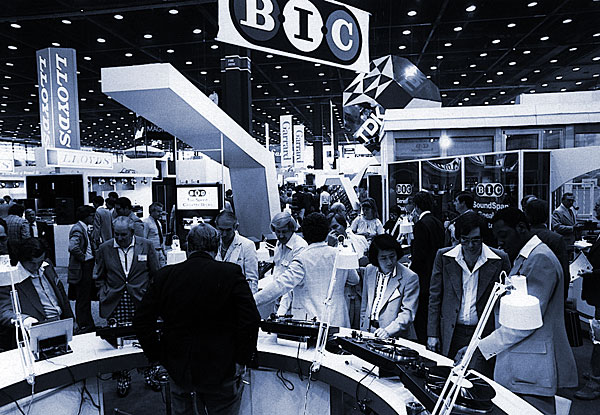
Editor's Note: We are republishing this report from the 1980 CES both because many of the themes strike resonances 35 years later, and because it emphasizes the hard time high-end audio was having at the end of the 1970s. The LP had been eclipsed by the cassette and 8-track cartridge as the primary massmarket media for recorded music and the decade-long hi-fi boom that had been fueled by the entry of Japanese brands was running out of steam. Ironically, it was the launch of Compact Disc three years later that was to reinvigorate the audio business.John Atkinson
The 1980 Winter CES, held in Las Vegas in January 1980, came on the heels of the worst business year the audio field has seen in almost a decade. So-called high-end audio, in particular, had distressing sales declines during the last year of the 1970s, with some dealers (who had not yet gone out of business) predicting that their books for 1979 would probably show as much as a 30% loss in sales from the previous year. Dealer turnout in the Las Vegas Jockey Club, where most of the high-end manufacturers were showing their wares, was nonetheless surprisingly good, although makers of the highest-priced exotica were not as ecstatic about the turnout as were those exhibiting more-affordable gear. One high-end entrepreneur was heard to say (to one of his associates), "It doesn't look any better for this year than last."
Three Pickups: Which is the Best?
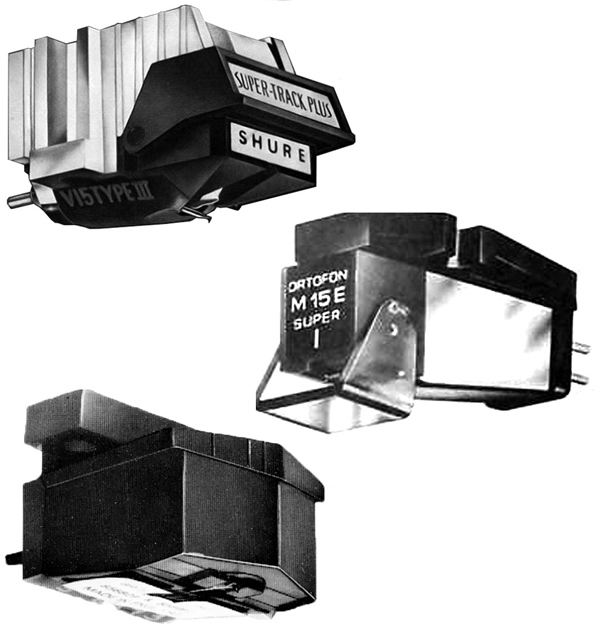
If you have read my reviews of the Ortofon M-15, the Shure V15-III, and the Decca Mark V, you have probably formed a pretty firm impression of which of the three contenders for the title "Best Pickup" is the winner. In case you haven't, though, here's a capsule wrap-up of our reactions to the three phono cartridges reviewed in May 1974.