

Cambridge EXN100 streaming D/A processor

The marriage of little streaming computers to DACs was at first a shotgun thing, a way to add Swiss Army knife capabilities at a price point. That was back when it was cutting-edge to have a NAS server full of digital files on the home network, and when commercial streaming was new, primitive, and lossy. Remember Pandora? Cool idea, but who wants to sit through ads and not be able to skip over more than a handful of disliked tunes every hour. Then Spotify came along. Then Apple and Amazon jumped in, and that's all she wrote. Eventually, streaming even got around to us audiophiles who desired lossless audio of at least CD resolution. Viva Qobuz!
The EXN100 is Cambridge Audio's state-of-the-art streaming DAC. It's half of the new EX line; the other half is the EXA100 integrated amplifier.
Cambridge SoundWorks Ambiance loudspeaker
According to the conventional wisdom, companies selling consumer products fall into two categories: those whose sales are "marketing-led" and those whose sales are "product-led." Marketing-led companies tend to sell mature products into a mature market where there are no real differences between competing products—soap powder, mass-market beer, or cigarettes, for example—whereas product-led companies tend to sell new technologies, such as personal computers and high-end hi-fi components. In the audio separates market, conventional wisdom would have a hard time categorizing any individual company: no matter which you choose, it would be simplistic to say that it is either product- or marketing-led. No matter how good the product, without good marketing the manufacturer stands little chance of success; a poor product superbly marketed may make a company successful overnight, but that success will have hit the end stops by the following night.
Cayin A-50T integrated amplifier

Late in 2006, I was watching John Atkinson set up a pair of DPA cardioid microphones in front of the stage of New York City's Otto's Shrunken Head to record a performance of my jazz quartet, Attention">http://www.myspace.com/attentionscreen">Attention Screen (footnote 1). Before the first set, Wes Phillips approached me. "Bob, I found a piece of equipment you must review—the Cayin A-50T integrated amp. It's only 1300 bucks and you'll love it!"
Celestion 3 loudspeaker
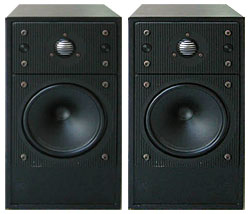 "Why does John Atkinson devote so much of his time to loudspeakers selling for under a [sic] $1000?" wrote a correspondent to The Audiophile Network bulletin board in August, there being a clear implication in this question that "more expensive" always equates with "better" when it comes to loudspeakers. While it is true that the best-sounding, most neutral loudspeakers possessing the most extended low-frequency responses are always expensive, in my experience this most definitely does not mean that there is an automatic correlation between price and performance. I have heard many, many expensive loudspeakers whose higher prices merely buy grosser sets of tonal aberrations. For those on modest budgets, provided they have good turntables or CD players, a good pair of under-$1000 loudspeakers, coupled with good amplification, will always give a more musical sound than twice-the-price speakers driven by indifferent amplification and a compromised front end.
End of discussion.
"Why does John Atkinson devote so much of his time to loudspeakers selling for under a [sic] $1000?" wrote a correspondent to The Audiophile Network bulletin board in August, there being a clear implication in this question that "more expensive" always equates with "better" when it comes to loudspeakers. While it is true that the best-sounding, most neutral loudspeakers possessing the most extended low-frequency responses are always expensive, in my experience this most definitely does not mean that there is an automatic correlation between price and performance. I have heard many, many expensive loudspeakers whose higher prices merely buy grosser sets of tonal aberrations. For those on modest budgets, provided they have good turntables or CD players, a good pair of under-$1000 loudspeakers, coupled with good amplification, will always give a more musical sound than twice-the-price speakers driven by indifferent amplification and a compromised front end.
End of discussion.CEntrance DACmini CX D/A converter

Sure, Stereophile gets letters to the editor. We also get some colorful responses for our "Manufacturers' Comments" section. (Vince Bruzzese and Roy Hall are literary standouts among their component-making peers.) And, as one of the magazine's Contributing Editors (Audio), I get lots of personal mail from readers seeking my advice. I thought I might share some of these letters with you, and my responses.
CEntrance DACport USB headphone amplifier

I have built up a large collection of CDs since the medium's launch more than a quarter century ago, along with a modest number of SACDs and a small number of DVD-As. But I find these days that, unless I'm getting down to some serious listening and can give the music my uninterrupted attention, I use iTunes to feed computer files to my high-end rig (footnote 1). I've mostly been using the superb-sounding combination of dCS">http://www.stereophile.com/hirezplayers/dcs_puccini_sacd_playback_syste… Puccini U-Clock and Puccini player/DAC that I reviewed last December to take a USB feed from a Mac mini, but I've also been using the Bel">http://www.stereophile.com/digitalprocessors/bel_canto_usb_link_2496_us… Canto USB Link 24/96 and Stello">http://www.stereophile.com/digitalprocessors/lindemann_amp_stello_usb-s… U2 USB-S/PDIF converters, particularly for headphone listening, when I use one of those two format converters with a Benchmark">http://www.stereophile.com/digitalprocessors/886">Benchmark DAC1 D/A headphone amplifier.
Channel Islands Audio Transient Mk.II & VDC•5 Mk.II USB D/A processor & power supply

Most folks don't even know they exist, but the Channel Islands are a chain of eight moderately sized mountains poking through the Pacific Ocean along the coast of southern California, between Santa Barbara and San Diego. The most famous of these is Catalina Island and its city, Avalon, which sit opposite San Clemente. The other Channel Islands are relatively wild and have been preserved mostly uninhabited.
Chario Premium 1000 loudspeaker

In my reviewing career, except for fleeting listening sessions at the occasional audio show, I've had little contact with products from the Italian loudspeaker maker Chario. When asked if I'd be interested in reviewing an affordable bookshelf speaker from them, I did some research and discovered that Chario is distributed in the US by Koetsu USA. Well, with that kind of pedigree—I'm a loyal owner of two Koetsu">http://www.stereophile.com/phonocartridges/1098koetsu">Koetsu Urushi cartridges—I thought I'd better give the Premium 1000 ($1015/pair) a careful listen. A few months later, I was tucking in to a pair of review samples.
Chord Chordette Gem D/A processor
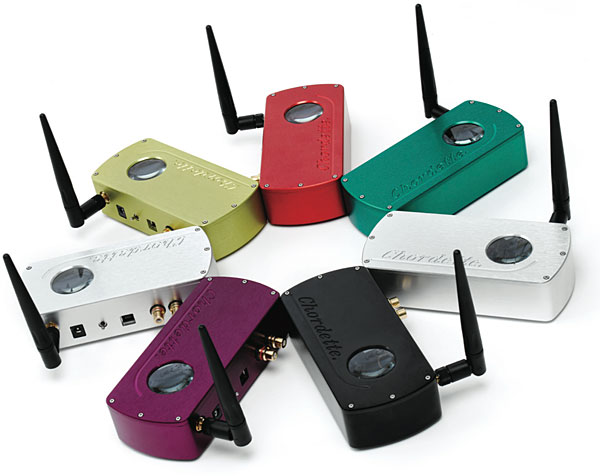
There's home cooking on one side of the hedge and fast food on the other, and the world moves farther from the former and nearer to the latter with each passing day. So it goes in domestic audio, where virtually every new milestone of the past quarter-century has pointed far more toward convenience than toward quality.
Depressed? Don't be. Those of us in the perfectionist community have a history of dealing with such things, howsoever slowly and inefficiently. (footnote 1). We're getting better at it, too, year by year. An example: Chord Electronics, of sunny southern England, has now brought to market their Chordette Gem D/A converter ($799) which they offer as an affordable means of getting perfectionist-quality sound from computer-music files.
Chord Electronics Mojo D/A headphone amplifier

Like all men, I learned at an early age to resist the allure of a pretty face.
OkayI learned that I should try to resist the allure of a pretty face.
Okay, I confess: I have never been able to resist the allure of a pretty face. Which is why, when I first clapped eyes on the Mojo D/A headphone amplifier from English company Chord Electronics, at an event hosted by Manhattan retailer Stereo Exchange, I had to borrow a sample for review.