Reference

Sort By: Post DateTitle Publish Date

Red Shift: Doppler distortion in loudspeakers
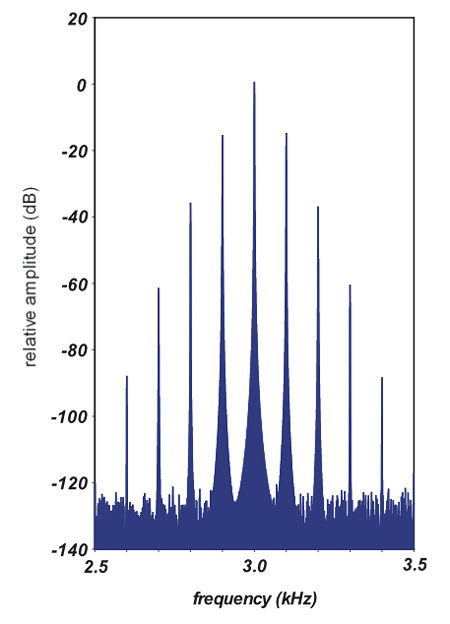
In the world of digital audio, jitter has been a focus of audiophile attention for well over a decade. It is blamed for many of the sonic ills of which CD and other digital media have been accused. But here's a puzzle: The major source of frequency intermodulation distortion in audio systems—the loudspeaker—has largely escaped such withering inquiry. Why?

Cutting Corners

If anyone ever thinks to compile a list of the 100 seminal audio papers that should be found in every tech-aware audiophile's filing cabinet, Harry Olson's "Direct Radiator Loudspeaker Enclosures" deserves to feature in it. Originally presented at the second Audio Engineering Society Convention, in October 1950, it was published in Audio Engineering in 1951. In 1969—in a rare and certain acknowledgement of its classic status—the AES republished it in its Journal (footnote 1).


New Media Metrics

Looked at from one viewpoint, DVD-Audio and SACD appear to be exercises in sheer profligacy. In the case of DVD-A, why provide a maximum">http://www.stereophile.com/features/282">maximum bandwidth almost five times what is conventionally taken to be the audible frequency range, and couple it to a dynamic-range capability far in excess of that achievable by the microphones used to record the sound? In the case of SACD, why provide a potential bandwidth in excess of 1.4MHz, only to fill more than 95% of it with quantization">http://www.stereophile.com/features/374">quantization noise?


The Law of Averages

The Compact Disc clearly hasn't read the script. At a time when, in the autumn of its commercial life, the format is supposed to be stepping aside to allow younger blood to succeed it, CD has instead in recent years enjoyed something of a revival in audiophile opinion. While SACD and DVD-Audio, rather strutting and fretting their hour upon the stage, are doing more plain fretting than anything, the best in CD sound quality has improved sufficiently for some to question whether we need the new media at all.


Spectral X-Contamination: Problems in Op-Amp Chips

In high-end circles, the sonic repute of integrated-circuit op-amps (from "operational amplifier") is, at best, checkered. Of course, the expertise with which they are used and the parts they're used with can make all the difference. For example, my DIY preamplifier design, "AMP-02," published in Hi-Fi News & Record Review in 1989–90, and my earlier (1983–84) AMP-01 (footnote 1), I used the better IC op-amps of the time throughout. Both units were thought to outperform cost-no-object commercial units of the time that employed discrete transistors and even tubes, and only indicate what's possible.

Upsampling or Oversampling?

Charles Hansen said it best, in a recent e-mail: "People have been holding back from criticizing this technology because they weren't certain that some new discovery hadn't been made." Ayre Acoustics' main man was talking about "upsampling," whereby conventional "Red Book" CD data, sampled at 44.1kHz, are converted to a datastream with a higher sample rate. (Because of its association with DVD-Audio, 96kHz is often chosen as the new rate.)


Super Audio CD—One Year Later

In his very English way, Sony's then managing director for the UK, Tim Steele, was getting a touch, er, desperate. His oh-so-cultured voice rose a smidgen as he resorted to a direct selling of the benefits of what he was talking about. "Look, you're all sitting on riches," was his fundamental pitch. "You can sell music-lovers your entire back catalog all over again—at a higher price!"


Super Audio CD: The Rich Report

Although Philips invented the Compact Disc, it was only when Sony got involved in the early 1980s that it was decided—at the prompting of conductor Herbert von Karajan, a close friend of Sony's then-president Akio Morita—that the CD should have a long enough playing time to fit Beethoven's Ninth Symphony on a single disc (footnote 1). Even if the conductor was using very slow tempos, and even given the minimum pit size and track pitch printable at the time, the 16-bit data and 44.1kHz sampling rate they settled on gave them a little margin.


Tubes Do Something Special

Most people who now listen to tube amplifiers began with a transistor amp, and know from experience that a tube amp of a given measured power output sounds louder than its nominally identical transistorized equivalent. The unofficial consensus is that you need two to four times the transistor power to achieve the same loudness as you would using tubes. In other words, given the (subjectively) undistorted sound level a 25W (footnote 1) tube amplifier can provide, if you want the same loudness from solid-state technology you would have to replace it with at least a 50W transistor amp (footnote 2).


Advertisement
Advertisement
Advertisement