
Features

Sort By: Post DateTitle Publish Date

Harmonic Convergence: the Effect of Component Tweaking
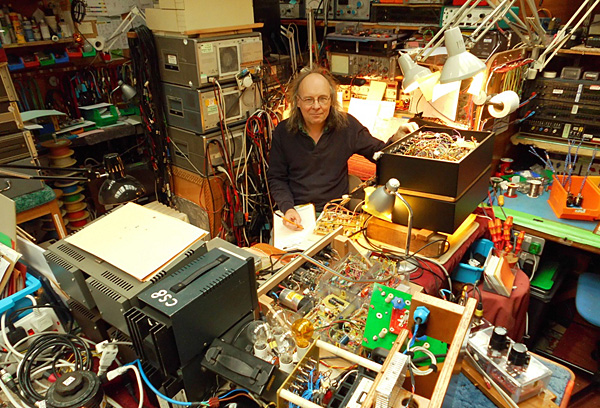
Power amplifiers fascinate me. In the past 15 years I've helped design and build over a dozen advanced models, with output powers ranging from 50 to 2500W, for a number of the UK's professional equipment manufacturers. To learn from others' ideas and mistakes, I've also repaired, measured, used, and reviewed hundreds of makes of amplifier. My experiences have led me to regard the power amplifier as one of the messiest, most imperfect pieces of electronic equipment in the record/replay path.
As Reviewers See It

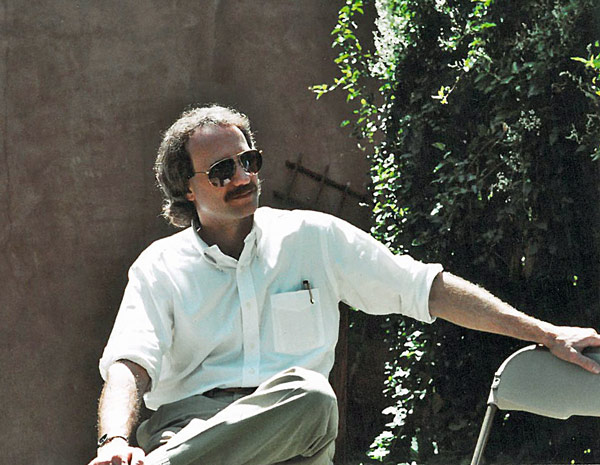
Every summer, I invite a representative sample of Stereophile's equipment reviewers to the magazine's Santa Fe HQ. For the third successive year, I decided to tape some of the free-for-all discussion that takes place and offer readers the opportunity of peeking over the participants' shoulders by publishing a tidied-up version of the transcript.

Installing a Dedicated AC Line

The most important change made to the system was one that held up the writing of my review of the Mark">http://www.stereophile.com/solidpoweramps/991ml23">Mark Levinson No.23.5 power amplifier for several months, such was its anticipated impact. Though my listening room is well-equipped with wall sockets, there are actually only two 15A circuits serving these outlets. Ever since I had converted what had hitherto been our house's master bedroom into my listening room, I had intended to run new circuits to it.


Stereophile's Writers on an Audio Quest

One Saturday afternoon in August 1990, a number of Stereophile's writers—John Atkinson, Arnis Balgalvis, Robert Deutsch, Larry Greenhill, Robert Harley, J. Gordon Holt, Richard Lehnert, Guy Lemcoe, Lewis Lipnick, Peter Mitchell, Tom Norton, Dick Olsher, Don Scott, and Bill Sommerwerck—gathered together in the magazine's Santa Fe, NM listening room to discuss the "Recommended Components" listing that was due to appear in the October 1990 issue. To add a little Tabasco to the proceedings, JA had invited AudioQuest's main man Bill Low (above) to give a short talk on whatever subject was uppermost in his mind that weekend, to be followed by an open discussion.

Looking Back at the 1980s

A freelance reviewer's workload is erratic. On the odd occasion one might have a few moments' respite, while at other times the coincidence of multiple deadlines for copy results in several weeks of panic. As I write this missive I have just completed one such overload period covering so much equipment that I thought that it would be worthwhile to look back and take stock at the audio in the past decade (footnote 1).

CD Tweaks & Listening Tests

In "Music and Fractals" in the November 1990 issue, I discuss how digital audio's quantization of amplitude information in what was originally a continuous waveform represents a fundamental difference between analog and digital representations of music. In a letter published in the English magazine Hi-Fi Review in January 1990, John Lambshead conjectured that naturally originating sounds were pseudo-fractal in character; that is, their waveforms have a wealth of fine detail, and that detail itself has an even finer-structured wealth of fine detail, and so on, until the crinkliness of the waveform is finally enveloped in the analog noise that accompanies every sound we hear.

Take Me to Your LEDR!

"My system has great imaging!" "I can hear sound coming from beyond my speakers." "The depth image in my system goes back at least 20 feet." Yes, we audiophiles are proud of our imaging (footnote 1), and we've worked hard to get it. My back is still aching from the last time I tweaked my speakers until the image was just right.


Advertisement
Advertisement
Advertisement