Features

Sort By: Post DateTitle Publish Date

An Amplifier Listening Test

It is always a matter of great interest when a difficult question, in this case the audibility of differences between amplifiers, is put to an empirical test. When the question is tested by such intelligent, knowledgeable, and unbiased investigators as John">http://www.stereophile.com//features/113/">John Atkinson and Will Hammond (see the July issue of Stereophile, Vol.12 No.7, p.5, the interest is even greater. Unfortunately, when the test turns out to have been flawed by errors in design and in use of statistics, as was the case here, the disappointment is also even greater.

A Babel, a Babble . . .

Twice a year, Stereophile brings some of its writers out to Santa Fe, New Mexico, to discuss the compilation of the magazine's "Recommended Components" listing, the most recent of which appeared in the October issue. Following a comment from Will Hammond, John Atkinson's collaborator on the recent">http://www.stereophile.com//features/113/">recent amplifier blind listening tests, that the magazine's readers would love to eavesdrop on the conversations that take place on these occasions, it seemed a good idea to tape (footnote 1) some of the discussions and publish the transcript as this month's "As We See It" (footnote 2). Accordingly, Lewis Lipnick, Gary A. Galo, Robert Harley, Thomas J. Norton, Guy Lemcoe, Richard Lehnert, Dick Olsher, Peter Mitchell, Robert Deutsch, J. Gordon Holt, Larry Greenhill, John Atkinson, and Arnis Balgalvis all gathered in LA's palatial listening room one August Saturday. JA set the ball rolling by asking the assembled writers where they thought Stereophile had been, where it was, and where they thought it should be going, particularly in view of Robert Harley joining the magazine as Technical Editor.


Blind Listening

John Atkinson sets the stage
Nothing seems to polarize people as much as the vexed question concerning the importance of audible differences between amplifiers. If you think there are subjective differences, you're an audiophile; if you don't, you're not. And as any glance at an appropriate issue of Consumer Reportsthe publication for non-audiophiles—will confirm, the established wisdom is that once the price of an amplifier or receiver crosses a certain threshold, any further improvement in sound quality becomes irrelevant, in that it puts the price up for no apparent gain. In other words, when it comes to amplification, there is such a thing as being "too" good. Yet, as a reader of this magazine, I would expect that not only have you been exposed to real subjective quality differences between amplifiers that Consumer Reports would regard as sounding identical, you have made purchasing decisions made on the basis of hearing such differences.


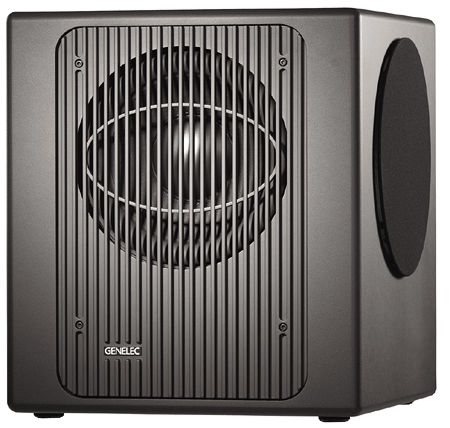
The Science of Subwoofing

There was a time, as recently as 40 years ago, when frequencies below 100Hz were considered extreme lows, and reproduction below 50Hz was about as common as the unicorn. From our present technological perch, it's too easy to smirk condescendingly at such primitive conditions. But just so you're able to sympathize with the plight of these disadvantaged audiophiles, I should tell you that there were two perfectly good reasons for this parlous state of affairs. First of all, program material at that time was devoid of deep bass; not because it was removed during disc mastering but simply because there wasn't any to begin with. The professional tape recorders of the day featured a frequency response of 50–15kHz, ±2dB—just about on a par with the frequency performance capability of a cheap 1988 cassette tape deck.


The Thick And The Dead

Alright already, quit shoving. I know I don't belong here. This magazine already has a place for manufacturers---in the back, where those large egos are squeezed into small column inches so they can't hurt you. Not that I'm exactly proud of my job. On social occasions, if pressed as to my profession, I will usually admit to some honest toil such as mortician or hodcarrier. Speaker design is downright devious work. As proof, examine the specifications for the 1376 models in Audio's 1988 equipment directory. Much of this data, when compared with each described system's real-world performance, looks like Joe Isuzu wrote it on a bad day.


Who Stole The Bass? / No One Stole The Bass

Editor's Introduction: Stereophile's "Recommended Components" feature is, as I am sure you will have guessed, produced by a committee. The reviews are studied, the reviewers polled to verify the continued validity, the merits and demerits of specific pieces of equipment are discussed or, rather, argued over at length by JGH, JA, and LA, and out of the whole business emerges the "truth." But, as with the findings of any committee, what is presented as a consensus will have significant undertows and countercurrents of opinion; if these are very strong, a "Minority Report" is often also produced. Such has been the case this time, concerning loudspeakers.

Workin' on the Railroad

Most audiophiles know Mobile Fidelity as the record company with the philosophy of resurrecting old, important, recorded performances and re-releasing them with (hopefully) the kind of sound they should have had in the first place. Few audiophiles are aware that Mobile Fidelity is also the name of a (different) recording company which collects sound effects in four channels for motion picture and television post-production.

Krell Power: A Visit to the Laboratory of Doctor Morbius

The only one who knows this ounce of words is just a token

Is he who has a tongue to tell, but must remain unspoken.
—Moondog, 1968


The Lockheed 1011 sits dormant on the ground at Chicago's O'Hare airport. "We have a little light bulb problem here" drawls the pilot in the approved Right Stuff manner. "We don't know if it's the bulb or what, we'll let you know."

Dick Olsher Dahlia speaker

Do-It-Yourself (DIY) loudspeaker projects are quite common in the UK, where details about several excellent designs, including a recent one by Martin Colloms, have been published for public domain consumption. Stateside, the situation is rather grim, where only an occasional subwoofer project (always popular) makes it into the commercial magazines.
Advertisement
Advertisement
Advertisement