J. Gordon Holt

Sort By: Post DateTitle Publish Date

Test Your Hi-FiQ

How do you rate as an audio expert? Test yourself on these 25 questions.


All of the following are multiple-choice questions, dealing with things that every audio hobbyist should know, either before or after completing the test. Most of them are easy, but take your time in answering and don't jump to conclusions. Some of the questions are quite tricky, and wrong answers will be subtracted from your final score, so read them and the possible answers carefully before committing yourself. Don't guess if you aren't fairly sure.

KLH Model Twelve loudspeaker

The idea of a loudspeaker system whose frequency response could be tailored to suit room acoustics and/or personal taste is one that has always appealed to the high-fidelity perfectionist. Ideally, such a loudspeaker would allow you to raise or lower the level of any part of the audio spectrum to correct for, say, a sharp 370Hz room resonance or a mild absorptive condition that weakens, say, the 800Hz–3kHz range. Obviously, though, this kind of flexibility would require an infinite number of bandpass networks, each with its own volume control—which is an obvious impracticality.

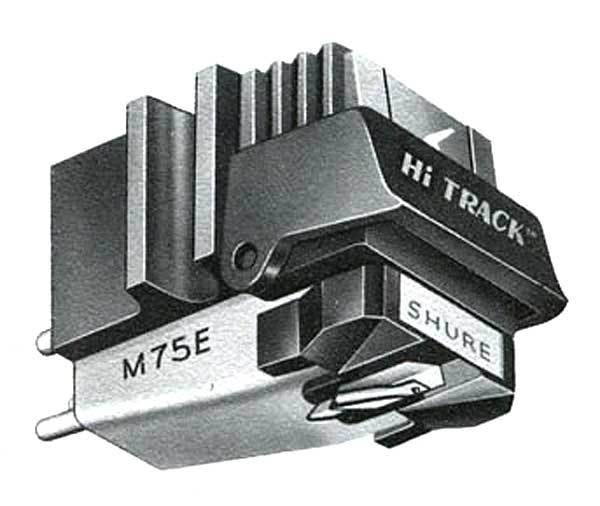
Shure M75E phono cartridge

This is one of Shure's new generation of pickups with "trackability" that grew out of research on the Type II V-15 pickup.


At first glance, the V-15-II and the M75E are physically identical. They're the same size, the same shape, and almost the same weight (the M75E weighs 0.8 grams less); and both of them have the same neat little hinged cover that flips down to protect the stylus when the pickup's not in use.

Ortofon RS-212 tonearm

The RS-212 is one of the most impressive-looking tonearms we've seen in many a moon. Our first reaction to it, in fact, was much the same as our reaction to the first big, professional Ampex tape recorder we ever saw: it reminded us of one of those precision-engineered and cleanly styled electronic devices you see in hospitals and industrial laboratories—devices which make no attempt to cater to the current fashion in interior decorating or depth-researched consumer preferences, but which are designed simply to do a job neatly and efficiently. This arm, in short, is practically guaranteed to impress your Magnavox-oriented friends with the quality of your phono system, no matter how oblivious they may be to its actual sound.

Recording of February 1968: Chopin; Nocturnes

Chopin; Nocturnes

Arthur Rubinstein, piano

RCA Victor LSC-7050 (2 LPs) (reissued on CD as RCA Victor Red Seal 0902 663049-2). Max Wilcox, prod.; Tom MacCluskey, Sergio Marcotulli, engs. Recorded August 30–September 2, 1965, 2 February 21, 1967.


If these Nocturnes are never played better than this, we couldn't care less. These are exquisite performances!


The recording, via RCA Victor's Dynagroove process is a far cry from the earlier excesses that gave Dynagroove its horrid reputation among perfectionists. One is simply not aware of the recording at all, as long as it is played at the right volume, which is about what you would hear from a good first-balcony concert-hall seat.

Audio & Design M9BA tonearm

Back in the days of pre-stereo high fidelity, when a 6-gram phono pickup was considered to be "featherweight," the best universal-type tonearm we knew of was a bulky, very professional-looking device made by Gray Labs and designated the Model 108. One unusual thing about it was that, instead of using sleeve or cone-face bearings, it had a single up-ended needle—a so-called unipivot—for both the vertical and lateral modes of motion. The other unusual thing about it was that the pivot system was viscous-damped, and it was this, we suspect, that was largely responsible for the arm's ability to make any pickup sound somehow sweeter and cleaner than it did in any other arm.

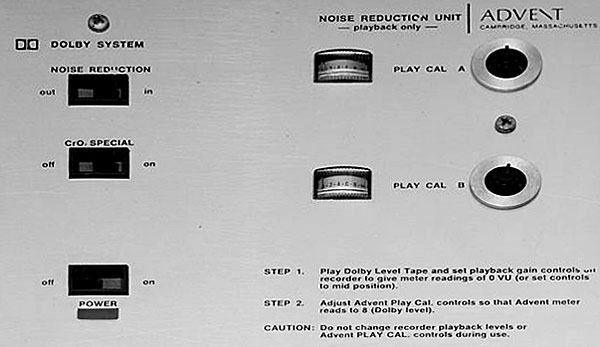
A Dolby In the House

By the time you read this, in the fall of 1967, the "Dolby system" will probably be old hat to you. Every other audio publication has been describing it, discussing it, and hailing it as the greatest invention since sex.


We've seen that kind of press ballyhoo before, about such significant advances as the Edsel, the 16-rpm LP and the "thin-profile" loudspeaker, so our first inclination was to be a wee bit skeptical of the Dolby. It seemed too good to be true.

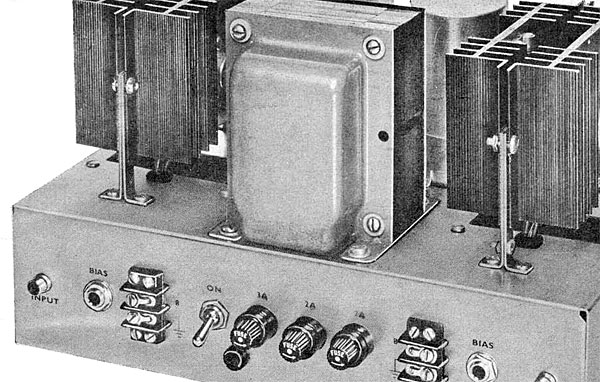
Futterman H-3A power amplifier

It is not at all unusual these days to find manufacturers producing "matched" speakers and amplifiers that are designed specifically for one another. But it is very unusual to find this being done by an amplifier manufacturer who doesn't make loudspeakers. The Futterman H3-A is one of these rarities—an amplifier designed primarily to complement one of the best, and one of the hardest-to-drive loudspeakers on the market: the KLH Model Nine.

Do It Yourself!

Editor's Note: in the main, Stereophile has steered clear of DIY audio projects, leaving them to magazines like The Audio Amateur, which was published by the late Edward T. Dell. But one of the exceptions was this 1967 article on the "Brute," a tube amplifier design by none other than Ed Dell. Note that the DIY competition mentioned by Gordon Holt is long closed to entries.—John Atkinson


There's a platitude to the effect that the road to Hell is strewn with good intentions. Well, we don't see ourselves as headed for perdition, but we must admit that we are surveying a rather impressive-looking junk pile of good intentions at this point.

Advertisement
Advertisement
Advertisement