J. Gordon Holt

Sort By: Post DateTitle Publish Date

Recording of April 1967: An Audio Obstacle Course

An Audio Obstacle Course: The Shure Trackability Test Record

Shure Bros. TTR-101.


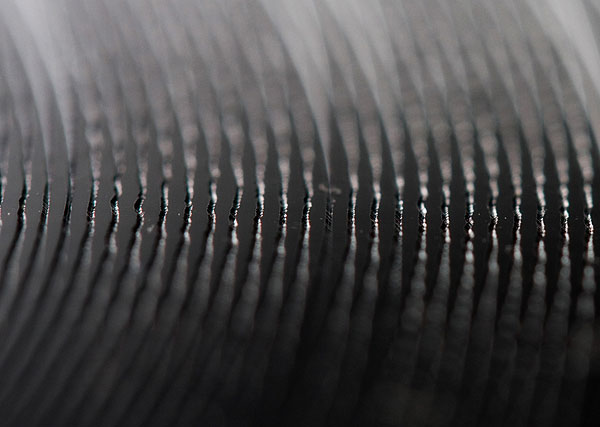
Shure's new "Supertrack" V-15 Type II pickup was designed as an answer to all those high-powered discs whose excessive modulations make them shatter all over the place on lesser pickups, But just in case anyone didn't happen to own any of these difficult discs, Shure decided to issue one of these, too. The result is a collection of some of the meanest modulations ever gathered together in one place.
A Measurement that Says Something

When we first heard rumors that Shure Brothers was about to unleash something called "trackability" on the audio world, our reaction was mainly one of indifference. We already had loudspeakers with listenability, tape recorders with portability, and amplifiers with stability and dependability. Trackability, we figured, was just another clever sales gimmick; a catchy word that the advertising department had thought up to describe what everyone wanted in a pickup.

Thorens TD-150AB turntable and tonearm

This is an integrated arm-and-turntable unit using single-belt drive from a stepped motor pulley to an inside platter (under the main one), and having a three-point suspension similar to that in the AR turntable for isolation from acoustic feedback and floorborne vibrations. Speed change is accomplished by a two-pronged "fork" which, actuated by the speed selector knob, throws the belt from one step of the motor pulley to the other. The motor is a special synchronous type that is actually two motors in a single case. Their speed is determined by the frequency of the AC supply, so there is no speed adjustment.

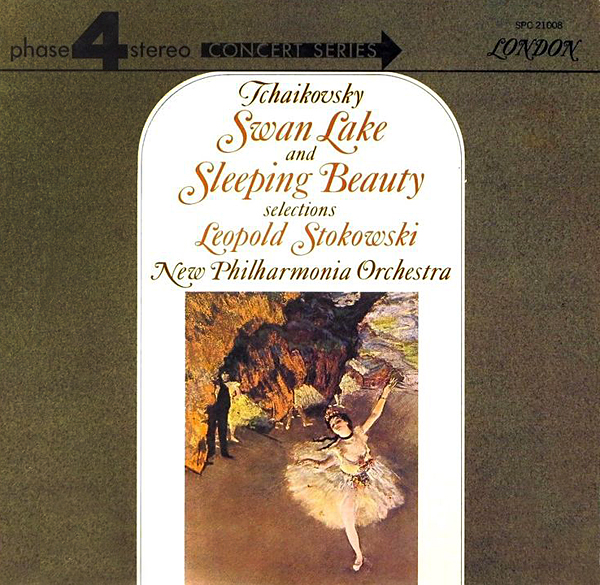
Recording of December 1966: Tchaikovsky: Swan Lake & Sleeping Beauty


Tchaikovsky: Swan Lake & Sleeping Beauty Selections

New Philharmonia Orchestra, Stokowsky

London Phase-4 SPC 21008 (LP); Ampex LCL-75008 (open-reel tape). Tony D'Amato, Marty Wargo, prods.; Arthur Lilley, eng. TT: 46:50.


These are exciting, lilting, concert-style (as opposed to ballet-style) performances of the best-known excerpts from Tchaikovsky's second- and third-most-popular ballets. (First, of course, is the Nutcracker.) The recording is a surprise, after the excesses we've heard on earlier Phase-4 recordings.

Janszen Z-600, Z-900, & Z-960 loudspeakers

The Z-600 is the latest of the "console" (as opposed to "bookshelf") systems made by Neshaminy Corp., and using Janszen electrostatic tweeters (footnote 1) and a Neshaminy-designed 11" woofer. The nominal crossover frequency is 1500Hz, with a broad overlap between the woofer's top and the low end of the paralleled tweeters. Tweeter level is not adjustable (footnote 2).

Subjective Loudspeaker Testing

One of the most firmly-established audio platitudes is the one which says "The specs don't tell the whole story." One reason for this, of course, is the fact that most manufacturers, preferring to sell their products on the basis of emotional appeals in ads rather than on hard, cold performance claims, do not attempt to make their specs tell the whole story.

Nowhere to Go?

Our mail, in recent months, has brought a number of comments (some of them printed in this issue) from professional audio men who decry the fact that developments in the audio field seem to have come to a screeching halt.


There would seem to be some justification for believing this, too. There hasn't been a new kind of loudspeaker, amplifier, pickup, or tuner for the past five years or so. The professional engineering journals, once loaded with juicy articles about research and developments in music reproduction, are now devoted largely to public-address techniques and new methods for the "creation" of electronic music.

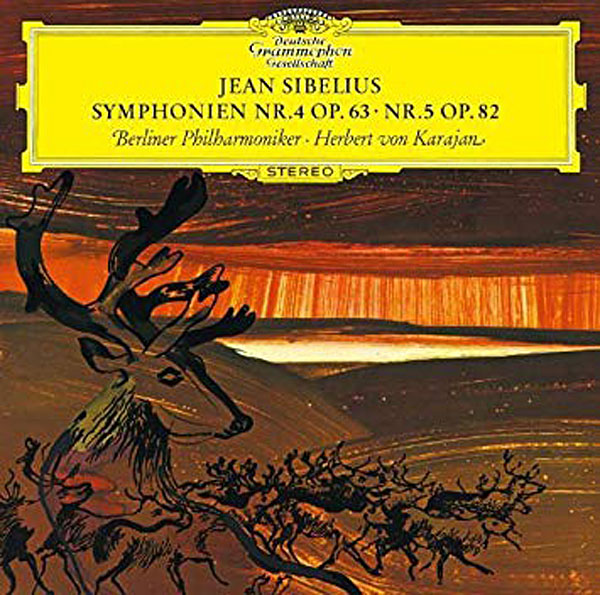
Recording of September 1966: Sibelius: Symphonies Nos.4 & 5


Sibelius: Symphonies Nos.4 & 5, The Swan of Tuonela, Tapiola

Berlin Philharmonic, Herbert von Karajan

Deutsche-Grammophon 138 974 (LP, Symphony 4). Both symphonies reissued on CD (Deutsche Grammophon 457 748 2)


Magnificent, musically natural recordings with some of the deepest, fattest bass and richest, warmest orchestral sound that's been committed to recordings for many years. The discs are a shade more lucid than the tapes, but not much. Take your pick.—J. Gordon Holt

Dynaco Stereo 120 transistor power amplifier

One by one, the major amplifier manufacturers have acceded to the pressures of the marketplace and introduced "solid-state" models, whether or not these happened to sound as good as their previous tube-type units. Dynaco was one of the last of the hold outs, preferring, according to their advertisements, to wait until they could produce a solid-state unit that was at least as good as their best tube types. Now, they've taken the plunge at last, with their Stereo 120.

KLH Model Nine loudspeaker

Editor's Note: Although this product has been available for several years, it is being reviewed in considerable detail because it is a strong contender for the title of "Best Available Loudspeaker System, Regardless of Cost," and because we plan to review some of the other contenders for the same title within the next few issues. We feel that since all of these systems represent a considerable outlay of money, prospective buyers should have a thorough understanding of the merits and demerits of each system, so they will know what to expect from them in the way of performyince capabilities and operational requirements.
Advertisement
Advertisement
Advertisement