Historical

Sort By: Post DateTitle Publish Date

60 Years of Stereophile!
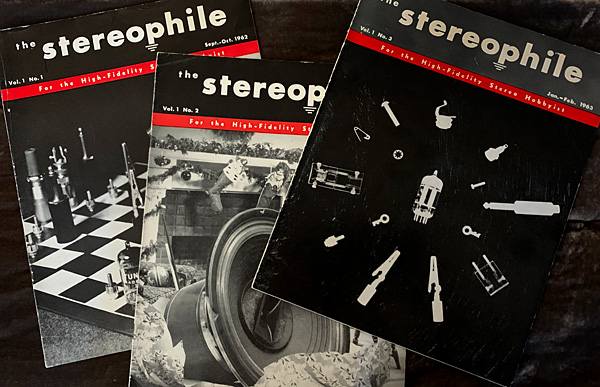
It was September 1962. In the UK, the Beatles were recording their first single, "Love Me Do," at London's Abbey Road Studios. And in the US, a young journalist, J. Gordon Holt, born in North Carolina but raised in Australia from 1935 to 1947, had become dissatisfied with the advertiser-friendly atmosphere at High Fidelity magazine, for which he had been the audio editor. Holt quit High Fidelity and, after a brief stint with phono cartridge manufacturer Weathers, published the first issue of what was then called The Stereophile.

John Atkinson: a Career in Audio

At the end of April, Adrian Low, the proprietor of Toronto retailer Audio Excellence, asked if he could interview me. "I've been interviewing audio luminaries for some time," Adrian wrote, "partly because I am so interested in how they started, their experiences, and also to share these with fellow audio enthusiasts."


We connected with Skype and, in the two videos embedded below, Adrian and I, along with Jan and Vilip from Audio Excellence, talk about many things connected with my 52 years as an audiophile, my 43 years in audio magazine publishing, and my 33 years at the editorial helm of Stereophile.

2020 Jitter Measurements

Even as digital/analog processors were becoming a hot product category in the early 1990s, audiophiles were also learning that timing uncertainties in the AES/EBU and S/PDIF serial datastreams—jitter—would compromise any improvement in sound quality offered by these DACs. Some companies therefore introduced products to reduce or eliminate jitter—in the November 1994 issue of Stereophile, Robert Harley reviewed three such products: the Audio Alchemy DTI Pro, the Digital Domain VSP, and the Sonic Frontiers UltrajitterBug. I still have Stereophile's review samples of the UltraJitterBug and VSP, along with two contemporary DACs: a PS Audio UltraLink and a Parts Connection Assemblage DAC-1.


As our reviews of these products were published before Paul Miller's and the late Julian Dunn's development of the "J-Test" diagnostic signal, I performed J-Test jitter measurements to bring that 1994 review into the 21st Century. You can see what I found here.

Stereophile: A Personal Odyssey

John Atkinson (left) and Richard Lehnert (right) in RL's house in May 2011, the day before RL moved from Santa Fe, New Mexico, to Ashland, Oregon. (Photo: Susannah Tyrrell)


I first became aware of the existence of Stereophile sometime in spring 1985, while working as a typesetter in Santa Fe, New Mexico. (Remember typesetting?) From far down the hall behind me I heard a big, high-pitched laugh. I turned to see my present boss guiding toward my dark typesetting cell my future boss: a very tall, balding, round-faced man with a huge grin who shambled along in loose chinos and a Hawaiian shirt in full sail.

William Zane Johnson 1926–2011

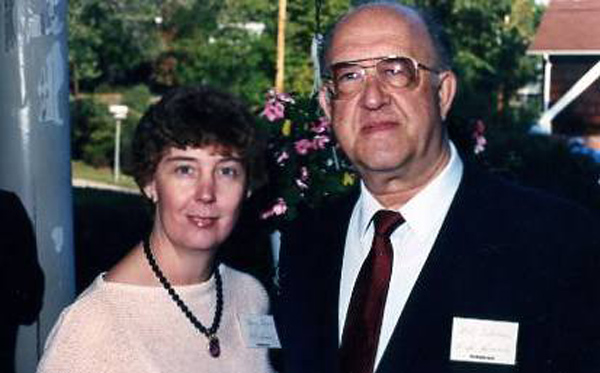
We were saddened to hear of the passing, on December 10,of Audio Research founder William "Bill" Zane Johnson. Bill, who founded Audio Research in 1970 and became its Chairman Emeritus in 2008, is survived by his wife Nancy (left in photo) and family. We are preparing a tribute to Bill, to be published in the March 2012 issue of Stereophile, but meanwhile, we are reprinting here an interview Paul Messenger and I conducted with Bill that was originally published in the June 1983 issue of Hi-Fi News. (My thanks to HFN editor Paul Miller for permission. Stereophile's 1994 interview with Bill can be found here.)—John Atkinson

Listening #89

Nineteen days after J">http://www.stereophile.com/news/j_gordon_holt">J. Gordon Holt died, my daughter and I drove west on NY Route 20, passing lawn sale after lawn sale on our way to the supermarket in Richfield Springs. Each sale promised a pleasant waste of time on that hot afternoon, but only one caught my eye: There, among the Avon bottles and the 8-track tape cartridges, were two large bookshelf loudspeakers, dressed in walnut veneer and light-colored fabric grilles. AR 3s, I thought. Or maybe Large Advents. "They'll still be there when we come back this way," I said, stupidly.


John Crabbe: Firebrand

Editor's Note: John Crabbe was Editor of Hi-Fi News & Record Review when I joined that magazine as a lowly editorial assistant in September 1976. At the end of 2007, I had asked Steve Harris to interview John for Stereophile, as part of an ongoing project to create an oral history of high-end audio (footnote 1). Sadly, John passed away in December 2008—see "As We See It" and "Industry Update," in our March issue. We are publishing Steve's interview as a tribute to a man from whom I learned my craft as an audio magazine editor.—John Atkinson

EICO HF-81 integrated amplifier

If you spotted an EICO HF-81 at the local Goodwill, you'd think nothing of this plain-Jane integrated amplifier in its nondescript gray case. But if you kept on walking, you would have passed up one of the best-kept audio secrets of all time. The HF-81 hails from hi-fi's pioneer days, before chromed chassis and slick Mac transformers. It isn't ultracool-looking, like early Marantz or McIntosh gear. It doesn't have the nostalgia factor of a Fisher. It's not a supercheap eBay steal like a Stromberg-Carlson or a Heathkit. So what's the deal?


Advertisement
Advertisement
Advertisement