
Historical

Sort By: Post DateTitle Publish Date

Dynaco PAT-4 preamplifier

This review of one of the first solid-state preamplifiers was published in 1968. It includes some of JGH's first thoughts on the ongoing subject of "Accuracy vs. Musicality."


Preview, from July 1968 (Vol.2 No.6): Overall sound extremely good, but phono sounds slightly lacking in deep bass, despite impeccable measurements. Scratch filter judged very highly effective, but tone controls felt to be less than ideal be cause of excessively coarse action and marked tendency to affect midrange output. Spring-return Tape Monitor switch probably will not appeal to serious tapesters. This preamp is slated for a full report in the next issue.
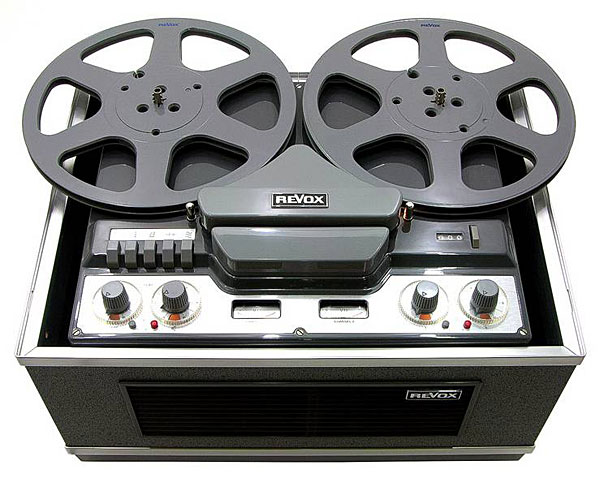
Revox G-36 open-reel tape recorder

The Swiss-made G-36 recorder had earned an enviable reputation among perfectionists during the few years that it has been available in the US, and our inability to test one (because of a backlog of other components for testing) became increasingly frustrating to us with each glowing report we heard from subscribers who owned them. Now that we have finally obtained one through the courtesy of ELPA (footnote 1), we can see what all the shouting was about, but we also have some reservations about it.

Test Your Hi-FiQ

How do you rate as an audio expert? Test yourself on these 25 questions.


All of the following are multiple-choice questions, dealing with things that every audio hobbyist should know, either before or after completing the test. Most of them are easy, but take your time in answering and don't jump to conclusions. Some of the questions are quite tricky, and wrong answers will be subtracted from your final score, so read them and the possible answers carefully before committing yourself. Don't guess if you aren't fairly sure.

KLH Model Twelve loudspeaker

The idea of a loudspeaker system whose frequency response could be tailored to suit room acoustics and/or personal taste is one that has always appealed to the high-fidelity perfectionist. Ideally, such a loudspeaker would allow you to raise or lower the level of any part of the audio spectrum to correct for, say, a sharp 370Hz room resonance or a mild absorptive condition that weakens, say, the 800Hz–3kHz range. Obviously, though, this kind of flexibility would require an infinite number of bandpass networks, each with its own volume control—which is an obvious impracticality.

Futterman H-3A power amplifier

It is not at all unusual these days to find manufacturers producing "matched" speakers and amplifiers that are designed specifically for one another. But it is very unusual to find this being done by an amplifier manufacturer who doesn't make loudspeakers. The Futterman H3-A is one of these rarities—an amplifier designed primarily to complement one of the best, and one of the hardest-to-drive loudspeakers on the market: the KLH Model Nine.

Audio & Design M9BA tonearm

Back in the days of pre-stereo high fidelity, when a 6-gram phono pickup was considered to be "featherweight," the best universal-type tonearm we knew of was a bulky, very professional-looking device made by Gray Labs and designated the Model 108. One unusual thing about it was that, instead of using sleeve or cone-face bearings, it had a single up-ended needle—a so-called unipivot—for both the vertical and lateral modes of motion. The other unusual thing about it was that the pivot system was viscous-damped, and it was this, we suspect, that was largely responsible for the arm's ability to make any pickup sound somehow sweeter and cleaner than it did in any other arm.

Thorens TD-150AB turntable and tonearm

This is an integrated arm-and-turntable unit using single-belt drive from a stepped motor pulley to an inside platter (under the main one), and having a three-point suspension similar to that in the AR turntable for isolation from acoustic feedback and floorborne vibrations. Speed change is accomplished by a two-pronged "fork" which, actuated by the speed selector knob, throws the belt from one step of the motor pulley to the other. The motor is a special synchronous type that is actually two motors in a single case. Their speed is determined by the frequency of the AC supply, so there is no speed adjustment.

Janszen Z-600, Z-900, & Z-960 loudspeakers

The Z-600 is the latest of the "console" (as opposed to "bookshelf") systems made by Neshaminy Corp., and using Janszen electrostatic tweeters (footnote 1) and a Neshaminy-designed 11" woofer. The nominal crossover frequency is 1500Hz, with a broad overlap between the woofer's top and the low end of the paralleled tweeters. Tweeter level is not adjustable (footnote 2).

Dynaco Stereo 120 transistor power amplifier

One by one, the major amplifier manufacturers have acceded to the pressures of the marketplace and introduced "solid-state" models, whether or not these happened to sound as good as their previous tube-type units. Dynaco was one of the last of the hold outs, preferring, according to their advertisements, to wait until they could produce a solid-state unit that was at least as good as their best tube types. Now, they've taken the plunge at last, with their Stereo 120.
Advertisement
Advertisement
Advertisement