Historical

Sort By: Post DateTitle Publish Date

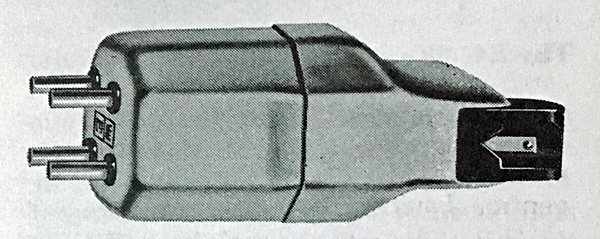
Audio Dynamics ADC-1 phono cartridge
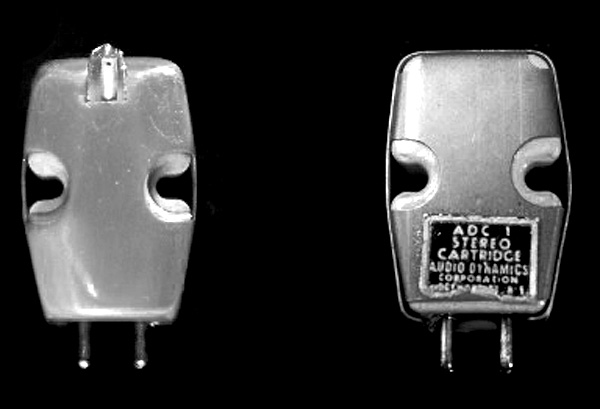
We tested two samples of the ADC-1 phono cartridge, both of which were taken from a dealer's stock. One was a demonstrator that had been in use for some months. The other was brand new, right off the shelf. Both were tested in an Empire 98 tonearm and in a Gray 108-C tonearm with its damping lightly adjusted, but results with both cartridges were for all intents and purposes identical in both arms.
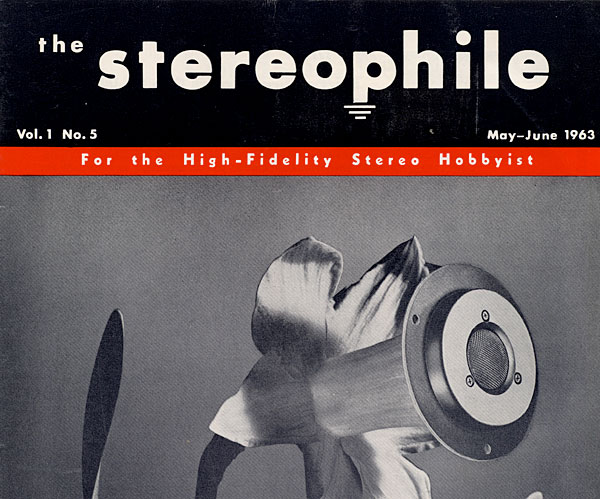
Down with Dynagroove!

Editor's Introduction: In 1963, Stereophile's founder J. Gordon Holt published attacks on what he saw as the single largest step backward in high-fidelity sound reproduction at that time: RCA's introduction of "Dynagroove" LP records, where the recorded signal was pre-distorted and dynamically equalized to compensate for the poor performance of cheap phonograph players. "Issue 5...revealed most of RCA Victor's 'revolutionary' new system as nothing more than a sophisticated way of bringing higher fi to record buyers who don't care enough about hi-fi to invest in a decent playback system." Ten years later, Gordon wrote that, "As of 1974, the best we can say for Dynagroove is that there is no audible evidence of it on current RCA releases." (These articles were reprinted in June 1992, Vol.15 No,6, as part of Stereophile's 30th-anniversary celebrations.)John Atkinson

Recommended Components #1

[Note - this article is from the May, 1963 issue of Stereophile]


Many readers have asked why we don't maintain a permanent listing in each issue of The Stereophile of those components that we feel to be the best available, with or without qualification.


So, we are following our readers' suggestion, and will list in each issue groups of components which, at publication time, we feel are ones from which our readers would be well advised to assemble their systems. The list will change from time to time, as new products appear, old ones are obsoleted, or manufacturers change their quality control standards. Components will be added to or dropped from the list without advance notice if we see adequate reason for doing so, but each change in the list will be explained in the magazine at the time the change is made.

Empire 880P phono cartridge

The 880P is a moving-magnet stereo cartridge for use in transcription arms and the few high-quality record changers now available, such as the Garrard Model A and the Lesa units. It has standard ½" mounting centers, and the pickup requires the 47k ohm termination provided by most preamplifiers. The 8mV output, too, is about ideal for nearly all preamps.

Garrard 301 & Thorens TD 124 turntables

An editorial note: We recently republished Stereophile founder J. Gordon Holt's 1966 review of the Swiss Thorens TD-150AB turntable. This was the first high-end 'table I bought after leaving university and earning a wage. But as good as I felt the TD-150AB to be, with its belt drive and sprung suspension, it was sonically overshadowed both by Thorens's TD 124 turntable and by the English Garrard 301 turntable.

Why Hi-Fi Experts Disagree

Dateline: late August 1989. The scene: my palatial office in the Stereophile Tower. Present were the magazine's official technowizard Robert Harley, Circulation Kahuna Michael Harvey, and myself. The subject under discussion was the program for the Stereophile Test CD, launched in this issue, and Bob had been dazzling Michael and myself with a description of the sophisticated signal-processing power offered by the Digidesign Sound Tools music editing system with which he had outfitted his Macintosh IIX computer. (He had to fit it with a 600-megabyte hard-disk drive!) "It'll even do edits as crossfades as well as butt joins," enthused Bob. "Let me tell you about the crossfade I once did when editing a drum solo for a CD master that lasted ten seconds..."

The Weakest Link

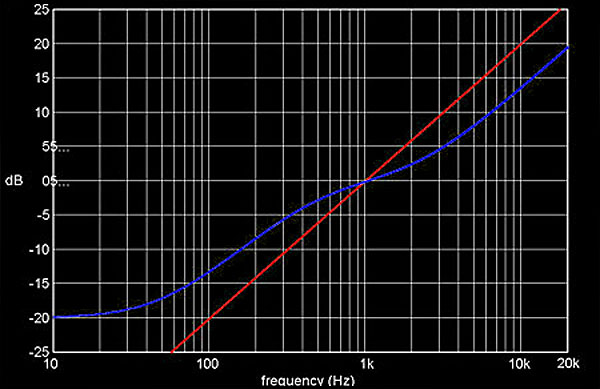
When the Record Industry Association of America adopted its standard disc playback equalization curve in 1954, hi-fi enthusiasts heaved a sigh of relief and bade fond farewell to years of confusion, doubt and virtual pandemonium. Before the RIAA curve there were six "standard" curves in use, and since nobody seemed to know who was using what, getting flat response from a disc was often more a matter of luck than anything else. The adoption of the RIAA standard playback curve heralded an end to all this.

Don't Tell Your Friends!

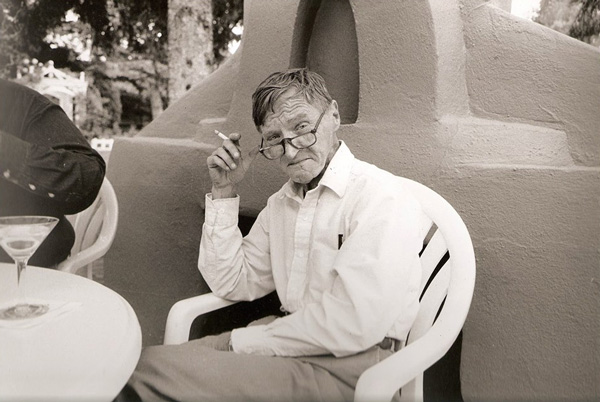
Stereophile's founder, J. Gordon Holt, photographed toward the end of his life by Steven Stone.


Editor's Note: The forthcoming August 2017 issue of Stereophile is No.451, but 55 years ago this summer, J. Gordon Holt was putting together the first issue of what initially was to be called The Stereophile. Here is Gordon's editorial leader from that issue, published in November 1962.

Recording of November 1962: Berlioz: Symphonie fantastique

Berlioz: Symphonie fantastique

Boston Symphony Orchestra, Charles Munch, conductor

RCA Victor LSC-2608 (LP). TT: 48:40


It is easy to forget that the hi-fi movements—the "March to the Scaffold" and the "Dream of a Witches' Sabbath"—comprise barely a third of the music in the Symphonie fantastique, yet when we listen to most of the available versions of this, we can understand why the first three movements are usually passed up by the record listener. Two are slow and brooding, one is a wispy sort of waltz, and all three require a certain combination of flowing gentleness and grotesquerie that few orchestras and fewer conductors can carry off. It is in these first three movements where most readings of Berlioz' best-known work fall flat. Either they are too sweetly pastoral or too episodic and choppy, or they degenerate into unreliered dullness.

Advertisement
Advertisement
Advertisement