My Back Pages

Sort By:  Post Date TitlePublish Date

Make America Old Again: Remembering Robbie Robertson and The Band
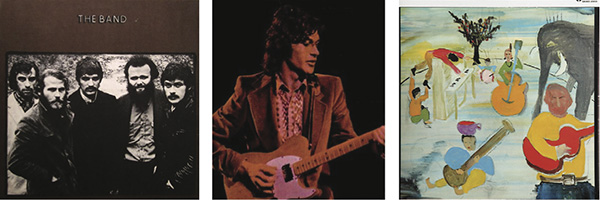
When I read the news that songwriter and guitarist Jaime Royal "Robbie" Robertson had passed, I forwarded a link to the obituary in the New York Times to my friends Doug and Jon. They were with me in the balcony of the Berkeley Community Theater on the evening of January 31, 1970, to hear a performance by The Band. We were juniors at Berkeley High School that year and lived and breathed that music every day. I recall sitting around with them outdoors, singing songs from The Band's first two albums.

(Re)imagining a Brahms piano quintet—without piano

Brahms first scored what was to become his Quintet in F minor, Op.34, for piano, two violins, viola, and cello for two violins, one viola, and two cellos—no piano. The scoring and perhaps the music was inspired by Schubert's similarly piano-less, two-cello Quintet in C major. The original Brahms score has been lost.

Cellist Terry King, a protégé of the great Gregor Piatigorsky and the first American-born teacher to teach a Tchaikovsky Competition Gold Medal winner, long wondered what the original quintet sounded like. He sent me this quote, from Clara Schumann, from just after she read Brahms's original score, playing all the parts on her piano. "What a world of strength and richness there is in the first movement, how the first theme takes hold of one at once," Schumann wrote. "How beautifully it is scored for the instruments! I can see them bowing. Dreamy at times and then the accelerando and [the] wild, passionate ending—it has taken hold of me. And how rapturously the Adagio sings one long melody from start to finish! I play it over and over again and never wish to stop."

King decided that he would recreate the original version of the Brahms quintet.

Nostalgia for an Age to Come

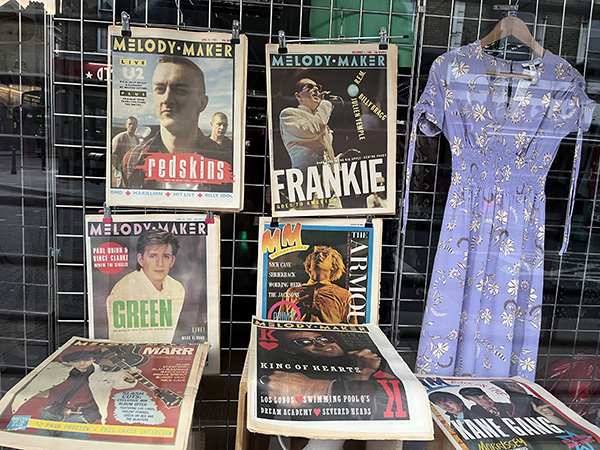
I was surprised to see, in the window of my local charity shop in a corner of north London, a display of 1980s Melody Maker magazines featuring some of my favorite bands. Nestled alongside second-hand frocks and pieces of crockery were The Redskins, Scritti Politti, Johnny Marr, and Frankie Goes to Hollywood.

The Redskins produced one rather fine album, which attempted to marry left-wing politics with northern soul. Frankie was seen as outrageous in its day; "Relax" was banned on several radio shows, and some record shops refused to stock it. Now both appeared proudly in the window of a second-hand shop that raises money for the Royal Society for the Prevention of Cruelty to Animals.

Intrigued, I went in to find out what the story was. I was in luck: The person responsible for the display was working behind the counter. It wasn't, as I had assumed, a middle-aged bloke reliving his youth, reminiscing about a time when he had a full head of hair (that was me), but a young woman, probably born 20 years after those Melody Makers were published.

Five Things I Learned At Hi-Fi Shows

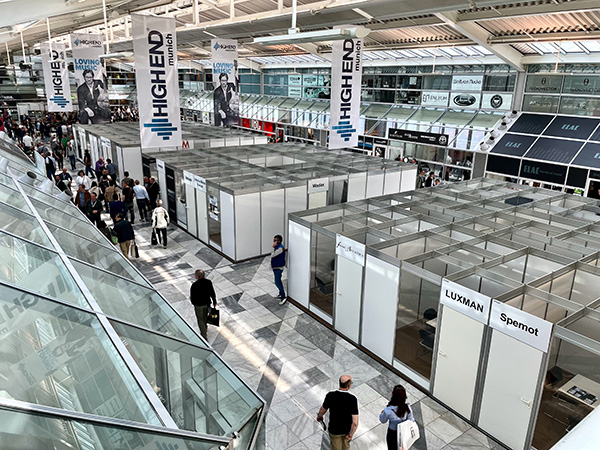
"I hope you're decompressing from AXPONA," I recently wrote to a frazzled-looking friend I'd met at this greatest of North American hi-fi shows. Google's spellcheck offered to change decompressing to decomposing. I declined, though it's true that such expos can be grueling—just not grueling enough to stay away.

In these observations about high-end audio shows, fondness is foremost, but a few dark side notes will slip in.

I conspired to provide material support to an independent record store

At least I didn't get arrested is a helluva way to begin a story, but then I never expected the FBI to question me about my online record shopping, viewing it as cover for potentially "Conspiring to Provide Material Support" to an international terrorist organization. "We need some information from you," the email said. "We've also temporarily limited certain features in your PayPal account."

Why Not Listen to Everything?

I have been haunted for 15 years by these words: "Very often if I was given the choice of listening to a piece of music I really liked or listening to nothing at all, I would choose nothing at all. ... These days I don't listen to a lot of music, and I find a lot of pleasure in no music. There's a kind of silence and just hearing some conversation from outside, or hearing a police car in the distance, just these fragments of daily life are very poetic and very peaceful somehow."

They were spoken by Britisher David Toop, confirmed music-head, someone who has spent his life playing, listening to, and writing about music. Why would a person who amassed such a dragon's hoard of obscure releases that a documentary was made about it—who tried to listen to every darn thing ever recorded—at the end of the day prefer regular sounds that would not even fit the dictionary definition of music?

Bob Dylan's Bootleg Series Vol.17: Fragments: a Masterpiece as It Is Painted

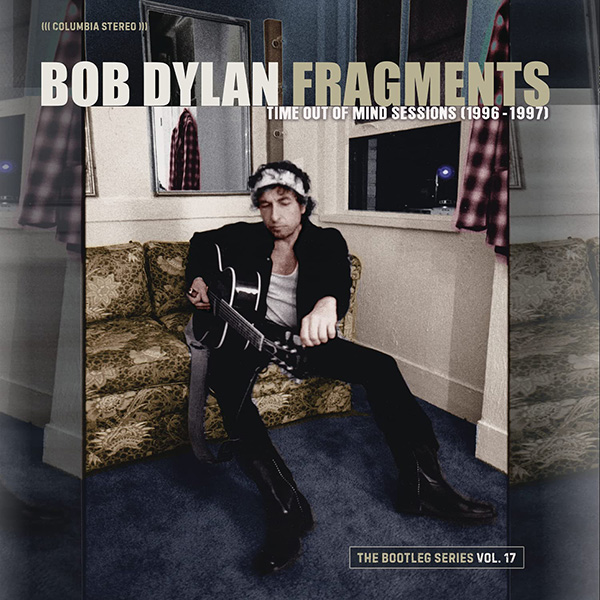
Columbia Records continues to extend its Bob Dylan Bootleg Series, which began in 1991. The latest edition in this complex warren of burrows brings us to Volume 17, Bob Dylan—Fragments—Time Out of Mind Sessions (1996–1997).

Fragments—the title—feels inaccurate; these recordings are not shards of some missing whole. Rather, they form a single large, varied portrait. To borrow an analogy from art history, what we have here is the result of cleaning and restoring a large canvas, removing layers of varnish and dirt that had obscured the true colors and textures that were there when it was first painted. Now we can experience this masterpiece in a new way.

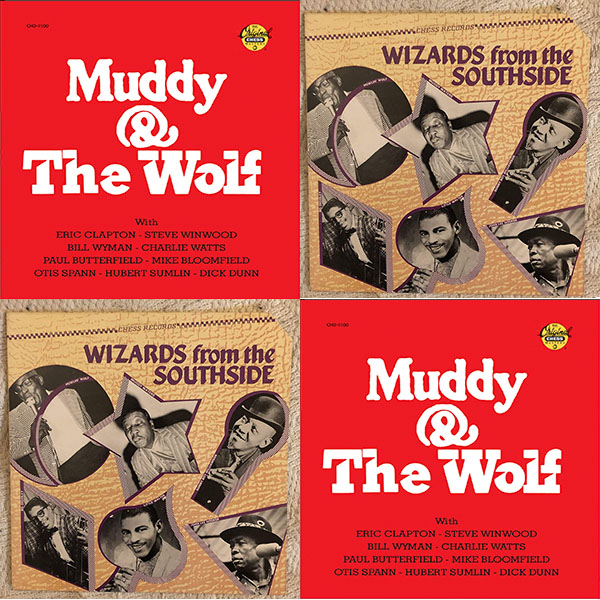
Boy Meets Blues: Muddy Waters, Howling Wolf, Little Walter, Chess Records

Most of us were not born with musical tastes intact. Tastes develop over time as we learn and experience new music and other things. An open mind, an ear attuned to songs and sound, and a procession of mentors and musical guides make for a musical life that's rich and full. To my way of thinking, the best life has a soundtrack that's varied and constantly expanding.

Which is not to say there aren't transformative events. Prior to my lightning-strike moment—about which, more in a minute—the blues were all around me, as they always are around all of us. As a kid attuned to rock'n'roll, growing up in the suburbs with a full FM dial, I was exposed to blues-based music current and past, from Elvis on the oldies stations to Led Zeppelin and the Rolling Stones.

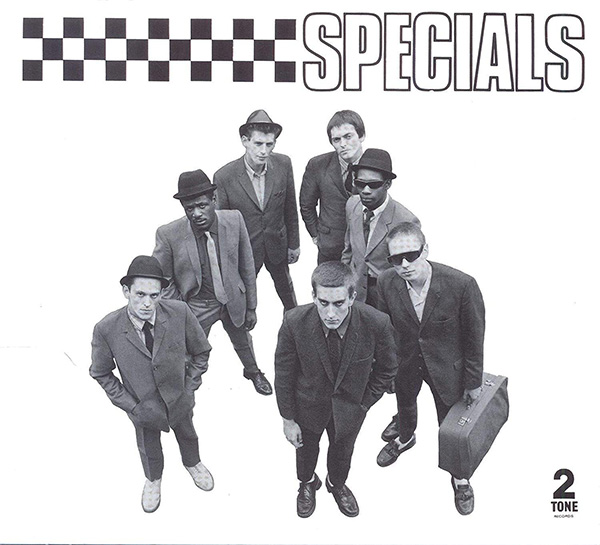
Thinking of You: Terry Hall & The Specials

A few weeks before Christmas—the time of year when all public spaces are required by law to play Mariah Carey on an endless loop—this writer was pushing a trolley idly around a London supermarket. I was over by the fresh veg when the distinctive, Hammond-driven intro of the Specials' "Ghost Town" was piped through. Heads nodded. Some shoppers started to sing along.

Weeks later, I heard that Specials front-man Terry Hall had died, of pancreatic cancer. Memories came flooding back.

Spelunking Jazz Caverns

I never collected baseball cards, played Cops & Robbers, or was a Boy Scout. From the moment I heard the opening guitar riff of Blondie's "One Way or Another," at age 6, it was clear that music would be central to everything I was going to do. It was my first important big thing, and my last.
Advertisement
Advertisement
Advertisement