My Back Pages

Sort By:  Post Date TitlePublish Date

My Last Far East Trip

Photo: Roy Hall

First comes the anticipation, that initial jet of warm water, that miraculous searching, finding the sweet spot, then heaven on earth as it cleans and caresses. As if by magic, warm, soothing wafts of air gently and sensuously dry my tush. I had forgotten just how wonderful Japanese toilets can be.

It was 5am in Tokyo. I was on my way to Hong Kong, but my ticket demanded a change of planes. Haneda Airport was empty, save for a woman driving a golf cart. She offered me a ride to the other side of the airport where some restaurants were. As we drove off, the cart started playing "Around her neck, she wore a yellow ribbon," filling the cavernous hall with echoes of John Wayne astride his horse, galloping through Monument Valley.
On Radio, Loss, and Music Discovery

The death of KMET in Los Angeles was a turning point in my young father's life. I was 6 years old when it signed off permanently, ending commercial viability of the progressive, freeform rock format on L.A.'s FM dial.

It's also one of my earliest memories: Windows down and heater up on a cloudy February morning, sitting backseat in an Arby's parking lot before kindergarten, the sound of heresy on the airwaves. Its replacement was Smooth Jazz. We—my father and my 6-year-old self—hated it.

My Triumphant Return to Vinyl

I recently started buying records again after a 30-year hiatus, thanks to my youngest daughter. She was 9, and I was gutting it out through the implosion of my first marriage. I was invigorated by the challenge of outfitting a new apartment on the cheap. I'd walk the aisles of Value Village in search of serviceable kitchen gear, and she loved to come with me, sifting through used books and house dresses while I assessed the quality of a skillet or stovetop percolator. She'd leave wrapped in threadbare pastel, cradling an armful of books by Lemony Snicket and Geronimo Stilton.

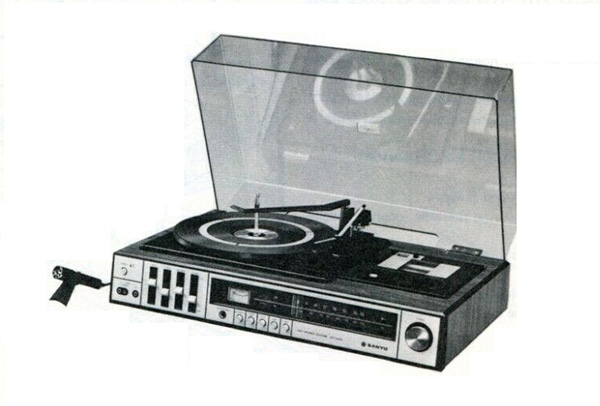
One afternoon, as we passed a stack of George Foreman Grills, she saw the record player, a mottled beige-brown box familiar to any Gen-X kid who spent time in their elementary school library. It had the reinforced metal corners and industrial clasps of a steamer trunk and a thick green handle made of indestructible Cold War plastic. Written across the top in black marker: #0027. How this piece of surplus ended up in the wayward-housewares section of a suburban thrift shop was surely an interesting story but not my concern. There it was, shut tight and resolute, perhaps since the 1970s. The price: $8.

(Un)healthy Obsessions

During a ferocious storm one recent Saturday, firefighters knocked on my door and urged my family and me to evacuate. The gale had smashed loose a neighbor's large propane tank and plunged it into the choppy waters of the fjord we live on. An explosion was possible, we were told. Five minutes later, our teenage daughters, our dogs, and my wife and I were in the car on our way to safety. (No blast occurred.)

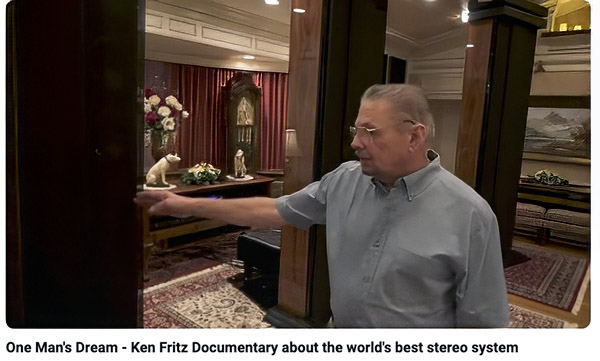
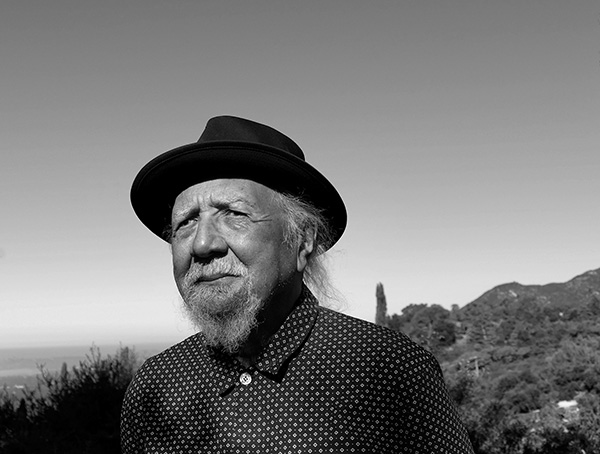
Coincidentally, the last thing I'd read that turbulent morning was the Washington Post's front-page story about the late Ken Fritz (above), a diehard audiophile who'd spent 40 years creating "the best stereo system in the world," and, as I wrote in the April 2024 issue's My Back Pages, alienating members of his family in the process. Both the evacuation and the Fritz tale put me in a pensive mood. If you'll pardon the triteness, each reminded me that life is precious and fragile, as are our relationships with loved ones. We can't afford to take either for granted.

What Price Perfection?

The late Ken Fritz discusses his legendary audio system, from the YouTube video One Man’s Dream

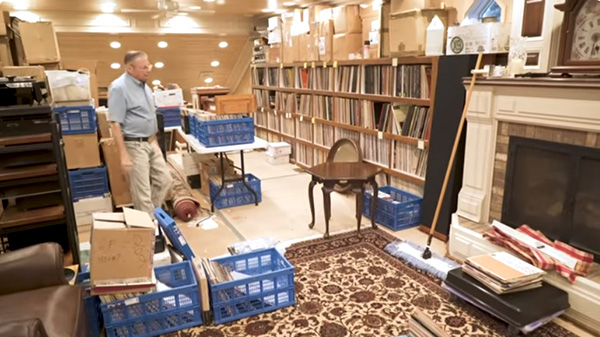
When Ken Fritz died, many people wondered what would become of his stereo system. Fritz's rig was the stuff of legend. The audiophile from Chesterfield, Virginia, had built much of it with his own hands, including line-array speakers too tall to fit in most people's homes. They took 5400 hours to complete and were appraised at more than $200,000. He also designed and built a three-arm turntable that sat on a unique 1500lb antivibration platform. Fritz felt that his "Frankentable" rivaled or bested record players costing well into six figures.

That was just the beginning.

How Scottish Indy put fun back in my life

There's a famous quote by Lenin, that revolutions cannot stand still; they have to move forward. I'm guessing he wasn't talking about the British punk explosion, but it's applicable. There was a period of time around 1978—when that initial Sex Pistols thrill had subsided—when I thought it was stalling. The new bands started sounding dull, derivative. In all probability, I just had unreasonable demands: that a band should produce iconic albums weekly. I was 17, had just started work, and pretty much thought the world was there for my personal amusement.

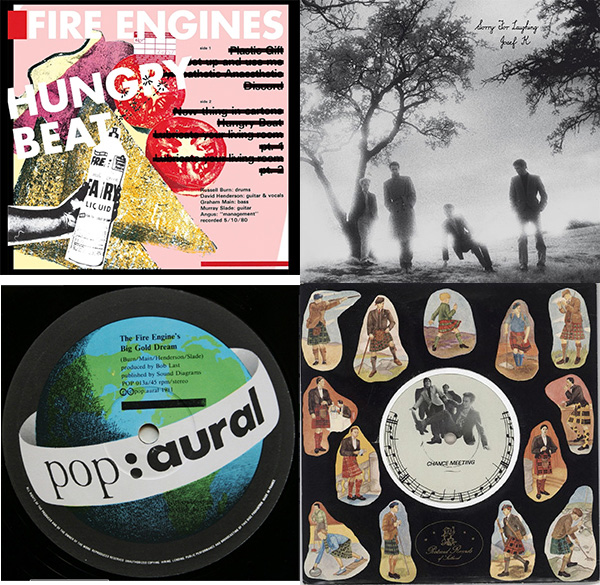
Then from the pages of my holy book—New Musical Express—came news from Scotland. Shamefully, back then, my awareness of Scottish music began and ended with Nazareth and the Bay City Rollers. But the NME journos were excitedly talking about two new record labels recently set up north of Hadrian's Wall: Fast Product and Postcard.

Shane MacGowan, the Pogues’ Poet of Displacement

Shane MacGowan (Photo: Creative Commons-Share Alike 2.0.)

There was a time in London, in the mid-'80s, when a party would invariably close with a couple of Pogues songs. It didn't matter what music had preceded them—it could be reggae or soul or whatever—but the Pogues would be played, to enthusiastic sing-a-longs by the party guests. Even I was known to join in occasionally.

As often as not, one of the songs would be the Pogues's cover of Ewan MacColl's "Dirty Old Town." It didn't matter that the song had been written about Salford (a city in Greater Manchester): Everyone would feel it had been written about their own town. This wasn't true just in my part of London, which has a large Irish diaspora, but in many other places across the world.

This was one of several gifts possessed by Shane MacGowan, who died November 30, 2023: Whether he had written the song or not, you felt he was singing about your world, your life.

The Truth Will Make You Odd

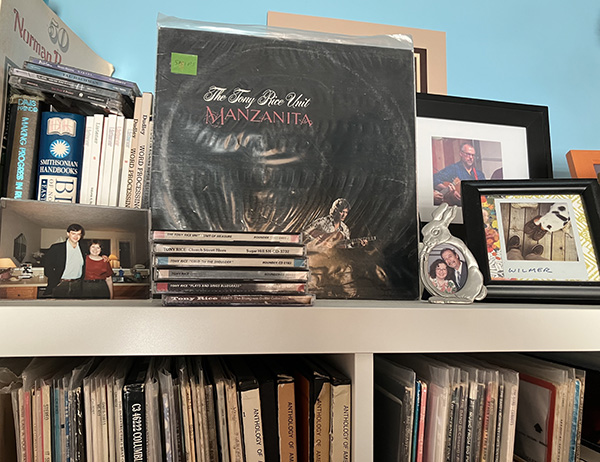
Recently I've been thinking a lot about the late Art Dudley and how Art worked humbly and relentlessly to get me to appreciate contemporary bluegrass, especially the work of renowned flat-picker Tony Rice. Back then, my contempt for contemporary bluegrass was equal to my contempt for contemporary country. Both seemed faux and shallow.

Joan Osborne's Musical Talisman

Photo by Laure Crost

We all have at least one cherished album that takes us back to the exact time and place we first heard it. Whenever we hear any of the music from that special album—regardless of whether it occurs months, years, or even decades later, of whether we hear it in the grocery store, on a car radio, or on a friend's playlist—we instantly reconnect with the feelings the music originally evoked within us.

Some of my old gear is boxed up in an offsite storage space, but almost all of my old LPs are within reach. I can reconnect with them and how they make me feel in a flash, with the drop of a needle.

Advertisement
Advertisement
Advertisement